One week from today we’ll be blessed with I and Love and You, the new record by The Avett Brothers. If you don’t know who I’m talking about, click as fast as you can, buy Live Vol. 2, and prepare to divide your musical life into before and after. If you’re a parent, start with A Gift for Melody Anne.
The Avett Brothers are one of the two best American bands still making records (along with the Drive-By Truckers). They play old school, back porch, rural American music.
Best of all? You don’t have to wait a week to hear the new record. You can hear it free right now, thanks to NPR. I listened to it tonight. I already love it. As I knew I would.
It makes me profoundly happy that in this era of Disney Channel media creations, there are young people out there making this kind of music.
And, of course, they are from the Carolinas Like lots of good things.
@Archive.Org (I can’t get the archive.org embeddable player to work)
Disc 1 (electric set)
1. Cold Rain & Snow 2. Mama Tried 3. Stage Banter 4. Dire Wolf 5. Big Boss Man 6. Morning Dew 7. Mason’s Children 8. Me & My Uncle 9. Hard To Handle
Disc 2 (acoustic set)
1. Stage Banter 2. Long Black Limousine 3. Seasons Of My Heart 4. Saw Mill 5. Bound In Memories 6. The Race Is On 7. Black Peter 8. Little Sadie 9. I’ve Been All Around This World 10. Katie Mae 11. Cumberland Blues
The Dead performed at The Warehouse for two nights. On January 31, 1970, the local police raided their hotel on Bourbon Street and arrested and charged a total of 19 people with possession of various drugs. This event was later memorialized in the lyrics of the song Truckin’.
I’ve used VideoStudio Pro to make my videos, going back to the Ulead Systems years and continuing after it was, sadly, bought by Corel. Corel hasn’t screwed up the application- yet, so it is still a robust, easy to use video editing and creation application. But creating a widescreen, high definition video for use on YouTube can be a little confusing.
Here’s a step by step.
After you get your video, audio, titles, etc. in the timeline the way you want them, here are the steps
1. File>Project Properties:
Be sure you have selected MPEG Files in the file format box shown above. Then click the Edit button.
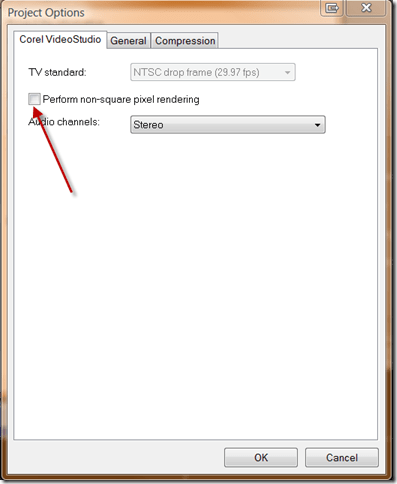
Under the Corel VideoStudio tab, deselect (i.e., no check in the box) “Perform non-square pixel rendering” as shown above.
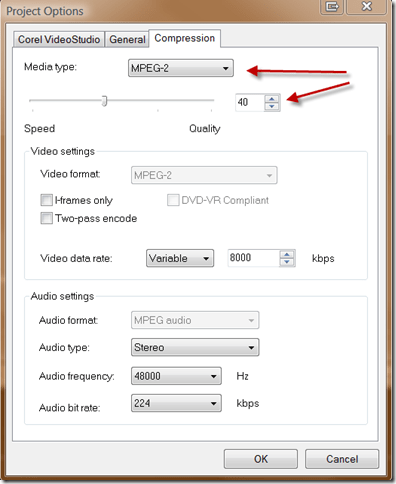
Under the Compression tab, select MPEG-2 and set the Quality at around 40%, as shown above.
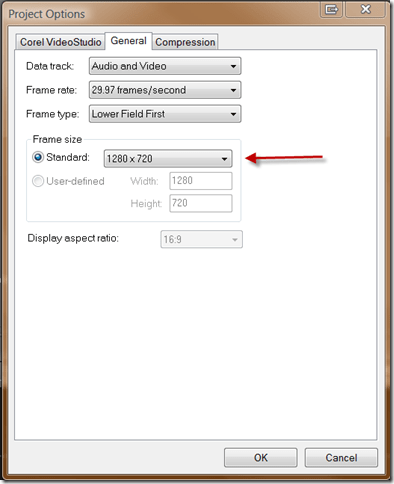
Under the General tab, select 1280×720 as shown above.
Click OK to get back to the application window.
Ignore any cache warnings or notices.
2. The Share Tab:
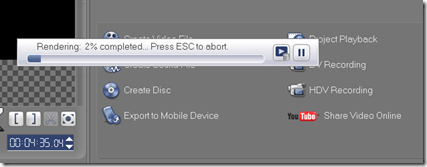
Click on “Create Video File” and select “Same as Project Settings.” Name and save your video. The application will render your video in widescreen HD.
When it’s done, you’re ready to upload your creation to YouTube. Note that it takes a while for YouTube to process the video after it is uploaded, even after it is viewable. The video quality will improve when the processing is complete.
Here’s the result of the project I used as a test case for this post.
Thanks to assasin301 for creating an excellent video tutorial, which taught me the steps I showed you above.
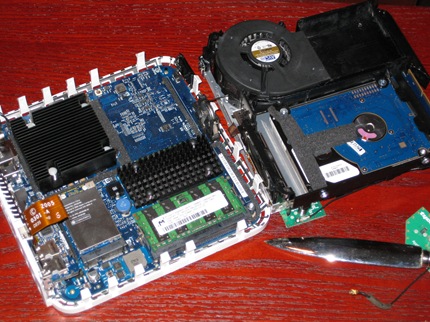
Mr. Mac Mini, 1, of Bellaire, Texas, died September 3, 2009 at home, from unknown causes. Mr. Mini was found sleeping at his desk and could not be revived. Heroic efforts were made by his friend and manager Kent Newsome, who performed immediate emergency surgery on Mr. Mini, to no avail.
Mr. Mini was born in June 2008 in China, and moved to Bellaire, Texas in December, 2008. He was the son of Steve Jobs of Cupertino, California. Following graduation from the Apple Store in 2008, Mr. Mini enlisted in the Extraordinary Everyday Lives Show and appeared semi-regularly during his short life. In early 2009 he partnered with childhood friend Mac the Ripper to rip a few recalcitrant DVDs. Several of his ripped MP4’s reside in the Newsome family media library. For his actions Mr. Mini was awarded the distinguished Medal of Mediocrity by leading tech blog Newsome.Org.
Mr. Mini was a life long Macintosh, and worked tirelessly throughout his life to rebut the oft-cited Mac superiority claims by Macintosh fans. From the age of 2 months, he was mute, unable to produce the slightest sound through his tiny little speaker. Thanks to the miracle of modern geekiness, he was kept alive and in operation for almost nine months.
His untimely death was met with great reaction from the technosphere. Steve Wozniak released a statement saying “while I am saddened by Mac’s death, when his father and I split up and his father got custody, I knew something like this was going to happen.” Noted blogger/photographer Earl Moore said “well, we all know Macs suck, so everyone should save themselves some misery and get a far superior Windows-based computer.” Richard Querin noted “since OS X is nothing more than a glorified Linux kernel, what did you expect?” Upon hearing the news, Bill Gates pumped his fist in the air and began to jump up and down briefly before falling to the ground with leg cramps.
Mr. Mini is survived by his father, of Cupertino, California, two brothers (HP, 3 , and Dell, 5), of the home, one sister (IBM, 4), of Houston, Texas, several mice, keyboards and iPods, and one AppleTV.
A private memorial service was held on September 4, 2009, after which Mr. Mini was interred in a trash bag.
In lieu of flowers, the family requests that donations be made to the Vintage Mac Museum, or the charity of your choice.
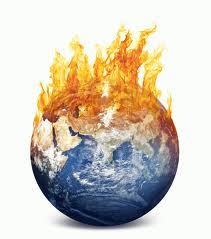
I’m just as certain today that global warming is an immediate and serious threat to our planet as I was in the summer of 1969 that Apollo 11 had actually landed on the moon. And I get just as frustrated today trying to explain global warming to disbelievers as I did that long ago summer trying to convince some of my fellow 9 years olds that their parents and grandparents were full of crap to claim the entire space program was a governmental fabrication.
Which is why I no longer try. I have expanded my growing policy of non-engagement to cover global warming and most other environmental issues.
I’ve talked a lot here and in the real world about how hard it is to have a reasoned debate with people who are so psychologically bound to their position that the merits take a back seat to world view preservation. The older I get the more willing I am to leave someone’s jacked up ideas unchallenged.
Here’s why.
There was a very interesting article the other day over at Contexts.Org about a study that found that rather than look for the truth, a lot of people seek out information that confirms what they already believe. It’s a concept called motivated reasoning. These theories are similar to the concept of emotional reasoning, which I read about most recently in Mary Pipher’s excellent Reviving Ophelia (must reading for parents of little girls), and a first cousin of the basic concept of rationalization.
All of this provides scientific support for, and at least in my mind an ironclad logical defense of, my theory of non-engagement. Nevertheless, I feel strongly about environmental issues and believe that the Idiocracy-worthy policy of placing an extra buck or two now above everything later is going to profoundly affect the quality of lives of our grandchildren, if not our children. A hundred years from now, people will consider our generation who, for all intents and purposes, pillaged the earth for the last quarter of the 20th century and at least the first quarter of the 21st century to be the most selfish, greedy and harmful generation in history. That’s a pretty big tumble from the lofty perch that our parents’ generation achieved, and for which history will one day give them the credit they deserve.
And from time to time people ask me what I think about global warming.
I end up having to choose between beating my head against the wall or just ignoring the question. Neither of those is satisfactory.
So from now on, I will direct anyone who asks me about global warming to this page. Where they can read how I feel, and find some really good information if they care to read it. But without the ability to ruin my day with illogical denials and half-baked rationalizations.
But first, this post has multimedia. Click play below and proceed.
In hindsight, this song may have
been too optimistic.
Like everything else scientific, let’s look to my favorite blog network- ScienceBlogs.
Global Warming is not an output of computer models, it is conclusion based on observations of a great many global indicators. By far the most straightforward evidence is the actual surface temperature record. While there are places, in England for example, that have records going back several centuries, the two major global temperature analyses can only go back around 150 years due to their requirements for both quantity and distribution of temperature recording stations.
These are the two most reputable globally and seasonally averaged temperature trend analyses:
Both trends are definitely and significantly up. As well as the direct measurements of surface temperature, there are many other measurements and indicators that support the general direction and magnitude of the change the earth is currently undergoing. The following diverse empirical observations lead us to the same unequivocal conclusion that the earth is warming:
There is simply no room for doubt: the Earth is undergoing a rapid and large warming trend.
“Antarctic ice is actually growing. So global warming is a myth.” I hear this a lot too. Coby’s rebuttal:
There are two distinct problems with this argument. First, any argument that tries to u
se
a regional phenomenon to disprove a global trend is simply dead in the water. Anthropogenic global warming theory does not predict uniform warming throughout the globe. We need to assess the balance of the evidence. In the case of this particular region, there is actually very little data about the changes in the ice sheets, and the conclusions we have seen of some growth in the East Antarctic ice sheet is such a small amount, that with the uncertainty, it might be shrinking. But even this weak piece of evidence may no longer be right. Some very recent results from NASA’s GRACE experiment, measuring the gravitational pull of the massive Antarctic ice sheets, have indicated that in fact ice mass is on the whole being lost.
Secondly, the phenomenon of thickening of an ice sheet is not by itself inconsistent with warming! Such an increase in ice mass in the face of actual warming would be the result of increasing precipitation and this is fully consistent with the Antarctic in a warming world. The Antarctic is actually one of the most extreme deserts on the planet, and warmer climates tend towards more precipitation. So even if you warmed a whopping 20oC from -50oC, you would still be well below freezing and accumulating snow, not melting in the rain.
While on the subject of ice sheets, Greenland is also growing ice in the centre for the same reasons described above, but it is melting on the exterior regions, on the whole losing approximately 200 km^3 of ice annually, doubled now from just a decade ago. This is a huge amount compared to what the changes may be in the Antarctic, around three orders of magnitude larger. So in terms of sea level rise, any potential mitigation due to the East Antarctic Ice Sheet is wiped out many many times over by Greenland’s ice sheet.
Sure there are plenty of unsolved problems and active debates in climate science. But if you look at the research papers coming out these days, the debates are about things like why model predictions of outgoing longwave radiation at the top of the atmosphere in tropical latitudes differ from satellite readings or how the size of ice crystals in cirrus clouds affect the amount of incoming shortwave reflected back into space or precisely how much stratospheric cooling can be attributed to ozone depletion rather than an enhanced greenhouse effect. No one in the climate science community is debating whether or not changes in atmospheric CO2 concentrations alter the Greenhouse effect or if the current warming trend is outside of the range of natural variability or if sea levels have risen over the last century. This is where there is a consensus.
Specifically, the “consensus” about anthropogenic climate change entails the following:
the climate is undergoing a pronounced warming trend that is beyond the range of natural variability.
the major cause of most of the observed warming is rising levels of the greenhouse gas CO2
the rise in CO2 is the result of fossil fuel burning.
if CO2 continues to rise over the next century the warming will continue
a climate change of the projected magnitude over this time frame represents potential danger to human welfare and the environment
While theories and alternate view points in conflict with the above do exist, their proponents are in a very small minority. If one requires unanimity before being confident, well, we can’t be sure the earth isn’t hollow either.
This consensus is represented in the IPCC Third Assessment Report, Working Group 1 (TAR WG1). This is the most comprehensive compilation and summary of current climate research ever attempted, and is arguably the most thoroughly peer reviewed scientific document in history. While this review was sponsored by the UN, the research it compiled and reviewed was not, and the scientists involved were independent and came from all over the world..
The conclusions reached in this document have been explicitly endorsed by:
Academia Brasiliera de Ciencias (Bazil)
Royal Society of Canada
Chinese Academy of Sciences
Academie des Sciences (France)
Deutsche Akademie der Naturforscher Leopoldina (Germany)
Indian National Science Academy
Accademia dei Lincei (Italy)
Science Council of Japan
Russian Academy of Sciences
Royal Society (United Kingdom)
National Academy of Sciences (United States of America)
Australian Academy of Sciences
Royal Flemish Academy of Belgium for Sciences and the Arts
Caribbean Academy of Sciences
Indonesian Academy of Sciences
Royal Irish Academy
Academy of Sciences Malaysia
Academy Council of the Royal Society of New Zealand
Royal Swedish Academy of Sciences
in either one or both of these documents: [PDF] [PDF]
In addition to these national academies, the following institutions specializing in climate, atmosphere, ocean and/or earth sciences have endorsed or published the same conclusions as presented in the TAR report:
If this is not a scientific consensus, then what in the world would a consensus look like?
All of the quotes above are directly from How to Talk to a Climate Skeptic, but there are lots more resources there. If you are
interested in the topic- and you should be- bookmark that page and read every entry.
One day they’ll build a bad business decision hall of fame. The featured display will be the Apple/ATT exclusive iPhone partnership. People will flock to see how something that could’ve been so good turned out so bad. Courses will be taught, degrees may even be awarded, on iPhone Launch Disaster Avoidance. “Yes sir, I got my ILDA from Stanford back in 2017, magna cum laude. I started out in the MBA program, but I wanted to go where the jobs are.”
Meanwhile we wait. We wait for someone at Apple and/or ATT to come to their senses and call bullshit on what has become the biggest technology failure in memory. We wait for other carriers to save the day. We hope the government will step in and restore order.
Mostly, we hope that one day our iPhones will do what other, less heralded, mobile phone can already do. We bought and re-bought our iPhones to be at one end of the technology curve, and we ended up at the other. Oh, the iRony.
At this point, we don’t know who to blame. Is this Apple being paternalistic and arrogant? Is it ATT being hapless? Or is it some combination of the two? I don’t know how to allocate all the blame, but that’s OK because there’s plenty to go around. Here’s what I do know. When the iPhone and the ATT partnership was launched, there is no way the executives involved intended things to turn out like they did. This phone was supposed to change the world. The fact that it had the impact it did in spite of the multitude of problems says more about the cult of Apple and the design of competing handsets than it does about the execution of the iPhone launch.
Consider where the iPhone- and the horde of developers writing for it- would be if just half of the subsequent failures had not occurred. The race would be over. Only the Apple/ATT failfest is keeping the other handsets in the game. I bet people at competing companies give thanks for ATT’s network infrastructure (or the lack thereof) every day.
So while I can’t allocate the blame, it doesn’t look to me like anyone is getting what they wanted out of this deal. Apple is shackled to a bad network that can’t handle nineties-era features and/or its misguided desire to over-control the user experience. ATT is the punching bag for those who want their iPhones to realize their potential, and has turned people who bought out of their contracts to become ATT customers into a shipful of rats looking to jump at the first opportunity.
And then there are all the iPhone owners. People who try to be excited and loyal in the face of daily reminders of all the things their phones can’t do.
Everyone is losing in this game. Someone needs to change the rules.
I’ve written about Drag the River over at GoodSongs.Com. It’s absolutely one of my favorite bands.
This live record from 2005 could very possibly be the best alt. country record ever made. Don’t take my word for it. Go get it.
Need some more incentive? Listen to their ass-kicking cover of She Thinks I Still Care. This record should be played loud. Preferably in your truck. With the windows down.
Once you get hooked, go buy the rest of their records.
A long time ago in a galaxy far away (e.g., the mid-nineties) there was this service that would create a font from your handwriting. I’m not certain, but I think it was called Signature Software and it may have been the predecessor to this. As I recall, the application inserted a button or menu tool in Word. You would type the document, a letter at a time, in your custom font, and then with a single click the writing would be converted to almost perfect cursive writing.
It was really hard to tell the result from real handwriting. It worked really well. So well in fact that I used it to write thank you notes to people who sent remembrances after my mom died. No, I didn’t send a form letter. I just used copy and paste for the common parts.
Today I read about Fontcapture, a free service, currently in public beta, that lets you make a font out of your handwriting. In less than 15 minutes, I printed the font form, filled it out, scanned it, uploaded it, created a font and installed it on my computer.
It looks a lot like the Signature Software font did, before you hit the magic button that transformed the letters into connected, authentic looking cursive. Without that magic button, I’m not all that impressed with the result, at least as far as an actual handwriting replacement goes.
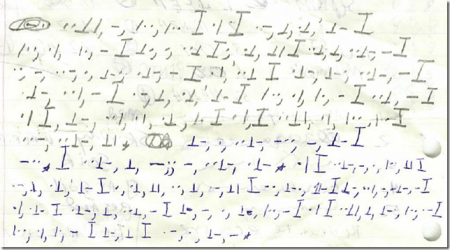
But it does occur to me that you could use Fontcapture to make some wicked secret codes. My buddy Tad and I had a secret code in grade school. Believe it or not, I still have one of our secret messages.
I have no earthly idea what that says, but based on the actual English on the other side of the page, at the time we were talking about dove hunting, rock bands and cars. Number 4 on Tad’s car wish list was a Pinto. The man always had taste.
If we’d had Fontcapture back then (well, that and computers, the internet, etc.) we could have created a whole new language. Then maybe Tad could have traded up to a Bobcat.



 I’m just as certain today that
  This Apple/ATT business fell off the tracks when we found out that our dream phones
  Consider where the iPhone- and the horde of developers writing for it- would be if just half of the subsequent failures had not occurred. The race would be over. Only the Apple/ATT failfest is keeping the other handsets in the game. I bet people at competing companies give thanks for ATT’s network infrastructure (or the lack thereof) every day.

 Newsome.Org