Google Reader: Putting Scoble in Time Out

googlereader

I like Robert Scoble.  I really do.  But, like my 8-year old, if I don’t watch him like a hawk he gets distracted and starts doing all kinds of crazy shit.  Like pooping all over Google Reader, which is really a stand-in for RSS readers in general.  I know he doesn’t really mean it.  It’s like the time my 8-year old announced that she was giving up Skittles.  It was a radical thought.  There was logic to it.  Shoot, it made me proud.

But it wasn’t real.

Two days later she was back in the grip of her Skittles addiction, insisting that no right-thinking person would choose a granola bar when those colorful, chewy, irresistible sugar pills were just sitting there on the shelf.  Our battle over her junk food habit rages on, but I know in my heart that all the wishful thinking in the world won’t make a granola bar taste like a Skittle.

So let’s put Robert in virtual time out and see if we can get him to behave.  One step at a time.

He says Google Reader is slow.  I think that’s more of a problem with the front end platform that pushes the RSS feeds (e.g., FeedBurner), but I see his point.  But as I have said over and over, Skittles are bad for you.  Uh, I mean, faster is not always better.  I simply don’t need to read about some dude’s latest Farm Game achievement or Mafia Wars battle in real time.  And the flexibility of Google Reader (folders, the ability to rename feeds, archive feeds, search feeds, etc.) outweighs any marginal speed benefit you might get from the other sources (more on those below).

Of course, there’s a bigger flaw in that argument.  Most Twitter posts are links to other content that got served by. . . RSS feeds or some other platform.  The live on the scene Twitterer is the vast exception and not the rule.  So even if Twitter is instantaneous, most of the information put on Twitter is not.

And while I’m debunking the speed canard, let’s be honest.  When we thought that kid was in the balloon flying all over Colorado, we turned on CNN, not Google Reader and certainly not Twitter.  For live important news, the internet just ain’t the place, and the difference between 5 minutes later and 15 minutes later just isn’t that big of a deal.

image He says Google Reader’s UI is confusing.  I agree that all that sharing stuff is unnecessary screen clutter.  All we need to get our data out of Google Reader are the newish “Send to” buttons.  But Google has gotten caught up in the sharing hysteria like everybody else.  When all this sharing nonsense blows over, the internet will be a much more useful and fun place.  But come on man, all you have to do is ignore all that crap, just like I do.  And if you think Google Reader is confusing, then you must think Facebook is a big, non-intuitive mountain of Rubik’s Cubes.

He doesn’t like seeing all those unread items.  I have a folder of traditional news feeds (CNN, USA Today, etc.) that fills up faster than a cheetah can run.  You simply mark the entire folder as “read,” with one click.  It’s not hard.  Now trying to actually follow news topics on Twitter, that’s hard (more on that below).

Speaking of Twitter, does anyone really go to Twitter to consume content?  Be honest.  All I see are over there are people pushing unilateral content, like a flea market-cum-mailing list.  And social?  There’s more interaction on top of Mount Everest than there is on Twitter.  Seriously, I get the sense that the Twitter hysteria among the general public is fading.  If I owned Twitter, I’d sell it.  Now, while there are still a lot of greater fools thrashing around with someone else’s money to spend.

He says the social network features suck.  I would completely agree with this if it was an absolute statement, and not limited to Google Reader.  They probably do suck in Google Reader, which is one of it’s strongest points.  I don’t follow (or whatever the right word is) anyone via Google Reader.  I just find my content there, and push it from there to my blog, Facebook page, etc.  Let’s be honest, the social networks aren’t all that social, so why does a feed reader have to be social?

About this interaction business.  If you want to interact online with real people, the fact is that there is only one place to do it- Facebook.  The infrastructure is there.  The developers are there.  And most importantly, the non-nerds are there.  The battle for the mind of the so-called social networker is over, and everyone but Facebook lost.  Hell, I did everything I could to stay off of Facebook and I failed.  Lots of my real world friends are there, and none of them are on any of these lesser services.

He says he sees most news faster on Twitter than in Google Reader.  Uh, OK.  That’s like saying I got to California faster on a horse than when I walked.  The greatest myth in the history of the internet is that Twitter is the place to get news.  First of all, you have to separate those who actually know the news and have the desire and ability to accurately describe it from the spammers and nut-jobs.  Then you have to wade through the chaos and scrolling pages to find it.  At least on the CNN and Google News pages, there is some semblance of an organizational structure that the nut-jobs must adhere to.

He says headline scanning is easier on Twitter.  This is simply wrong.  Robert, I challenge you to walk me through this and show me how it is easier on Twitter.  If I’m wrong, I’ll eat my pocket protector.  Hell, I’ll go one step further- it’s impossible to scan headlines on Twitter.  Because there are none.

He says the iPhone apps are better for Twitter.  I agree with that.  Of course they are better, because Twitter has enjoyed a lot of momentum.  Like Hanson did at one point, and the Jonas Brothers do now.  Pretty soon all the kids will gravitate to the next big thing and Twitter will be relegated to the opening act.  Like Isaac, Taylor and Zac.

The only question is who will get rich before that happens.

What do use to get your online content?  And why?
About this Google Music Thing

As we all now know, I have totally capitulated to Google.  And I love me some music.  So I was interested when I read that my new master was going to release a music search thingy.  Until I read more about it.  Then it made me sad.  Not as sad as the lack of folders in Evernote makes me.  But sad.

Partnering up with MySpace?  Are you kidding me.  Now that Geocites is gone, MySpace rules supreme as the most butt-ugly collection of bad web design on the internet.  Lala?  What about Tinky Winky and Po?  Pandora has been a favorite of mine for years, but even they did their part to screw up the internet recently by letting people litter their Facebook and Twitter feeds with 30-second song clips, and then acting like that was a good thing.

I’d rather hear Edward Scissorhands play a Jonas Brothers song on a chalkboard that listen to a 30-second clip of anything.  Is this 2009 or 1995?  Rhapsody?  It took me a decade to rid my computer of all the Real Networks bloatware.  No way am I going to get snared in that net again.

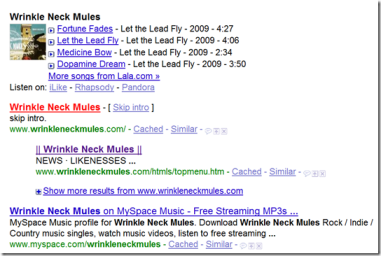
But being a good little Google minion, I had to check out its new baby.  So I dutifully searched for my new favorite band, the Wrinkle Neck Mules.

image

OK, nothing too horrifying there.

I clicked on the play button beside Medicine Bow.

image

And it played, via Lala.  Hmmm.  Cool, but I want to hear Lowlight, the biggest of my numerous Mules song-obsessions.  So like the internet-savvy cat I am, I clicked on the “More songs” link.  I got a list of 61 songs.  No Lowlight, but I found the incredibly wonderful Mecklenburg County.

image

And it  played too, not in a pop-up player like before, but in the player at the top of the Lala page.

OK, so what about the little sharing button up there.  In the name of all that is sacred, no clips please.  Let’s send this to my Facebook page and see what happens.

image

Damn, the song plays right there.  Now I’m starting to be impressed.  I just know there’s a catch.  Let’s look at the Lala help pages.

image

OK, now I get it.  You can listen once.  When I tried to play the song again from my Facebook page, I was confronted with the most horrifying thing.

image

A 30-second clip.  The horror.

Actually, it’s not all that bad.  If I can let all my Facebook friends hear the entirety of a song once, that’s still semi-cool.  I don’t know that I’ll do it a lot, but I may send a song or two along.  At the end of the day, this seems like a way for Google to capture a lot of the growing music search market, which it wants for ad-serving purposes, and for Lala and some of the other services to get (or more likely buy) a lot of exposure.

I’m not blown away by any means.  But it’s probably a worthwhile addition to our music sharing toolbox.

Going All In With Google Apps

googleappslogo

Why I did, and why you should.

Over the last year or so, my resistance to the Borg-like inevitability of Google has proven futile, as I have moved more and more of my online life into Google applications.  First, I started using Google Reader to manage and access my RSS feeds.  I have always used Gmail as a spam filter and a means to access my Newsome.Org email online and via my iPhone.  I have used Google Docs for podcast and church-related stuff.

But a couple of weeks ago, I went all in.

The cost of upgrading Microsoft Office, my pending move to Windows 7 via a new HP Computer that is frustratingly delayed, and the convenience of one-stop, online accessible apps got me thinking about moving me and my entire family to Google Apps.  I took the plunge, and boy am I glad I did.  There are some gaping holes in the Google Apps experience (more on that below), but there are also many elegant, useful features that I wasn’t aware of until I started to enjoy them.

Making the Move

I have used my Newsome.Org email address, on a dedicated server, for many, many years.  I knew changing to a Gmail address was not an option.  I wanted to keep my email address, as well as my massive set of personal folders and all the emails and data therein.  So the only- and best- option was to move my Newsome.Org email services to Google Apps.  Additionally, the move to Google Apps allows you to create a custom calendar site (e.g., calendar.yourdomain.com), a custom Google Docs site (e.g., docs.yourdomain.com), a shared Contacts site (e.g., contacts.yourdomain.com) and more.

Best of all, it’s free.

And, believe it or not, really easy.

Rather than recreate the wheel here, I’ll direct you to Mark O’Neill’s excellent walk-through.  Changing the MX records for my domain was really easy via Network Solutions’ Domains Management page (don’t forget the period at the end of the hostnames ).

And unlike in years past, the changes propagate pretty fast, sometimes within minutes.  After I had my mail page set up, I used a similar process to create CName records for my calendar, contacts, Google Docs, and even a short links (Google Short Links) and discussion board (Google Moderator) service.

Note than none of this affects your web site, as you do not modify the www, @none or *(all others) settings.  Any host (e.g., www) other than the ones you specifically change as set forth above will continue to point to their current locations.

After maybe an hour’s work, I had dedicated, Newsome.Org-branded and web accessible email, calendar, documents and contacts pages for myself and my entire family.

Email

The first thing I did was to create and upload a Newsome.Org Web Apps logo (see above and below) and customize a theme to match the Newsome.Org color scheme.  One annoyance that Google should address is that your custom theme only applies to Gmail.  There should be a way to cause your theme or custom color scheme to apply across all the various apps.  The custom logo appears in all the Google Apps.

As a Firefox user, the next thing I did was install the most excellent Better Gmail add-on.  Among many other indispensible features, this add-on lets you create labels- Gmail’s folder-substitute- in a nested tree structure, like folders and sub-folders.  Since I want to keep my Outlook personal folders, this was a huge help.  It also allows you to hide the Chat box and other screen wasting stuff.  Then I used Google’s Gmail Uploader app to upload my 10 or so years worth of personal folders.  I was worried that 10 years of emails would use most of my allocated 7 GB of storage, but happily it only took 472 MB!  In a few minutes, I had recreated my personal folders, as well as the primary labels (e.g., folders) I use for email and efficiency management.

Note how the Archive Songs folder expands when I click on it.  I also added POP access or forward rules (on those third party email apps, like Yahoo, that don’t allow free POP access) to capture my old AOL, Gmail, Hotmail and Yahoo email.  I have a filter set up to archive (e.g., move from my Inbox to the designated folder) that third party email as it arrived.

Next, I went to the Settings tab and added Quick Links (a way to create and save email searches, such as Unread or ones with certain attachments), the Google Calendar gadget, the Remember the Milk gadget (via the Add Any Gadget by URL feature under the Labs tab), and the Google Docs gadget.  Now, I can access everything I need.

Note how elegantly the calendar is incorporated into the Gmail sidebar.  I mentioned above that there are a lot of unexpected features.  One great example is that when you get an email with an address in it, a link to a Google Map appears.  Little things like that make the online world go around.

Calendar

I also moved my calendar to Google Calendar.  Via the Settings tab, I added some gadgets (World Clock and Jump to Date).  I gave and got access to Raina’s calendar, and I added US holidays, weather and phases of the moon.

In order to create a centralized calendar, I synch my Office calendar with my Google Calendar via Google Calendar Synch.

Via the Settings tab, you can configure Google calendar to email you an agenda each morning and to notify you via text message and/or email prior to each calendar event.  Again, this sort of small, but immensely helpful, feature is what makes these apps so compelling.

Documents

I uploaded my personal letterhead, a few forms I use a lot and some other key documents to my new, Newsome.Org-branded Google Docs page.

image

Google Docs is probably the weakest link in the application group, if only because word processing is so important in the business world.  Tables and complex formatting in Word documents can be lost on the upload.  And the addition of a tracked changes feature (or a close equivalent) should be job one for Google if it really wants businesses to use Google Apps.  But, warts and all, Google Docs works well enough for me to dump Microsoft Office.  I can’t believe I just typed that- but it’s true.

I don’t think Google Docs is the best choice for archiving old documents, pdfs, etc. (though implementation of the oft-rumored GDrive would be a welcome addition).  For that I use my other favorite (and free) app- Dropbox (sign up here and we both get extra free space).  I happily pay for the premium 50 GB Dropbox plan, which gives me plenty of space for document archives, etc.

Contacts

As I have noted before, Google Contacts is a train wreck, that should be completely rewritten.  In the meantime, however, consolidation trumps design, and I imported all of my contacts to Google Contacts.

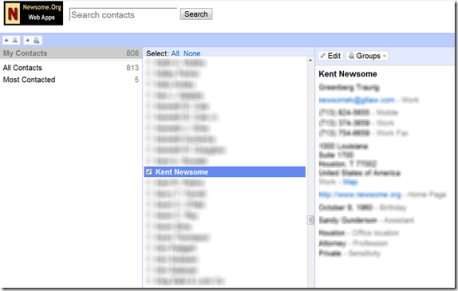
image

Online Utopia?

At the end of the process, my entire family has easy, accessible and efficient email, calendar, documents and contacts, all consolidated and branded.  It works really well.

But it could be better.

The individual apps still seem too much like individual applications tossed together, as opposed to an integrated suite of apps.  The ability to customize the look and feel of the apps should apply uniformly throughout.  Some of the apps, in particular Gmail, need to give us much more control over sidebar content, without the need for browser add-ons.  I don’t want the Chat box, but I do want customized links to my Dropbox and other sites I use a lot.

Google Sites is a really crappy, impossible to use, app.  Google Moderator is only marginally better.

Picasa should be integrated into Google Apps, and certainly Google Voice should be.  I’d like to see Google Reader integrated as well.  There should be a way to create personalized, private and integrated Google Groups.  Google Docs needs either GDrive to launch, or the ability to integrate another online storage service into Google Docs for document storage and retrieval.

In sum, Google Apps aren’t perfect.  But with a tweak here and there, they could be.

Sunday Mashup: JVC Pocket Camcorder & Sporting Clays

This week I bought a JVC GC-FM1A HD camcorder.  Although I am starting to suspect that this camera might suck, other than the complete lameness of the included MediaBrowser LE software, which does not even recognize HD video on the camera, the jury is still  out.  I do like the fact the camera records onto a flash card, which allows me to remove the card and manipulate the video within Corel VideoStudio 12 (VS 12 users should note that non-HD video is in 4:3 format, to avoid the squished appearance that will result if you set your non-HD video project files to 16:9).

I decided to test the camera by combining two of my favorite things: tech and shotguns.  When I went out to shoot some sporting clays today, I took the camera and my spider tripod and filmed a few shots at each station.  I inadvertently shot the video in non-HD, so the resulting video is in lower than ideal resolution.  One of the features this camera needs is a way to lock the resolution, to avoid accidental resolution changes.

When editing the video footage, it became apparent that my camera placement and, more importantly, the lower resolution made it difficult to see the clays in flight.  It is likely that you would need to follow the clays with the camera to get a good shot shot (to coin a phrase).  Since I was by myself, that was not an option today.  Cassidy and Delaney often go shooting with me, so we’ll have to try a moving camera next time.  I hope that HD resolution will allow you to see the clays in flight, even with a stationary camera.

I love the fact that HD video cameras are getting smaller.  What I would really love would be for the iPhone to shoot HD video.  When that happens (and eventually it will), I will be a happy camper.  In the meantime, I continue to search for a small, full feature HD camcorder that will let me shoot video and easily upload it to YouTube or Vimeo or download it to my computer for use within an editing application.  Suggestions would be appreciated.

As far as the shooting went, I did good with everything in the air, particularly since the pull-delay wasn’t working at some of the stations and I was shooting alone, and horrible with the rabbit shots, where the clays bounce along the ground.  It’s hard to believe I can hit so many of one and so few of the other.

How to Make Widescreen, HD, YouTube Ready Videos in Corel VideoStudio

I’ve used VideoStudio Pro to make my videos, going back to the Ulead Systems years and continuing after it was, sadly, bought by Corel.  Corel hasn’t screwed up the application- yet, so it is still a robust, easy to use video editing and creation application.  But creating a widescreen, high definition video for use on YouTube can be a little confusing.

Here’s a step by step.

After you get your video, audio, titles, etc. in the timeline the way you want them, here are the steps

1. File>Project Properties:

image

Be sure you have selected MPEG Files in the file format box shown above.  Then click the Edit button.

image

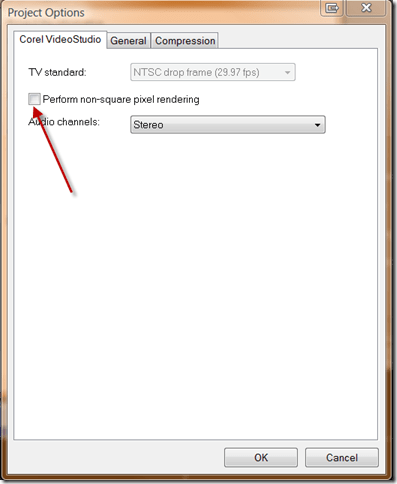
Under the Corel VideoStudio tab, deselect (i.e., no check in the box) “Perform non-square pixel rendering” as shown above.

image

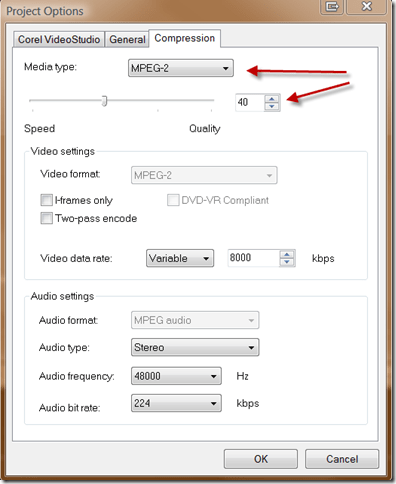
Under the Compression tab, select MPEG-2 and set the Quality at around 40%, as shown above.

image

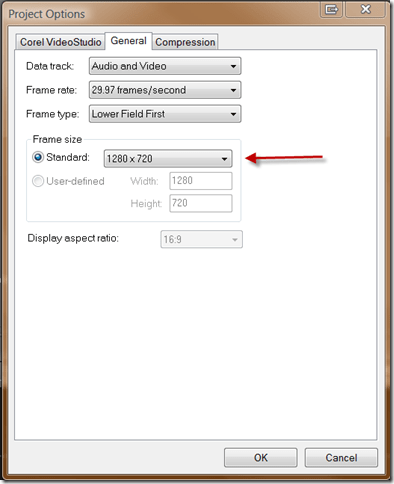
Under the General tab, select 1280×720 as shown above.

Click OK to get back to the application window.

image

Ignore any cache warnings or notices.

2. The Share Tab:

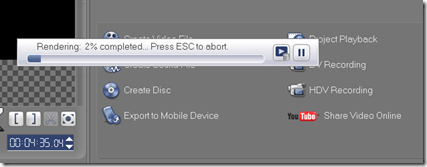
Click on “Create Video File” and select “Same as Project Settings.”  Name and save your video.  The application will render your video in widescreen HD.

image

When it’s done, you’re ready to upload your creation to YouTube.  Note that it takes a while for YouTube to process the video after it is uploaded, even after it is viewable.  The video quality will improve when the processing is complete.

Here’s the result of the project I used as a test case for this post.

Thanks to assasin301 for creating an excellent video tutorial, which taught me the steps I showed you above.

Mac Mini (2008-2009)

IMG_1009

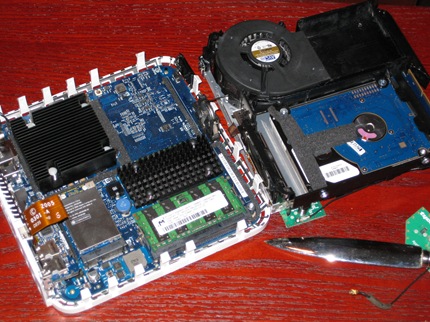
Mr. Mac Mini, 1, of Bellaire, Texas, died September 3, 2009 at home, from unknown causes.  Mr. Mini was found sleeping at his desk and could not be revived.  Heroic efforts were made by his friend and manager Kent Newsome, who performed immediate emergency surgery on Mr. Mini, to no avail.

Mr. Mini was born in June 2008 in China, and moved to Bellaire, Texas in December, 2008.  He was the son of Steve Jobs of Cupertino, California. Following graduation from the Apple Store in 2008, Mr. Mini enlisted in the Extraordinary Everyday Lives Show and appeared semi-regularly during his short life. In early 2009 he partnered with childhood friend Mac the Ripper to rip a few recalcitrant DVDs.  Several of his ripped MP4’s reside in the Newsome family media library.  For his actions Mr. Mini was awarded the distinguished Medal of Mediocrity by leading tech blog Newsome.Org.

Mr. Mini was a life long Macintosh, and worked tirelessly throughout his life to rebut the oft-cited Mac superiority claims by Macintosh fans.  From the age of 2 months, he was mute, unable to produce the slightest sound through his tiny little speaker.  Thanks to the miracle of modern geekiness, he was kept alive and in operation for almost nine months.

His untimely death was met with great reaction from the technosphere.  Steve Wozniak released a statement saying “while I am saddened by Mac’s death, when his father and I split up and his father got custody, I knew something like this was going to happen.”  Noted blogger/photographer Earl Moore said “well, we all know Macs suck, so everyone should save themselves some misery and get a far superior Windows-based computer.”  Richard Querin noted “since OS X is nothing more than a glorified Linux kernel, what did you expect?”  Upon hearing the news, Bill Gates pumped his fist in the air and began to jump up and down briefly before falling to the ground with leg cramps.

Mr. Mini is survived by his father, of Cupertino, California, two brothers (HP, 3 , and Dell, 5), of the home, one sister (IBM, 4), of Houston, Texas, several mice, keyboards and iPods, and one AppleTV.

A private memorial service was held on September 4, 2009, after which Mr. Mini was interred in a trash bag.

In lieu of flowers, the family requests that donations be made to the Vintage Mac Museum, or the charity of your choice.

Was Apple’s Partnership with ATT the Worst Business Decision Ever?

I finally got around to trying Qik, and I’m really impressed with it.  It’s too bad I have an iPhone which, unlike so many phones, won’t allow users to stream live video.  At least I can now upload video to Qik over the 3G network.  I guess that’s something.  You see, us iPhone users have to take comfort in small victories.

One day they’ll build a bad business decision hall of fame.  The featured display will be the Apple/ATT exclusive iPhone partnership.  People will flock to see how something that could’ve been so good turned out so bad.  Courses will be taught, degrees may even be awarded, on iPhone Launch Disaster Avoidance.  “Yes sir, I got my ILDA from Stanford back in 2017, magna cum laude.  I started out in the MBA program, but I wanted to go where the jobs are.”

This Apple/ATT business fell off the tracks when we found out that our dream phones can’t send MMS messages.  Nor can you use them as a wireless broadband modem, the way I used my Blackberry years ago.

Since then, we’ve seen a parade of new apps and improved features.  For other phones.  Google Latitude, Google Voice, the SlingPlayer app, Qik, etc.  If you can think of it, there’s probably an application.  For other phones.

Meanwhile we wait.  We wait for someone at Apple and/or ATT to come to their senses and call bullshit on what has become the biggest technology failure in memory.  We wait for other carriers to save the day.  We hope the government will step in and restore order.

Mostly, we hope that one day our iPhones will do what other, less heralded, mobile phone can already do.  We bought and re-bought our iPhones to be at one end of the technology curve, and we ended up at the other.  Oh, the iRony.

At this point, we don’t know who to blame.  Is this Apple being paternalistic and arrogant?  Is it ATT being hapless?  Or is it some combination of the two?  I don’t know how to allocate all the blame, but that’s OK because there’s plenty to go around.  Here’s what I do know.  When the iPhone and the ATT partnership was launched, there is no way the executives involved intended things to turn out like they did.  This phone was supposed to change the world.  The fact that it had the impact it did in spite of the multitude of problems says more about the cult of Apple and the design of competing handsets than it does about the execution of the iPhone launch.

Consider where the iPhone- and the horde of developers writing for it- would be if just half of the subsequent failures had not occurred.  The race would be over.  Only the Apple/ATT failfest is keeping the other handsets in the game.  I bet people at competing companies give thanks for ATT’s network infrastructure (or the lack thereof) every day.

So while I can’t allocate the blame, it doesn’t look to me like anyone is getting what they wanted out of this deal.  Apple is shackled to a bad network that can’t handle nineties-era features and/or its misguided desire to over-control the user experience.  ATT is the punching bag for those who want their iPhones to realize their potential, and has turned people who bought out of their contracts to become ATT customers into a shipful of rats looking to jump at the first opportunity.

And then there are all the iPhone owners.  People who try to be excited and loyal in the face of daily reminders of all the things their phones can’t do.

Everyone is losing in this game.  Someone needs to change the rules.

Fontcapture: Free Handwriting Font & Secret Codes

fotncapture

A long time ago in a galaxy far away (e.g., the mid-nineties) there was this service that would create a font from your handwriting.  I’m not certain, but I think it was called Signature Software and it may have been the predecessor to this.  As I recall, the application inserted a button or menu tool in Word.  You would type the document, a letter at a time, in your custom font, and then with a single click the writing would be converted to almost perfect cursive writing.

It was really hard to tell the result from real handwriting.  It worked really well.  So well in fact that I used it to write thank you notes to people who sent remembrances after my mom died.  No, I didn’t send a form letter.  I just used copy and paste for the common parts.

Today I read about Fontcapture, a free service, currently in public beta, that lets you make a font out of your handwriting.  In less than 15 minutes, I printed the font form, filled it out, scanned it, uploaded it, created a font and installed it on my computer.

It looks a lot like the Signature Software font did, before you hit the magic button that transformed the letters into connected, authentic looking cursive.  Without that magic button, I’m not all that impressed with the result, at least as far as an actual handwriting replacement goes.

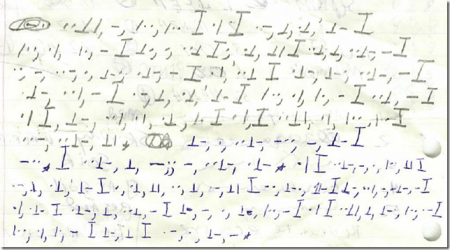
But it does occur to me that you could use Fontcapture to make some wicked secret codes.  My buddy Tad and I had a secret code in grade school.  Believe it or not, I still have one of our secret messages.

image

I have no earthly idea what that says, but based on the actual English on the other side of the page, at the time we were talking about dove hunting, rock bands and cars.  Number 4 on Tad’s car wish list was a Pinto.  The man always had taste.

If we’d had Fontcapture back then (well, that and computers, the internet, etc.) we could have created a whole new language.  Then maybe Tad could have traded up to a Bobcat.

Or maybe even a Maverick.

Tossing the Disqus

Or how I overcame Disqus and Blogger and by sheer force of will installed the Disqus commenting system on my remotely hosted, FTP published, highly customized Blogger blog template.

disqus

Whew.  OK, listen up ’cause I’m gonna tell you a sad story.

I have been watching Disqus for months, and considering trying to install it here at Newsome.Org.  Since I have a remotely hosted, FTP published, highly customized blog template and a Leopard-Skin Pillbox Hat (not really, but I’m punch drunk), both one of which I publish via Blogger, it was hard.  Now when I say it was hard, what I mean is that is was really, absolutely, just about impossibly, freaking hard.

So here’s how I did it.  All of this assumes you have registered at Disqus and have an account to use.  If this confuses you, move to Step 2 and skip Steps 1 and 3-7.

Step 1: Unsuccessfully Seek Help

First I tried the various options suggested by the Minimalist-inspired Disqus help pages.  I tried to manually upload my template, which I knew wouldn’t work.  I tried to manually add the code via these instructions.  No go.  I googled around looking for something to show me the way.  Nada.

Next I emailed Disqus to see if there was any other documentation I could look at.  I got a prompt response, telling me I should use a different blog template, thereby simultaneously experiencing both an epic instance of the tail trying to wag the dog as well as another reminder that I’m not as cool as my friend Louis.  I know that, of course, but I generally blame it on age.  Whatever the half-life of cool is, I have to be 2-3 half lives older than him.  If Dave Winer had invented the internet back when I was a young man, I’d be Robert Scoble and Louis Gray combined, baby.  Of course if I’d had the internet as a kid, I’d also be degreeless, homeless and living under a bridge somewhere.  In fact, the only technology we had when I was a kid were tractors and the phone.  And both got me in lots of trouble lots of times.  Generally when I should have been walking those four snowy miles to and from school.  And all that.

Anyway, after respectfully passing on Disqus’s suggestion that I demolish my blog and rebuild it just so I could use their application and pulling my bruised ego together, I got to work.

Step 2: Drink Some Bourbon

Locate a bottle of bourbon.  Open it, take a big gulp.  Place it within easy reach of your keyboard.

Step 3: Add the Standard Disqus Header

Add the standard Disqus header right before the </body> tag:

<!– Begin Disqus Header–>
<script type=”text/javascript”>
//<![CDATA[
(function() {
var links = document.getElementsByTagName(‘a’);
var query = ‘?’;
for(var i = 0; i < links.length; i++) {
if(links[i].href.indexOf(‘#disqus_thread’) >= 0) {
query += ‘url’ + i + ‘=’ + encodeURIComponent(links[i].href) + ‘&’;
}
}
document.write(‘<script charset=”utf-8″ type=”text/javascript” src=”http://disqus.com/forums/myusername/get_num_replies.js&#8217; + query + ‘”></’ +

‘script>’);
})();
//]]>
</script>
<!– End Disqus Header->

Step 4: Create the New Comment Link

Here’s where I had to start figuring stuff out on my own.  I changed the code at the end of the blogPost <div> to:

<$BlogItemBody$>
<div class=”byline”>
Posted by <$BlogItemAuthorNickname$> @ <$BlogItemDateTime$> |
<a href=”<$BlogItemPermalinkURL$>”>Permalink</a> |
<a href=”<$BlogItemPermalinkURL$>”>Leave Comment</a>

I did it that way so it would show both a Permalink and an obvious “Leave a Comment” link.  Yes, they go to the same place, but I want to make it easy for people to find the place to write a comment.

Step 5: Display the Comment Count

In my “Discuss” links, I changed the code to:

Discuss:
<a class=”comment-link” href=”<$BlogItemPermalinkURL$>#disqus_thread”>View Comments</a> |
<BlogItemCommentsEnabled><a class=”comment-link” href=”<$BlogItemPermalinkURL$>#comments”><$BlogItemCommentCount$> Pre-Disqus Comments</a></BlogItemCommentsEnabled> |
<a href=”
http://search.blogger.com/blogsearch?q=link:<$BlogItemPermalinkUrl$>” target=”_blank”>Inbound Links</a>
<br />

The <BlogItemCommentsEnabled>/Pre-Disqus Comments part was required to preserve my existing comments (see Step 6 below).

The only other change was to add the required #disqus_thread after the Permalink URL.

NOTE: This is before the <ItemPage> tag.  I want new commenters to use Disqus.

Step 6: Preserve Your Existing Comments

That got me up and running, with one gigantic problem.  I have lots and lots of existing comments, and inexplicably there doesn’t seem to be a ready-made way to import Blogger comments into Disqus.  Obviously, Disqus should spend some of that mad coin to write one.  I saw some roundabout ways that might work, but they were on the wrong side of the possible benefit – time required – likely result calculation.

So I needed to preserve my existing comments in place.

After some trial and horror, I ended up with this:

<ItemPage>
<BlogItemCommentsEnabled>
<a name=”comments”></a>
<h4><$BlogItemCommentCount$> Comment(s):</h4>

<BlogItemComments>
<a name=”<$BlogCommentNumber$>”></a>

<p class=”comment-body”>
<$BlogCommentBody$>
</p>

<p class=”comment-data”>
By <$BlogCommentAuthor$>, at
<a href=”#<$BlogCommentNumber$>”>
<$BlogCommentDateTime$></a>
<$BlogCommentDeleteIcon$>
<br />
**************************
</p>
</BlogItemCommen
ts
>

</BlogItemCommentsEnabled>
</p>

<div id=”disqus_thread”></div><script type=”text/javascript” src=”http://disqus.com/forums/newsome/embed.js&#8221;></script><noscript><a href=http://myusername.disqus.com/?url=ref>View the discussion thread.</a></noscript>
</div></div>
</ItemPage>

All of that brain damage does three things.  It displays my previous comments (recall the “Pre-Disqus Comments” code I added in Step 5).  It’s not ideal to have two Comments linkcounts, but you need to let people know those previous comments are still in place.  It removes (i.e., doesn’t contain) the code that creates the Blogger “Leave a Comment” link (because I want new commenters to use Disqus).  And it displays the Disqus comment box and comments underneath the previous comments.

NOTE:  All of this is within the <ItemPage> tags, because we only want the comments and the Disqus comment box to appear on the item pages, which are sometimes referred to as post pages.  Or, in the case of uninspired writing, ghost towns.

Step 7: Update Your Blog Via Blogger

After updating my blog, which takes forever (come on Blogger, please get a handle on the disintegrating Blogger/FTP experience), I have Disqus comments, while preserving my previous comments.

If needed, repeat Step 2.

So there you have it.  I hope this is helpful to someone.

Now, why not leave a comment and reward an old, un-cool man’s effort!

Drinking from a Fire Hose: In Defense of RSS

There’s lots of talk today about how RSS is dead, and whatnot.  Let me set things straight.

firehoseFirst of all, as a practical matter, RSS has never been alive.  Ask anyone other than a hard core geek (like me) what RSS is and they won’t have any earthly idea.  RSS is probably the most useful tool on the internet, but regular people don’t use it.  Why?  Because no one has figured out how to make money pushing RSS feeds, and so the informal brotherhood of mercenary content producers (e.g., old media and big new media) don’t embrace it.  In fact, they really don’t want you to use it.  They’d rather force you to their web sites where they can serve those ads you never click on, but that advertisers still pay for.

It’s the desire for money once again screwing up something beautiful.  The environment, professional sports, our computers, etc.

This conspiracy to kill RSS is just one more attempt to prolong the death of an antiquated system.  It’s the same sort of battle the record label cartel is waging against the digital distribution of music.  In the case of RSS, the system they are desperately trying to save is the one in which the provider selects and aggregates content, either on paper or a website, and the consumer accesses that content at the provider’s place.  Where the experience is tightly controlled, complete with ads, etc.  Under the new system, which will be much better for the consumer once it matures a little, the consumer selects both the content and the package, and then accesses it wherever he or she wants: internet browser, phone, RSS reader, Facebook, etc.  Of those choices, the RSS reader is currently the best choice, by far.

Why?

It is easy to use.  It’s free.  It has archival and search features. You can organize it any way you want.  There are tons of ways to slice, dice and organize your feeds.  Only the fishy smelling partial feeds used as bait by those trying to keep control of the experience detract from what would otherwise be a nearly perfect experience.

A perfect experience that the brotherhood is trying to ignore and the attention deficient bloggerati are trying to replace.

Many are boldly stating that, while simultaneously saving the entire world, Twitter is the best way to get our news in 2009.  There’s a lot wrong with that argument, but I’ll settle for three gigantic and obvious flaws:

1. Twitter is nothing more than a shared partial RSS feed.  Other than a headline, every bit of the content one consumes via Twitter is located elsewhere.    Someone tosses you a scrap, but to get the meat, you have to take a walk- usually right back to one of the brotherhood’s sites.  If you don’t think this has something to do with old media’s love affair with Twitter, you’re not watching closely.

2. Twitter has no meaningful archival value.  The ability to save a big pile of “Favorites” takes us back at least a decade, to the era of chaotic browser bookmarks.  Nobody, other than the deeply Twitter-addicted, sits in front of his or her computer all day staring at Twitter, which means that if you aren’t staring at the screen when something happens, that something will soon drift away on a river of quotes, links, self-promotion and spam.  If you have any meaningful number of Twitter follows, that breaking news story that Robert Scoble talks about will be buried in a matter of minutes, if not seconds.  Meanwhile, your RSS feeds wait patiently for you in Google Reader, nestled in topical folders (paging Evernote) and ready to be read by you, on your timetable.

3. Twitter’s search capabilities are rudimentary at best.  You can search your feeds via Google Reader (and no doubt other feed readers) in just about any manner you can think of.

Now, about that real time thing.  I have complained loud and long that RSS needs to be faster.  But when I talk about slow, I’m talking hours.  The difference between two hours and 15 minutes is one thing.  The difference between 15 minutes and 5 minutes is another.

And about this single criteria speed assumption. . .

Why are people assuming that faster is always the goal?  That more is better?  I don’t know about you, but I’m not really in a race to find out some piece of news before anyone else.  If you’re a gossip hound and you get your news from any online source, you’ll have plenty of time to blab to those who still wait for the TV news or morning paper.  And if you’re just someone who wants to stay informed, why do you need instant?  And if you demand instant, what price are you paying in terms of the experience?

It’s like skipping the movie to watch the credits, in fast forward.  Maybe it saves you a little time, but at great detriment to the experience.

Once again, there are way too many people drinking the Twitter Kool-Aid- apparently from a fire hose.

If RSS is really dead, it’s the brotherhood that killed it, not Twitter or any other flavor of the week.  People need to wake up and realize before it’s too late that RSS is the best thing going.  It is the single best way for users to take maximum control of the content and presentation of their news, simply because the man doesn’t own RSS.  The people do.

The man doesn’t like RSS because it’s disruptive of the establishment.  We can kill it, but if we do we’ll be sorry.

So what’s it going to be, the man or the people?