Here’s Why I Refuse to Consider Social Media a News Source

stupidfbnews

I’ve said for years that newspapers and magazines are obsolete media.  By the time it’s in a paper form, I either already know about it or don’t care about it.  I’m not kidding, the combination of caring about news and then getting it from a newspaper the next day seems like a logical disconnect Evel Knievel couldn’t jump over on a rocket bike.  I find the evening television news to be only slightly less untimely.

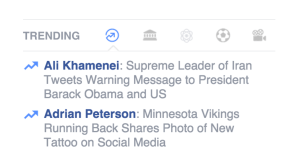
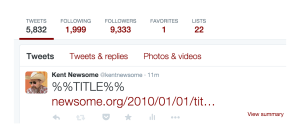
But that doesn’t mean I’m ready to get my news from social media.  The screen capture above, just taken from my Facebook page, explains why, perfectly.

The fact that some football player’s new tattoo is in a list (of 2 items) with the increasing tension in the Middle East tells me that what I thought was only the funniest movie ever made may also have been an accurate prediction of things to come.

If you want to know where I do get my news, there are three primary sources:

1. Rancho DeNada Times, the real time news aggregation page I created years ago.  I can quickly scan the headlines and see if there is anything I want to know about.

2. My RSS feeds, via Feedly.  I subscribe to Google News, The Atlantic, and NPR.

3.  NPR audio, via XM radio if I’m driving or via my Amazon Echo if I’m at home.

If there’s something major happening, I’ll tune into CNN via the internet or on my TV, but that’s a rare occasion.

American culture is celebrity-obsessed, serially focused on the media created drama-of-the week, and attention deficient.  As such, it’s important to decide where you get your news from.  Otherwise, your experience may start to look like this:

Apple Music Is Missing Some Notes

brokenrecords

“Apple Music is just too much of a hassle to be bothered with. Nobody I’ve spoken at Apple or outside the company has any idea how to fix it, so the chances of a positive outcome seem slim to none.”

via Apple Music is a nightmare and I’m done with it.

Here’s my conclusion.  Apple Music is geared towards young people who grew up in an era when few of their friends bought, listened to or cared about the entire album experience.  They just want to hear music they like, and maybe save (e,g,. buy, add or steal) a song or two here and there.

That may work out OK for lots of people, but it’s not going to work for people like me who have spent decades compiling, organizing and curating a vast music library.  I find the Apple Music experience to be a jumbled mess (compare just about any screen in Apple Music to the comparable one in Spotify; I gave up on Apple Music when I realized it was going to take more time figuring it out, slogging through its interface and getting things organized the way I want than I would spend enjoying the results).  I’m not interested in “personally curated playlists,” because no persons are curating playlists of the sort of music I like (and, as I noted the other day, no personally curated playlist will ever top Pandora when it comes to finding new music).  Neither am I naïve enough to think the marketing scheme feathered up to look like a way to “connect” with artists is anything more than a new age advertising platform.  America is celebrity-obsessed, so I understand the logic behind it.

But like the rest of Apple Music, it’s not for me.

GoodSongs: The Pollies

pollies

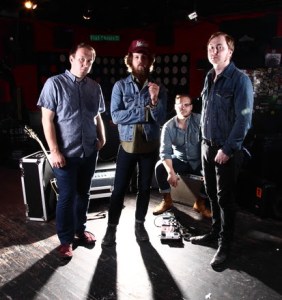
The Pollies, a quintet from Florence, Alabama, is preparing to release its new record, Not Here, on September 25, 2015 via Single Lock Records/Thirty Tigers.  Recorded at Dial Back Sound in Water Valley, Mississippi, and produced by Ben Tanner (of Alabama Shakes) and The Pollies’ lead singer and songwriter, Jay Burgess, the record is the band’s first for Single Lock/Thirty Tigers and the follow-up to their 2012 release, Where The Lies Begin.

This is a mighty fine, genre-defying, progressive southern, grab bag of ear candy.  The first song, Jackson, is an early clue that you’re into something good.  As a bearded, southern, country-raised social liberal, it makes my heart sing when other southern musicians take up the progressive flag.  “I’ve always been into revolutions—more specifically thinking about what things would be like if they hadn’t happened,” Burgess says.  “Obviously, a major movement in this country’s history was the Civil Rights movement.  I think about how long that effort took and how great the risk was, and it’s amazing to me.”  Jimmie Lee Jackson, a church deacon, was beaten and shot to death by Alabama State troopers in 1965 during a peaceful voting rights march. His death was one of the inspirations for the Selma to Montgomery marches.  It’s a great sounding song- one of my favorites of 2015, that tells a meaningful story (as an aside, I can’t wait for some southern bands to produce some great songs celebrating the marriage equality victory we joyfully witnessed this year, a movement that traces it lineage back to the Civil Rights movement).

Lost, the second song on the record, has a wonderful 70s-ish, alt. country vibe with some great harmonies.  I really dig this song.

The arrangements on this record stand-out, on almost every song.  She has a lot going on behind some wistful vocals.  A big shout out to whoever played the piano on this record.  Very nicely done (as another aside, best piano playing on any record ever?  Chuck Leavell on Brother and Sisters).

There’s a lot of range here as well  You Are alternates between a garage rock sound and a Cure vibe, and it works.  Losers is a rocker that would have fit right in on a dBs record.  Lonely Betty sounds like good Ryan Adams.

Like most good records, it changes as you listen to it.  Initially, I didn’t think much of Paperback Books, but then later, as the record was playing while I did other stuff, I though “damn, that’s a great song.”  Now it’s one of my favorites.

This is predominantly an alt. country record, but it has strong elements of folk rock, alternative rock, and the best parts of modern rock.  It’s easy to classify on first listen.  But the details blur the genre in a very interesting way.

Whatever you want to call it, this is an excellent record.  I put most of the songs in my primary playlist.  I suspect you will too.  Buy this record when it comes out.

Radio Test: Spotify vs Apple Music

oldradio

For the past few days, I’ve been experimenting with Apple Music.  While I am naturally skeptical of anything that involves iTunes, Apple has already proven, with the sale of music downloads, that it can revolutionize an industry.  Can it do for streaming and radio what it did for music sales?  That’s hard to say, largely because there are already a lot of streaming and radio options out there, many of which provide elegant solutions, and all of which have a head start on Apple in the streaming space.

I’m putting together a podcast about my views on Apple music overall, but I thought I’d take a look at one specific part of the music experience: radio.

First, if all you want is streaming, personalized radio, stop reading right now and stick with Pandora.  Pandora is, by far, the most effective and rewarding solution for personalizing radio stations.  Anyone who tells you different is confused or lying.  I have very specific music tastes (alt. country, meaning countryish songs played by rock musicians; as distinguished from Americana, which I view largely as old cats trying to be philosophical or clever), and I know virtually nothing about the artists that play on mainstream radio in 2015.  Nevertheless, Pandora does an excellent job of understanding what I like and providing me with music I’ve never heard that suits my tastes.

But if radio is merely a part of your overall music experience, and you also want the ability to listen to records on demand and to build custom playlists, etc., many of the broader music applications provide radio as a feature.  Let’s compare Spotify, my current primary music service, and Apple Music to see how they do with creating a radio station tailored to my musical preferences.

Again, because I don’t listen to much new, mainstream music, it’s important to pick a good starting point.  Both Spotify and Apple Music let you start a radio station based on a specific song.  Because it’s one of the best songs I’ve heard recently, and because I think the title makes a good name for a radio station, I decided to start with” Blue Light” by Jimbo Mathus.  Let’s see how each service does creating a radio station from that song.

For this experiment, I’ll start a radio station with “Blue Light,” play 15 subsequent songs, thumb the good and bad songs up and down and see what happens.  In the list below, Great means I thumbed up the song, Good means I didn’t thumb it up, but like it, and Bad means it got a thumbs down.  The number is my rating from 1-5 on how well I think it fits the vibe established by the initial song and any prior thumbs up or down.

Spotify

1. The Black Lillies – The Soul of Man (Good; 4)
2. Patterson Hood – 12:01 (Good; 3)
3. Otis Gibbs – When I was Young (Great; 5)
4. Slaid Cleaves – Horseshoe Lounge (Great; 5)
5. Catherine – The Black Lillies (Good; 3)*
6. Nothing’s Gonna Change the Way You Feel – Justin Townes Earle (Great; 5)
7. Tillamook County Jail – Todd Snider (Good; 3)
8. Moving On – Lauderdale (Great; 5)
9. Come Back Little Star – Patterson Hood (Good; 4)*
10. Gulf Road – James McMurtry (Good; 4)**
11. By the Wayside – The Black Lillies (Good; 3)***
12. Where Only the Graves Are Real – Otis Gibbs (Good; 5)*
13. Smile When You Call Me That – Jakob Dylan (Bad; 2)
14. Cemetery Road – Fred Eaglesmith (Great; 5)
15. Black T Shirt – Slaid Cleaves (Good; 5)*

* I didn’t thumb this down because I didn’t want to confuse the algorithm, but I consider it a fail if a station plays too much of the same artist.
** This excellent song would warrant a thumbs up, but I’m not generally a McMurtry fan, so I didn’t thumb it up because I thought that would result in more of his songs than I prefer.
*** 3rd song out of 11 gets a thumbs down on principle.

Summary: Spotify did a decent, but not fantastic, job with a pretty obscure song as a starting point.  Clearly, it has a harder time with a more narrow genre, which is a little surprising since there are a ton of songs on Spotify that fit within my target, including those on Rancho Radio, my hand-curated playlist.

Apple Music

1. Lonely Days – Deadstring Brothers (Great; 5)#
2. I Don’t Wear No Sunglasses – Watermelon Slim (Bad; 2)
3. Knockdown South – Jimbo Mathus (Bad; 2)
4. Ballad of Henry & Jimmy – Paul Burch (Good; 4)
5. Fightin’ – Cedric Burnside & Lightnin’ Malcolm (Bad; 1)
6. Goin’ Down South – North Mississippi Allstars (Bad; 2)##
7. Asked My Captain – Jimbo Mathus (Good; 3)###
8. Only Time Will Tell – The Better Angels of Our Nature (Great; 5)
9. John Henry – Furry Lewis (Bad; 2)####
10. Loose Diamonds – Jimbo Mathus (Good; 5)#####
11. Shotgun – Ashes and Angels (Good; 4)
12. Wild Bill Jones – Luther Dickinson (Great; 5)
13. In My Time of Dying – Alvin Youngblood Hart (Bad; 2)##
14. Self – Jimbo Mathus (Good; 5) #####
15. Goin’ Down South – Jake Leg Stompers (Bad; 2)

I have to add a 16, because it’s a great cover of a great song…

16. They Don’t Know – Lydia Loveless (Great; 5)

# Great, great start.
## This is an awesome jam of a song, but nothing like Blue Light.
### I didn’t thumb this down because I didn’t want to confuse the algorithm, but I consider it a fail if a station plays too much of the same artist.
#### Very clearly, Apple Music incorrectly made this a blues station.
##### 3rd or more song out of 11 gets a thumbs down on principle.

Summary:  Apple Music also struggles mightily with an obscure starting point.  I don’t like the excessive artist repetition, or the fact that it somehow decided I was making a blues station.  On the other hand, Only Time Will Tell  by The Better Angels of Our Nature was the best new song I heard on either station.

Conclusion:  As noted above, if you want radio, use Pandora.  As a part of a larger music service, neither Spotify nor Apple Music covered itself in radio glory, but Spotify is currently the better of the two.

This Was Going to Be a Review of Blogo

The desktop blogging app for Macs.

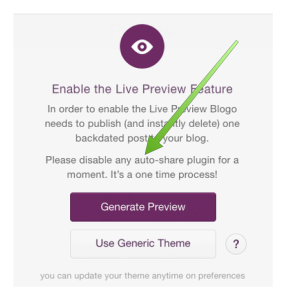
Until, after writing my test post, I tried to “preview” it, and without warning this happened.

blogonogo

And this.

blogonogo2

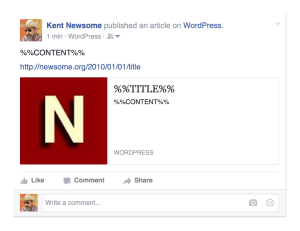
I have my WordPress.Com account connected to my Facebook and Twitter accounts (though I don’t always automatically share posts to Facebook), and when I previewed the blog post, the app apparently published the post to Facebook and Twitter.  And to my email subscribers.  Thankfully, I subscribe to my own email feed, and was alerted by an email that a new post had been (prematurely) published.

Not cool.  Not cool at all.

Interestingly, the non-post did not publish to my blog, only to the sharing locations and my email feed.

Blogo looks promising based on the screenshots and app store reviews.  But an app like this needs to be written in a way that it will not publish anything anywhere until you are completely and clearly ready to do so.

I may take another look later, but for now Blogo is a no go.

Update: Blogo tells me the app warns you to turn off auto-sharing during the setup process.  I was moving so fast, I didn’t read the entire message.  My bad.

blogonotice


The TV Walls Are Starting to Crumble

cordcutting

Hulu is a great idea, with a horrible execution (so far), because of ads.  Like many people, I spend significant amounts of money each month (Netflix, Spotify, XM radio, DVRs, etc.) in an effort to avoid ads.  Hulu has previously been unbearable because not only does it have ads, it has a lot of repetitive, brain-inflaming ads.  If I have to choose between ads and a cord, I’ll take the cord.  That Hobson’s choice has been one of the biggest issue in cord-cutting.  Now it seems like that’s about change.

Hulu is planning to offer an ad-free plan.  Apple inches closer and closer to announcing and releasing its streaming television service (the sleuth in me wonders if Hulu’s ad-free announcement is an effort by its owners- some of the very nervous content providers-  to get in front of the forthcoming Apple streaming avalanche.).  Weekly, we see new announcements from content providers making their content available via streaming, and apart from the traditional and obsolete cable bundles.

It will take some time, but the walls are crumbling and one thing technology has shown us is that once cracks start appearing in obsolete, unwanted gatekeeper monopolies, those cracks are almost impossible to repair.  The generation of consumers, like my kids, who have never felt tied to a cord will ensure victory for the cord-cutters (by way of example, my daughter loves Teen Wolf, but isn’t watching the current season because she doesn’t know or care what channel it’s on or how to record it on the DVR; “I’ll just wait ’til it’s on Amazon or Netflix.”).  The only question is how long it will take.

I still have a DirectTV package, which I would love to abandon in favor of something as close to a la carte streaming as possible.  When I can get the channels I want reliably and at a comparable cost, I’ll cut the cord, for sure.  The big, unspoken, hitch in this giddy-up is the requirement for fast, reliable broadband (a decade or so from now, all the pipes and waves currently delivering television content will be delivering data, which will vastly increase the size of the pipe, but for the time being pipe size will be an issue.).  My broadband at home is plenty fast enough to accommodate all the content my screen-addicted family wants to consume.  The farm, like most of rural America, is another story.  I am fortunate enough to have fairly reliable wireless broadband at the farm (because I am at the top of a hill with a good line of sight to the tower), but I am the exception, and the broadband I have, while perfectly adequate for web surfing and the occasional Apple TV download, is nowhere near fast and wide enough to accommodate mass streaming consumption.  I don’t know how this problem can be solved, but once cord-cutting becomes a more realistic option, at least we’ll have one less obstacle standing between us and our scissors.

Why I May Ditch My Apple Watch

incomplewatchapps

I don’t know that the Apple Watch is a flop.  I don’t know that it’s not a flop.  It’s probably somewhere in between.  I know that I’ve never noticed another one in the wild.  Maybe that’s because, like me, other early adopters prefer to use theirs inconspicuously.

But clearly, there are questions about whether the Apple Watch is ready for prime time.

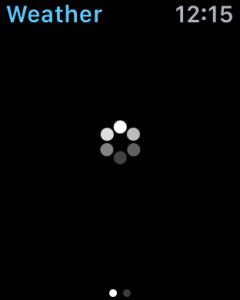
For one, the apps continue to load too slowly to be useful.

IMG_0047

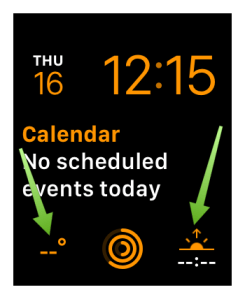
Yet I find the complications and notifications to be extremely useful.  When they work.

applewatchfail

And there’s both the rub and the reason I am considering throwing in the towel and relegating my Apple Watch to the drawer of shame, where I keep other things I bought and didn’t or couldn’t use.  There’s an Android tablet in there, and that early Samsung pre-tablet but handheld computer thing.  And my Instacube.

While I can do without the apps that never load, what I can’t do without is the information that’s supposed to appear on the watch face.  The complications.  In my case, these include the temperature and the sunrise and sunset times.  These two (of my five total) complications rarely appear on my watch.

This madness began not long after I received my watch.  A complete iPhone wipe and DFU restore solved the problem, for a little while.  Now it’s back.  Like Sharknado, but not as fun.

In fact, it sucks.  It should not be this hard.  It should just work.  But it doesn’t.  So far, the Apple Watch experience seems more like building a radio with some kit you bought from the back of a comic book than a traditional Apple experience.

I’m in wait and see mode.  Maybe an update will fix this issue, which is clearly a failure on the part of the watch and iPhone to reliably communicate with each other.  Maybe if I get to the end of my patience, I’ll make a desperate stab at the watchOS 2 beta.

Or maybe I’ll just go back to a bare wrist and a Fitbit One.