Recipe for a Killer Podcast Application

podcastingWhile doing last night’s RanchoCast, I thought of an application that would not only bring podcasting to the masses, but would also be very useful for current podcast listeners. I’m going to tell some smart guy or gal somewhere how to put themselves on the Web 2.0 map.

I have said before and I’ll say again, that as long as podcasting is technologically or psychologically tied to iPods and other portable music players, it will never reach the mainstream. Nobody I know, either socially or professionally, uses an iPod or other portable music player. Not one person. A couple of people I know have iPods, but they tell me that after the initial thrill of having one wore off, the iPods got relegated to a drawer somewhere, rarely to see the light of day.

Granted, I’m sure lots of kids and college students have iPods, and if you don’t mind ignoring millions and millions of grownups with lots of disposable cash, then so be it.

But if you want to bring podcasting to the masses, some things are going to have to change.

First, you have to understand that grownups who listen to podcasts generally do not listen on an iPod. We have made some progress integrating computer-listening features into podcasts. The Delicious playtagger supports this (as an aside, am I the only one who noticed that all of the Delicious buzz went stone silent as soon as Yahoo bought it?), as does the new play button in Feedburner feeds.

But there is another place where grownups listen to even more of their music, talk shows and audio books- in the car. Which leads me to my recipe for a killer podcast application.

Want to be famous and actually make some money too? Then create this-

An application, online or local, that allows a user to subscribe to podcasts and organize their subscription lists.

Allow them to listen to the podcasts online or to download them into an iPod.

Here comes the new and important part…

Create an easy to implement way to have selected podcasts automatically burned to a CD-R every week or so, with each podcast to be a separate track. After it is set up, the application would simply prompt the user to insert a CD-R every so often, at which time it would burn that week’s podcasts onto a CD-R that could be listened to in the car.

The application would also create a text document with the track numbers, names, dates and descriptions of the podcasts. That document could be printed and used as a listening reference. Label maker developers could write plug-ins that would allow the automatic printing of jewel case labels or, even better, templates for applications, like my Primera printer, that print on the CD-R itself.

Have the podcast name and date burned on the CD-R as CD Text.

Most car stereos can play MP3’s now, so that would be the default setting- for more capacity. But there would also be an option to burn the CD-R in CDA format so older car stereos could also play it. CD-R’s are almost free these days, so cost is not a factor.

Plus, the CD-R’s would allow the user to create an archive of podcasts and to share good ones with friends.

People would happily pay for this product. And if you wanted to be true to the Web 2.0 mantra and get some of the allegedly infinite ad revenue, you could place ads on the application pages, if it’s an online application, or on the CD-R between the podcasts themselves. Perhaps there would be a cheaper version of the application that has brief ads between the podcasts and a full-priced version that doesn’t.

I realize that you can burn podcasts to CD-R’s now, but it’s simply more trouble than most people are willing to go to for a concept they don’t fully understand or embrace. To get to where the population and the dollars are, you have to make it easy for people to say yes.

Let me say it again, the customers we are trying to sell to are not geeks like us. They want something that is (a) easy, and (b) cool and useful, but in that order. Too many Web 2.0 developers get it backwards. You have to make it easy to say yes, because it will always be easy to say no.

Take podcasting into the cars and trucks of the masses and you’ll see podcasting really take off.

Otherwise it’s just too easy to say no.

Reaping What You Sow: Generosity in the Blogosphere

Steve Rubel has an interesting post about generosity in the blogosphere. It seems that Steve had lunch recently with Keith Ferrazzi, author of the bestselling book Never Eat Alone. Keith made the comment that to build a network (the business and social kind), you have to be generous. That got Steve thinking about the blogosphere and the importance of generosity there.

Steve concluded, and I agree, that the generous bloggers are the most influential. Steve identifies Robert Scoble and Mark Cuban as generous bloggers- blogger who create great content and generously link to others. I’d add Steve (for sure- remember the day he took off to visit with podcasters on a first come, first served basis), Doc Searls and Guy Kawasaki to that list.

All of those guys are flat earth guys who welcome new voices and want to use the blogosphere- and their position in it- for the common good. I won’t get on my soapbox again, other than to say that blogs are nothing more than extensions of our pens and our words. Anyone who isn’t kind and generous on the internet probably isn’t all that kind and generous in real life.

Blogs are like cars- they create a false sense of invincability that releases your inner asshole.

Yet the same forces that make people good networkers in life make them good and influential bloggers in the blogosphere. The reasons why Robert, Steve, Doc and Guy have so many friends in the blogosphere are the same reasons why Keith Ferrazzi became the youngest partner in Deloitte Consulting’s history.

Contrast that to the ones Steve describes thustly:

“Then there are others – and I won’t name them – who are not generous. In fact, even worse, they are grievous. They syndicate snippets rather than publish full text RSS feeds. They don’t credit other bloggers who they clearly steal content from. They are filled with just nasty criticism, rather than a balance of ideas and constructive advice. They focus solely on themselves and not an iota on others.”

I don’t know who Steve is referring to, and it doesn’t matter. But when I think of people who are not generous in the blogosphere, I think of guys like Steve Gillmor who spend much of their time trying to separate themselves from other bloggers- via artificial paradigm shifts and country-club tactics. The greatest irony of 2006 so far was when Steve referred to those who dare to disagree with him as trolls. Most of us think of people who disagree with us as great candidates for a conversation. But that’s just it- inward looking people don’t want conversation.

And then there are the pseudo-intellectuals like Andrew Keen (who is the blogosphere’s version of the party guest who can’t stop talking about how smart he is long enough to notice the PhD’s shaking their heads as the walk away). Or the Nick Carr types whose many thoughtful posts get lost in the flood of Mary, Mary posts made in the name of fame or traffic.

All of those guys are well known. But so is the blustery guy at the party. You know them, but you are not influenced by them.

You are influenced by the people who realize that being generous is a win win proposition.

It’s good for us, and, as it turns out, it’s good for them too.

Something to think about.

Another Mom Takes It to the RIAA

riaaAn Oklahoma mom has successfully defended a lawsuit by the RIAA.

The better news is that the mom might be able to collect her attorneys’ fees from them.

Maybe the RIAA should go back to suing dead grannies. At least they don’t fight back.

The way to stop the RIAA’s unchecked madness is to keep defending these suits aggressively and make it difficult for them to intimidate their customers.

Tags:

Joe Jobbed

Last night through this morning, my server got joe jobbed. I got bombarded with thousands and thousands of spam bounces. Last night I was getting about 3 bounces a second.

The message was a bunch of randomly generated prose, sometimes with a random photo that appreared to be an ad, but wasn’t a real ad.

Fortunately, my server host was able to get things fixed and more or less back to normal by this afternoon.

This is yet another example of the chat room, message board, etc. mentality that I have written about before, where a certain percentage of the population is compelled to try to screw things up for the rest of us.

Anyway, if you got spam from me last night or today, it was not from me. Check the headers.

Here’s the story of the first joe job.

Tags:

AOL & the Myth of Infinite Advertising

toomanyads

I mentioned the other day that I thought AOL’s decision to drop its subscription fees in exchange for the faint hope of more and more advertising dollars was a bad idea- and wondered why so many people have bought into the myth of infinite advertising.

Henry Blodget explains exactly why it is an act of desperation that is doomed to fail.

If you want a primer on the myth of infinite advertising, read Henry’s post.

Will Zune Stumble and Fall Like Origami?

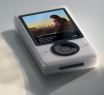
zuneWord about Microsoft’s upcoming media player continues to crawl around the blogosphere, with Engadget reporting today that the device, currently dubbed Zune, will support wireless song transfers. I’m sure that will either require a potload of DRM or invoke the wrath of the priority-challenged RIAA.

Anyway, Gizmodo reports that the Zune device is the flagship product of a new line of portable devices. Everybody seems to have a plan to dethrone the iPod. Here is Microsoft’s:

“Microsoft’s concentrating on features the iPod doesn’t have, instead of trying to beat Apple at their own game. The tipmeister reiterates that ad-hoc networking feature will be there, as well as a possible buffered internet radio streaming feature. If you’re within range of a WiFi signal and you’re listening to a station, the device will snatch as much of the feed as it can so when you wander out of WiFi signal, it’ll keep playing the stream as if you were in range. This might not make its way into the final product, so don’t get your hopes up too high.”

I’m guessing once the RIAA gets wind of this most excellent and logical feature, it will let slip the lawyers of war and yet another great idea will be canned in the name of preserving a dying business model.

What I am more interested in, however, is Microsoft’s marketing, or lack thereof, with respect to new products. Microsoft doesn’t seem to know how to manage a proper build up to release- particularly with hardware.

Recall the great buzz that was generated prior to the release of Origami, now renamed a buzz-killing UMPC. I wondered at the time whether Microsoft would walk the walk or toss the product out there and let it twist in the wind.

Well, I have read many reviews of UMPCs, and most of them have been negative. My blogging pal James Kendrick believes the bad reviews are a result of a misunderstanding of the UMPC’s purpose and features. While I have never held a UMPC, I tend to agree with James (I would love to have a UMPC to read news, etc. around the house and on trips). But in the face of a lot of negative press, Microsoft seems to have moved on to phones and iPod killers, etc.

Robert Scoble used to try as hard as he could to manage the build-up to release of new products. But Robert has left Microsoft and there’s no one left with the mindshare to try to point bloggers, and the three non-bloggers who read blogs, in the right direction. Sometimes, how people feel about something depends more on their expectations than the actual thing itself. Einstein, relativity and all that.

Get enough press, real and citizen, to understand a product and write about it from a place of understanding and you’ll go a long way towards ensuring a successful release. Let people speculate wildly, toss something out and forget about it and you’ve ensured the opposite.

Someone needs to step up for Microsoft and help inform, direct and manage expectations.

Otherwise, I predict another stumble out of the gate for Zune.

Seth Finkelstein Says No Thanks

Seth Finkelstein says he does not want a Wikipedia entry.

Which is probably a good indicator that he is entitled to one. In this day and age when so many people are trying everything to get a Wikipedia entry- from ghost writing for a friend to actually writing their own entry, Seth says no thanks.

I missed all of the debate about Seth’s entry- which is a good thing for him because I’m afraid I would have been on the other side of the argument. But then, as I have made clear in more than a few recent post, I am a Wikipedia believer.

I have also read Seth’s blog since the first day I entered the blogosphere and he is a frequent Commenter here. I have always been amazed, and a little envious, of his ability to stay focused and on point. His blog posts and Comments are among my favorite reading.

More importantly, he is one of the most effective watchdogs and critics of censorware. As pointed out in the very Wikipedia entry he doesn’t want, he received the EFF Pioneer Award for his contributions “to decrypt and expose to public scrutiny the secret contents of the most popular censorware blacklists“. As Newsome.Org is blocked by some censorware applications, I have personal experience with being censored.

If Seth wants out, at the end of the day I would support him as a friend. But when it comes to notable and worthy of inclusion, he is clearly on the in side and not the out side.