Blogging from a (Mini) Mac

Well, I’m not rich or convinced enough to go all-in with something super-expensive, but I was curious enough to dip my toes in the Mac-water with a Mac Mini. I bought one a couple of weeks ago, hooked it up to one of the two monitors in my study and have been using it, along with my PC, ever since. At first, I was under-whelmed, but the more I use it, the more I like it. I already prefer it for converting my home movies for my media server. Getting it to play well with my reasonably extensive home network was a bit of a challenge, but except for a couple of still-invisible devices, I managed to get there.

The early results are that I get the Mac thing, at least to some extent.

It’s hard to tell if I will gravitate more to the right side of my setup- where the Mac resides, but at a minimum I’ll keep the Mac around for the things it clearly does better than a PC. If I win the lottery, I’ll buy a tricked out Mac Pro and run both OS’s via Parallels or some other software.

I can tell you absolutely that there is no Mac-equivalent to Windows Live Writer for writing and managing blog posts. I’m using Ecto at the moment, and, with apologies to the Mac nation, it’s not even in the ballpark. It feels like going back to Internet Explorer after years of Firefox plug-in heaven.

UPDATE: I really don’t like Ecto. This post originally posted to an old, abandoned blog I still haven’t deleted. Granted, I’m sure I could figure out how to post it to this blog, but how wasn’t immediately evident, as it is in Live Writer. I reposted it via the Blogger dashboard.

I also hoped that iTunes would be faster on a Mac. It’s not- the Windows and Mac experience seem identical. It still amazes me how inflexible, slow and generally crappy the iTunes application is, given how elegant the Apple hardware is.

But there’s still something that feels different and oddly better about using the Mac. Plus, Earl and my other Mac buddies will be proud of me for taking the first step.

The Golden Era of Online Music

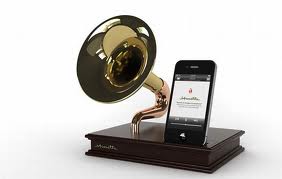
gramophoneAs I continue my love affair with my iPhone and, more recently, my AppleTV and as I partially capitulate to the slow, inflexible and generally crappy iTunes as a required gateway to my beloved devices, I am reminded of the golden era of online music.  I feel sorry for those who were too young or too old (and technophobic) to have experienced that fun and enlightening time.


Let’s reminisce a moment about the good old days, from around 1997 through the early part of this century.  Back when MP3.Com was a legitimate music hub, with hundreds of new, unsigned and independent musicians and bands bringing their music directly to the eager public for the first time.  If I ranked the songs on my music server, a surprisingly high number of my favorite songs would be songs I found on MP3.Com.  Songs like Dear Elaine, by a band called Buckeye.  San Antone by Brementown.  Driver 75 by Shy Dragger.  If You See Mary, by Juarez.  Crooked Country’s Whiskey Burns.  Piece of Heaven by Chochamo.  Jerkwater USA from The Calamities.  There were hundreds more.  I remember spending hours upon hours surfing around MP3.Com in some musically induced euphoria from all the great stuff I found and legally downloaded there.  I even formed a cyber-band called Rancho DeNada and put some of our songs up there.  The web was still relatively new.  Getting great songs without having to go to the store and buy a CD was new.  Life was mystical, musical and fun.  No one had ever heard of the RIAA.

These years were also, perhaps not coincidently, the height of the alternative country movement.  Every time I logged into my computer there was another new band filling my mind and ears with rock and roll songs played twang-style with country instruments.  Steel guitar and Caitlin Cary‘s violin became the soundtrack of happy musical stories taking place all over the world.

eMusic was another place to mine for new music.  It took a little work to separate the wheat from the chaff, but you could find good stuff from new and emerging artists if you looked around.  eMusic still exists and is the only one of these services that looks anything like it did during the golden era.  But eMusic lost its mojo somewhere along the way.  Like AOL, it’s still around, but it’s no longer the hip place to be.

Then came Napster.  I didn’t really understand the concept when I first heard about this so called “peer to peer” song sharing application.

napsterscreen

It wasn’t until late 2000 that I finally relented and gave it a try.  I didn’t use Napster to find new music.  I used it to digitize some of my thousands of LPs and CDs (all of which now sit in storage thanks to my music server), and to look for old, obscure and out of print songs.  I probably found 90% of the old, obscure stuff I looked for.  One song, Fred Knoblock‘s Why Not Me, proved so elusive, I had to buy the LP on eBay and convert it to MP3.  It was also fun just to look at people’s libraries, particularly people you knew shared your musical tastes.  I bought a ton of CDs from Amazon just because I saw them listed in libraries I knew to be close to my tastes.  It was a stone age Pandora of sorts.

It was also sharing with a purpose.  Not the synthetic sharing that seems to drive many of today’s applications.  I once met a fellow musician who lived half way across the country and within the first half hour of chatting we realized that we had shared libraries on Napster for months.

But like just about everything that seems too good to be true, it didn’t last.  Metallica, Dr. Dre and the cat-chasing, empty bag-holding record labels ganged up on Napster like a horde of peasants outside Frankenstein’s castle and destroyed the technology they feared.  MP3.Com, in a move that foretold the future, started letting users register (not upload) their CDs and access them anywhere, leading the increasingly panicked horde to its castle door.  Before long, the record labels were suing grandmothers for allegedly sharing music they’d never heard of, while the guerilla sharers moved from one lesser substitute to another.

The golden age was over.  The record labels embarked on a schizophrenic quest to either kill or embrace online music.  They tried DRM.  They tried futilely to plug as many torrent holes as possible.  Ultimately, they began to tire of tilting at the infinitely reproducing windmills and let Amazon and now (sort of) Apple sell songs the right way, accepting the inevitable fact that most music buyers aren’t pirates and those that are will always find loot to pillage.

At the end of the day, Amazon, CD Baby and, maybe, iTunes will become acceptable substitutes for the direct distribution of music.  But the experience is not as fun as it used to be and, sadly, there is not as much unsigned and independent music to be discovered there.  I like Amazon MP3 downloads.  I loved those MP3.Com downloads.

I suppose MySpace is the new direct distribution point for a lot of bands (here’s Buckeye’s page), but MySpace has a lot of extraneous content cluttering up the experience.  MP3.Com and the others were all about the music.

So while the hardware has gotten better and better, I’m not sure the applications have.  I miss the good ol’ days.

Zoho’s Lucky Day: Google Closes Its Notebook

I have been a regular user of Google Notebook for a long time.  It’s not as pretty or full-featured as Zoho Notebook, but I don’t need a lot of those extra features.  I just need a simple, uncluttered and easy to use place to keep and access notes and other data.  Google Notebook has filled that role well for a long time.  Surprisingly, Google announced today that it is ceasing development on Google Notebook, apparently along with some other apps I have never used.  So from a note taking perspective, I am homeless.

googlenotebookscreen

I don’t understand this move.  Google Notebook was a useful and reasonably well designed product.  I have to believe a lot of people used it.  Why couldn’t Google just add a right-side column with AdSense ads to fund development?  I also wonder if this is indicative of a move away from Google’s chase for desktop application dominance.  Google Docs is still under active development, but any office suite (or online substitute) needs a note taking application- at least as an add-on.

Technically, current Google Notebook users will continue to have access to their data and, presumably, the ability to create new notebooks.  But the Google Notebook extension will no longer be available, nor will the hope for new features.  In other words, Google has opened the door, but out of courtesy will wait patiently for everyone the leave the party.

So where does that leave us note taking hobos?  There’s always Evernote, which would be the easy choice if I made all of my notes on the iPhone.  Evernote’s iPhone application is elegant, but its web interface borders on horrible.  I suppose I’ll move my notes to Zoho Notebook, at least for now.  Zoho Notebook is a fine application, but, again, I think it has more horsepower (and clutter) than I need (or want).  Plus, I don’t find an iPhone app for Zoho Notebook.

I need a note taking home, with a simple, but powerful web interface and an elegant iPhone application.

Can anybody spare a link?

Technorati Tags: , ,

Hear a Great Song, Save an Animal

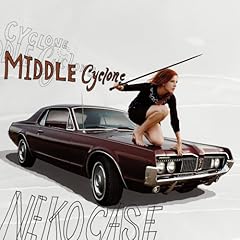
Ever since I heard Neko Case sing Loretta Lynn‘s phenomenal song, Rated X, she has been one of my favorite musicians.  Well, as it turns out, Neko has a new record, Middle Cyclone, coming out on March 3.  An album I might add that has one of the greatest covers since Linda Ronstadt’s Hasten Down the Wind.

To celebrate the new record, Neko’s record label, Anti Records, has posted an MP3 of one of the tracks, the excellent People Got a Lotta Nerve.

Even better, Neko and Anti will donate $5.00 to Best Friends Animal Society, an organization that rescues animals, for each blogger who reposts the song.  Give it a listen.  Post it on your blog.  And, if you like good music, buy the record when it comes out.

Neko Case rocks, in more ways than one.

Drawing the Line: No Text Spam

notextspamTechdirt has a story on the ATT American Idol text spam that I and many others received today.  ATT responds by saying that it wasn’t spam because it was sent to people who previously voted in American Idol contests and other so called “heavy texters.”  I’ve heard some mind boggling arguments in my day, but that may take the cake.

First of all, it’s clearly spam by any rational definition of spam.  Additionally, ATT must have a pretty low threshold for what constitutes a “heavy texter.”  I have never watched one second of American Idol, much less voted for a contestant.  My kids text me some on their iPod Touches- maybe three or four times a week.  If that makes me a heavy texter, then just about everybody is one.

Of even greater concern is the potential for companies, legitimate and not, to start tossing unwanted crap in our face via text messages.  Spam has completely killed faxing- I unplugged my fax machine long ago because of all the bullshit fax spam from travel agencies and health insurance brokers.  It takes a ton of work and technology to stop email spam at the inbox gate- I get about 1000 spams a day at home, compared to maybe 20-30 legitimate emails.

I do not want text messaging to turn into another battleground for my privacy and peace of mind.

If companies start text-spamming me, they are going to lose my business.  I think we should start a no text-spam movement.  Maybe by collective action, we can stop this menace in its tracks.

Technorati Tags: ,

Mobile Blogging

ibloggerI’ve been looking at the various blogging apps for the iPhone. I wish there was a Live Writer iPhone app, but in its absence, I settled on iBlogger.

iBlogger seems to work reasonably well, though I don’t understand why links end up a couple of lines below where I try to add them. The link building form is a nice touch, but blogging from an iPhone really drives home the need for cut and paste.

The biggest drawback is that you cannot add photos if you use Blogger as your publishing platform, as I do. This feature is spposedly forthcoming, and it better get here soon. Photos are a must-have component in any iPhone app.

The jury and the camera are still out, but I think iBlogger has a lot of potential.

Evening Reading: 1/5/09

So it’s out with 2008, in with 2009 and back to the big, scary rat race.

oldoffice

Noupe has an excellent list of free Photoshop tutorials.  Personally, I think you need a masters degree in Photoshop to use it to its fullest.  So I tend to look for plug-ins that will do the work for me.  I know that I could make some amazing stuff if I really knew Photoshop.  The problem is that I already have a job.

Mike Fruchter has an excellent list of steps to get started in social media.  While I continue to believe the return on social investment for blogging is very low compared to the effort it takes, Mike’s suggestions are uniformly good.  I would add that, unless you have the time and staying power to keep at it until you will your way up blogger’s hill, your blog should be focused on getting ideas out of you, as opposed to into others.  I think the slow progress towards readership and interactivity is why so many bloggers give up or move to Twitter, where the work is lighter and the audience (or at least the people who theoretically see your posts) is larger.

Gear Diary, in reviewing the Griffin Road Trip, mentions the biggest pain in the ass about iPhone accessories- the fact that any case makes the device too big to fit on the adapter.  This drives me crazy.  And no, I don’t want to try the slider case, because they are also a pain in the ass and I don’t believe that the little strip of rubber inside the case will protect the phone any better than, say, nothing.  The Marware Sport Grip is, so far, the only case I like.  Speaking of the Griffin Road Trip, not only will my encased iPhone not fit the adapter, but the neck on that thing is about half (really, less than half) as long as it should be.  I have to lay down on my seat to get my iPhone.  Otherwise, though, it’s a neat device.

As noted before, we use and love Beejive IM (iTunes link).  The forthcoming update looks awesome.  If you text at all, you should use Beejive.  It’s a bargain, even at $16.

It’s a little before my time, but if you like music from the late 50’s, here’s a jukebox for ya.  Now someone go do one for the mid-seventies.

I haven’t tried it yet, but the greatest board game of all time is now, sort of, on the iPhone.

Consumerist on DirecTV installation problems.  We’ve had one box (out of four) that has been searching for almost a year for a signal for Satellite 2.  This means no live TV on several channels, including the networks.  Oddly enough, you can often successfully record shows on those channels- you just can’t watch them live.  Our recent experience with DirecTV support has been, to say the least, unsatisfactory.

Why do I keep going to the Apple web store and looking at Mac Pros?  I love my iPhone and AppleTV.  Surely I’m not about to go all in.  Am I?

Eye-Fi, which I and my kids use regularly with our digital cameras, is coming to the iPhone.  If you have a friend or parent who is not interested in learning the technology, but wants to use a digital camera, Eye-Fi may be just the ticket.

Technorati Tags:

Are Computers Becoming Irrelevant?

I have loved computers since that Christmas break long, long ago when my brother in law and I stayed up all night playing Odyssey: The Compleat Apventure on his Apple II.  Later, I spent countless hours playing Starflight and writing shareware games on an IBM clone.  Even later, I wrote and recorded hundreds of songs and took my home office paperless, all on my trusty computer.  In order to learn as much as possible about computers, I started building my own.  It makes me a little sad to realize that my beloved is quickly becoming irrelevant.

But the fact remains they are, because we just don’t need them anymore.  A confederacy of other devices have stolen all the fun and turned the once proud computer into an over-priced media server or typewriter.  The addition of an HP MediaSmart Server to my home network removes even the data storage role from my desktop computer’s job description.

So how did it happen?

Let’s start with games.  I have fond memories of late nights playing all sorts of computer games, from the excellent until abandoned Front Page Sports games to most of the Civilizations.  Then came Nintendo, the PSP, the X-Box and, finally, the Wii.  I held out during the PSP and X-Box era, but one game of Mario Kart on my kids’ Wii was all it took to convince me that the computer is an ineffective and obsolete gaming platform.  From this point on, it’s all about Mississippi Queen on Guitar Hero.

For email the herd has migrated to the iPhone and other lesser, but effective, devices.  We also use text messaging a lot more that we used to.  My family uses Beejive IM on our iPhones and iPod Touches, both to allow the kids to text from their iPods and to avoid the cost of traditional text messaging.  For music, we have our iPhones and iPods, AppleTV and, most recently, the ability to hear and display Pandora through our home theater system, via Samsung’s excellent BD-P2550 blu-ray player.  The Pandora application on this box is easy and beautiful.  It shows the last few songs played, with album art, and lets you easily switch between stations.  You can also watch your Netflix instant queue on this box.  It’s a brilliant strategy for the DVD makers to go on the offensive in the turf war.  PC makers have been trying, unsuccessfully, to displace DVD players for years.

If you just want to rent movies online or easily access your home movies, there is no better solution that AppleTV and iTunes.  Again, except for a server tucked in a closet somewhere, no computer needed.

All of this leaves the computer in the unenviable role of typewriter.  Sure, we need typewriters.  We use them every day.  But we don’t love them.  Or think of them as fun.  And, sadly for the PC makers, we don’t want to pay much for them.  So all these new devices steal the fun and the dollars, while the once mighty computer becomes a commodity, like paper, pens and other office supplies

Technorati Tags:

The Rules of 42

Republished, upon reader request, from another, older Newsome.Org page, to increase readability and consolidate content.  As an interesting (at least to me) aside- these rules were directly responsible for my receipt of a job offer to serve as a domino teacher on a cruise ship.  I didn’t take it, but it was cool to get it.

Note also that I wrote the original post below over 12 years ago, and some of the people mentioned have grown up and become semi-responsible adults.  I hope one day to join them.

*****************

Forty-two is a trick taking game played with dominoes. It is especially popular in Texas, USA. There is a place in Texas called Rancho DeNada where there is almost always a forty-two game in progress. The following description is loosely based on information from David Dailey, Kit McKormick, John Rhodes, Adam Hauerwas and Kate Gibson. Also, see John McLeod’s excellent Card Games web page for the original version of these rules and more great information.

There are basically two forms of 42: it can be played for points or for marks. The version for marks will be described first. The version for points is similar except in the bidding and scoring – the differences are described later.

Players and equipment

There are four players in fixed parnerships – players sit opposite their partner. Gibmonster was a good partner many years ago. Now he is afraid to bid. Kate gives him a lot of shit when he bids. Kate also drinks daiquiris mixed with bourbon. Kate is a cool chick. Bub is a good partner for about three hands. After three hands, her alcohol level is up, her attention span is down, and it’s all downhill from there.

A double-six set of dominoes is used – that is 28 dominoes, one for each possible pair of numbers from 0 (blank) to 6. A domino with the same numer at each end is called a double.

Rank and suit of dominoes

There are 7 suits: blanks, ones, twos, threes, fours, fives and sixes. The highest domino of each suit is the double.

Normally one suit is trumps. Every domino containing that number is exclusively a trump, and apart from the double, they rank in order of the other number on the domino. For example if threes are trumps, the trump suit from high to low is:
3-3 6-3 5-3 4-3 3-2 3-1 3-0

Update:  sorry, but the images were lost somewhere along the way.  Please imagine there are still beautiful images where the broken ones appear.

The remaining dominoes, apart from the doubles, belong to the two suits corresponding to the two numbers on them. Within each suit they rank in order of the other number on the domino. So if threes are trump, the members of the fives suit from highest to lowest are:
5-5 6-5 5-4 5-2 5-1 5-0

Values of Dominoes

Each domino with 10 pips – 6-4 5-5– is worth 10 points to the side that wins it in their tricks.

Each domino with 5 pips – 5-0 4-1 3-2– is worth 5 points to the side that wins it in their tricks.

In addition each of the seven tricks is worth one point to the side that wins it.

There are therefore 42 points available in each hand. One time Johnny Walker bid 43 but he was drunk.

The Deal

The first dealer is selected at random. Thereafter the turn to deal passes clockwise. The dealer “shuffles” the dominoes by mixing them thouroughly face down on the table. Then each player in clockwise order, starting with the player to dealer’s left takes seven dominoes and sets them on edge so that the owner can see their values, but the other players cannot see them. The dealer is supposed to take dominoes last, but Kate never remembers this rule. One night Kate got hammered while playing dominoes at the Ranch and tried for about an hour to call random people on the phone. She was unsuccessful in both dominoes and dialing. Later she and Gibmonster did some really crazy stuff while we all listened. Where are those drums when I need them….

The Bidding

Each player has just one chance to bid or pass, starting with the player to dealer’s left and going clockwise round the table. Each bid must be higher than the previous one. If Amy bids, you can assume she has an ass kicking hand. Amy does not bid much. One night in San Antonio Amy got shit faced and abused Bo (a serious turn of events). Bo said it was “huge bullshit.”

The lowest possible bid is 30, meaning that (a) that’s usually what Gibmonster bids, and (b) the bidder’s team undertakes to win at least 30 points in tricks. Then come 31, 32, 33, etc. up to 41, then 1 mark (which is equivalent to 42), 2 marks, 3 marks etc.

Bids of 1 mark and above require the bidder’s side to win all the tricks (i.e. all 42 points) or take on one of the special contracts (Nello, Plunge, Sevens) described below.

The highest opening bid allowed is 2 marks (unless the declarer intends to play a Plunge). Once someone has bid 2 marks a subsequent player can bid 3 marks, and so on. One time Cody bid two marks. Kent, the next bidder, bid three marks and got his bid. Gibmonster, who didn’t bid, got stung by a scorpion. It was a pretty exciting hand. To play Plunge it is necessary to bid 4 marks, or 5 if the bidding had already reached 4.

If all four players pass, the dominoes are thrown in and the next player deals. If Gibmonster was cloned, this would happen a lot.

The Play

The highest bidder (the declarer) names trumps, or may name one of the special contracts if the bid is 1 mark or more.

The declarer leads to the first trick. Players must follow suit if possible. A player unable to follow suit may play any domino. The trick is won by the highest trump in it, or if it contains no trump, by the highest domino of the suit led. The winner of a trick leads to the next. On those rare occasions when Gibmonster has the bid, he usually calls twos or threes as trump and leads with a non-double, non-trump. It’s either really smart or really not smart, we’re not sure which. Such a move is universally called a “Gibby opening.”

When a non-trump domino is led, it counts as a member of the higher numbered suit, but for following suit it counts as belonging to both suits. For example if threes are trump and the 6-5 is led, it counts as a 6 rather than a 5. But when fol
lo
wing suit the 6-5 can be used to follow to a lead of either sixes or fives. If threes are trumps then the 5-3 when led counts as a 3 not a 5, because trumps are trumps and nothing else.

Notice for example that if blanks are not trump, and you hold the double blank, although it is the highest card of its suit the only way it can win a trick is if you lead it. Any other blank which is led counts as the lowest domino of some other suit. Cody used to like to make clever points like this before he married Chilton. Now she just tells him to shut the hell up. Usually he does.

Tricks are kept face up to the right of one member of each team, in the order that they were played, and can be viewed by all the players. For example after two tricks one side’s captures might look like this:
6-6 6-4 6-1 4-3this trick is worth 11 points, and was won by the 6-6 (sixes are trump)

5-5 5-0 6-2 5-3this trick is worth 16 points and was won by the 6-2, a trump.

When playing a contract to win all the tricks, declarer can elect to stack the tricks. In this case the third trick is stored on top of the first, the fourth on top of the second, and so on, leaving only two previous tricks visible at one time. This saves space and reduces the players’ opportunity to chack back to see what has already been played.

Special Contracts

Nello

A declarer who has bid 1 mark (42) or higher can announce Nello, which is a contract to lose every trick. Declarer’s partner turns all her dominoes face down and takes no part in the play. The declarer leads to the first trick, and there are no trumps. Doubles form a suit of their own ranking from 6-6 (highest) to 0-0 (lowest). Rules of play are as usual, and a lead of a double calls for doubles. If a non-double is led the larger number determines the suit to be followed, and a double cannot be played to the trick unless no dominoes of the suit led are held.

Plunge

The declarer must hold at least 4 doubles to announce Plunge. Declarer’s partner chooses trump (without consulting). Delarer leads, and declarer’s team must take all seven tricks to win.

To play a Plunge, declarer must have bid at least 4 marks. In order to play a plunge, declarer is allowed to open the bidding with 4 marks, or jump to 4 marks over any lower bid, or bid 5 marks over a previous bid of 4. This is the only case where a jump bid or opening bid higher than 2 marks is allowed. A subsequent player could overcall 4 marks with 5 marks, and play a normal contract to win all the tricks, or Nello. 5 marks can be overcalled by 6 marks, and so on.

At some venues, including Rancho DeNada, a Plunge bid is not allowed. At Rancho DeNada, that’s because if someone said “Plunge,” Gibmonster would dive into the cement pond with his boots on and drown.

The Scoring

The scoring is in marks. For any bid from 30 to 42 (1 mark), the declarer’s team score 1 mark if they win. For higher bids they score the number of marks bid. If the declarer is unsuccessful, the contract is set, and the declarer’s opponents score as many marks as the declarer’s team would have scored. The game ends when one team reaches a total of seven marks or more.

The marks are drawn to form the word “ALL” – the first mark is drawn as the left side of the “A”, the second is the right side, the third the crossbar, the fourth the vertical of the first “L”, etc. The winning team is thus the first to complete the word “ALL”. You can also spell “SEX,” if you are into that sort of thing.

When playing for money, the winners are paid an agreed amount for each mark the losers were short of 7, plus an amount for each time the losers were set. If the winners end up with more than 7 marks any excess over 7 is ignored. Also it does not matter how many times the winners were set – they lose nothing for this. For example if A & C agree to play B & D for $0.25 per mark and $1.00 per set, and A & C win 7 – 4, with each team set once, then B & D pay A & C $1.75.

Variations

Rank of Doubles in Nello

In Nello, some people give declarer the option of playing with the doubles as the highest dominoes of their suits (as in a normal contract) rather than doubles being a separate suit. Some allow a declarer in Nello a further option of specifying that the doubles are the lowest dominoes of their suits. When playing this variation, a declarer who announces a Nello must at the same time state whether doubles are their own suit, high in suit or (if allowed) low in suit.

Sevens

This is another special contract, which can be played by a declarer who has bid 1 mark or more. Declarer leads, and each player must play a domino whose pip total is as close as possible to 7. The trick is won by the closest domino to 7, or if several are equally close by the first of these which was played. The winner of a trick leads to the next. The declarer’s team have to take all seven tricks to win.

There is no strategy in sevens – the play is forced throughout.

Without special contracts

Some players do not allow the special contracts Nello, Plunge and Sevens.

Opening lead

Some people play that the lead to the first trick must be a trump.

No hands passed out

Some people play that if the first three players pass, the declarer must bid. The hand cannot be thrown in.

42 with bidding and scoring by points

The information on this form of 42 was supplied by Adam Hauerwas.

In this version the bids are the numbers from 30 to 42, then 84 and 168. You cannot bid 168 unless someone has bid 84.

For bids below 42, if declarer’s team make their bid, both sides score the points they take. If not, the declarer’s team score zero, and the opponents score the points they take plus declarer’s bid.

For bids of 42, 84 and 168, declarer’s team score the bid if successful. If declarer is set the opponents score declarer’s bid but nothing for their tricks.

It is not possible for all four players to pass. After three passes the dealer must bid.

Low-No is a game equivalent to Nello in the game for marks. Low-No can only be bid by the dealer and only when the other three players all passed. The declarer’s side score 42 points if successful, and the other side score 42 points if the declarer is forced to take a trick.

The special contracts Plunge and Sevens are not allowed.

Instead of naming a trump suit, the winner of the bidding has two other options (in either case the object remains to win at least as many points as were bid – or all the tricks if the bid is 42 or more):

  1. No trumps: Exactly what it says. The double is the highest domino of each suit as usual and every other domino belongs to two suits.
  2. Doubles: There is a trump suit consisting of all the doubles, ranking from high to low: 6-6, 5-5, 4-4, 3-3, 2-2, 1-1, 0-0. When a double is led everyone must follow suit
    with a double if possible. The doubles don’t belong to their normal suits so for example if the 4-2 is led you can’t trump with the 4-4 unless you are out of 4’s, in which case you could play anything.

Remarks on bidding strategy

Three passes might leave the dealer in an incredibly awkward situation without having a bid to make; that’s part of the game. Note, though, that this gives the dealer’s partner incentive to bid 30 on a somewhat mediocre hand, because they could be saving the dealer from an awkward situation.

If the dealer gets “stuck” with the bid after three passes, note that Low-No could be bid by the dealer in order to avoid going set on a 30 bid. Since the opponents get the bidding teams bid PLUS whatever points they catch, if you go set on a 30 bid the opponents would receive 30 + (at least 13 points required catch for the set) A dealer might bid low-no on a terrible hand if only to restrict the opponents to catching 42 points (instead of more from a bid of 30 which is set).

No-Trump may be bid on a hand with a lot of control but short on long suits. The problem here is regaining the lead once it is lost. Example no-trump hand: 6-6, 6-5, 5-5, 3-3, 3-2, 3-1, 1-1. Tricks might be played in order from left to right, and one would hope that one or two “threes” would fall on the first three tricks so that the double-three could pull in the remaining threes — making the 3-2 and 3-1 good.

Hands on which it is right to declaring doubles trump are rather rare. One possible hand where it would make sense to bid doubles would be the following: 6-6, 4-4, 3-3, 2-2, 1-1, 6-5, 5-4. Note if the double-five falls on the first trick, you gain ten points and make your 5-4 good.

Technorati Tags: ,

Why Sharing is Holding Back Application Development

I still love my iPhone.  I especially love the fact that I can read my iPhone reading list and browse the App Store for new applications that promise to make my life easier and more efficient.  The iPhone/App Store combination has been one of the biggest productivity advances I have ever experienced.  Heck, Apple may be taking over my tech life- I bought an AppleTV box today.  It’s another elegant device and, by far, the best device I have found for serving home movies.

But it could be better.

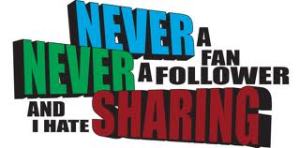
hatesharingEvery developer, every application and every blogger is obsessed with sharing, collaboration, yada, yada.  Today I read that the developers of my most useful app, Evernote, may be moving their focus away from their excellent iPhone app to focus on, you guessed it, sharing and collaboration.  Does anyone actually use the collaboration features crammed into all these apps for anything truly useful?  Most people I know are more interested in keeping people away from their data than putting it out there for the world to see.  Even if we wanted to collaborate with our partners, clients, etc., no corporate IT department in the world would let us.  And even if they did, there are enterprise platforms that permit collaboration while maintaining the big business-mandated level of security.

The iPhone has crossed over from the realm of the geek to the larger and much more profitable realm of the mainstream user.  I have numerous real world friends who can barely send an email, but who use and love their iPhones.  These people and thousands if not millions like them represent a gold mine for application developers.  And most of them couldn’t care less about the ability to share their documents with others.

The reason why the Apple Store was packed today, why I am morphing into an Apple lover after years of resistance, why so many of my real world friends have the Apple sticker in the windows of their cars, is simple.  This stuff works.  It’s easy to set up and use.  And most importantly, it makes tasks that lots and lots of people do every day more efficient and more fun.  Tasks like email, texting, information storage and retrieval, taking and emailing photos, finding a good nearby restaurant, playing Uno with your kids, etc.

The Evernote team, and just about every other app developer, would be better served and would more easily tap into that gold mine, if they forgot about sharing and focused on making their application more useful to non-geek users on an individual basis.  For example, while the Evernote iPhone app is intuitive and easy to use, the web application needs a lot of work.  That’s where the focus ought to be.

I think a lot of developers are electing to fish in a small pond, while the fish in the big pond swim around hungrily.

Technorati Tags: ,