Is Google’s Haphazard App Development Path a Master Plan or an Epic Fail?

image Much of the time, it seems to me like Google develops apps the way a squirrel hides nuts.  Toss as many of ‘em out there as quickly as possible, knowing that you’ll come across some of them later, even as others are forgotten or lost.  Maybe this is a brilliant master plan, or maybe it’s a sign of something else.

Like a lack of focus?  Or a waste of resources?

As we all know, I started moving into the cloud last year.  As a part of that, I attempted to abandon Microsoft Office, and set myself and my family members up with a Google Apps account.  It wasn’t really a level playing field, though, since I still had Office on my downtown office computer and my work laptop.  It took about a week for my entire family to mutiny in the name of getting Office back.  I used Google Docs for my personal word processing, which involves mostly letters and some light spreadsheet work.  Even that was pretty frustrating.

But once school started and my kids had to actually create documents, the mutiny was in full force.  So I capitulated and reinstalled Office, less Outlook.  We all agree that Gmail is an acceptable (to them) and preferable (to me, because of the cloud-based location) email client.  Though, it’s worth pointing out, only Better Gmail 2 makes it so.  Without that fantastic add-on, even the Gmail interface is needlessly cluttered and you can’t collapse your tags (which I use as folder-equivalents).

While Gmail, at least when hacked right, is great, for anything other than your great grandmother’s level of word processing, Google Docs are completely and totally unworkable.  This is really surprising to me, since Google Apps has a Premium version, and at least up to now had the very real potential to do the two things Google loves most: make some money and hurt Microsoft.  But for some utterly insane reason, Google continues to let Google Apps lie in a fallow, disjointed state, preferring to devote its resources to adding needless social networking features.  None of which will ever make Google Apps the robust Microsoft killer it could be.

No one, and I mean no one, can tell me this makes any business sense.

So why is it happening?

At the same resource wasting time, Google continues to toss more nuts into the ground: Latitude (remember all the initial hoopla about this now forgotten location sharing app?), file sharing on iGoogle and something called Orkut (where the hell is the real GDrive?), Wave (which is about as happening as FriendFeed these days), Buzz (the buzz surrounding which had the half-life of Jesse James’ relationships), Google Reader (a great app that is being ignored in favor of the momentum play du jour).  The list goes on and on.

Seriously.  Does someone at Google HQ look out the window, see someone talking on a phone and and say “Hey, that reminds me.  Don’t we have an app called Google Voice, or something like that?  Let’s spend 10 minutes on that before we get back to this Twitter clone we’re working night and day on.”

The press, as a whole, doesn’t help.  Some combination of clue deficiency, Google lust and the need to say stupid things so people like me will click over to yell at them makes the press write articles that allow Google to pretend that all of this is going swimmingly.  When it’s so clearly not.

For example, I was astounded today to see an article at C|Net speculating, yet again, that maybe we don’t need Office anymore, because we can bathe in the wonder of Google Docs.  Then I noticed that this dude is a Linux guy.  I suppose when you think Linux is preferable to Windows 7, you probably think Google Docs is the greatest thing since the keyboard.  Still, this might be the single most blatantly incorrect sentence ever strung together:

And at some point, CIOs are going to realize that the vast majority of their employees don’t spend any time mucking around with pivot tables or drafting documents. At most, people use Outlook, and buying an entire Office license to get e-mail feels like overkill.

WHAT?  Are you kidding me?  People in companies all over America spend all day and all night doing exactly that.  And then sending those documents, with tracked changes (which of course Google Docs can’t do), to other people who take their turn.  Over and over.  Even the email part is wrong, as Outlook is the most dispensable part of Office.

To even suggest that corporate America could use Google Docs is to demonstrate that you’ve never spent a day working in corporate America.  It’s this problem that Google should be focused on.  Because the right cloud based application could serve corporate America.  Google Docs, as it currently exists, is about as far away from being that app as possible.

Paul Thurrott, taking a page out of my sermon book, gets it right:

I don’t believe that Google’s free tools–Google Docs, part of Google Apps–represent a technical or financial challenge to Office at all….  Microsoft Office is vastly superior to every single office productivity solution there is.

As Paul points out, about the only thing Google Apps can do for corporate America is serve as a stalking horse.

Open Office is a mostly workable solution, and does make Google Apps look pitiful by comparison, but then again so does Zoho.  For that matter so does a piece of chalk lying on a sidewalk.

Microsoft could own the cloud based office productivity space if it wanted to.  It just doesn’t want to yet- while the cloud is still forming.  We’re seeing the price of Office fall over time, clearly as a result of that stalking horse.  Perhaps Microsoft will eventually take flight (or be forced) into the cloud.

Until then, we will have to search for other options.

But Google Apps is not one.  It’s just another lost nut waiting to be rediscovered.

iTunes: Apple’s Fly in the Ointment

itunessuxI’ve been excited about the approach of iPaday since I ordered my iPad the first minute Apple started taking orders.  I’ll find good uses for it either way, but until today I wondered if my iPad would be the evolved replacement for an iPod Touch and a Kindle, or something more revolutionary.

I hoped it would be something revolutionary, and based on the videos Apple released today, it looks like it will.  I think there’s a lot of controlled hype going on right now (for example, I think some of the unit figures being tossed around are beyond absurd), but I also think these videos demonstrate that the iPad is going to be big.

Really big.

The primary goal of the iPad is undoubtedly to expand Apple’s growing stranglehold on the content distribution pipeline beyond music, and further into video and, in a bold and perhaps killing first strike, books.  I also think there is hope in Cupertino that the iPad will serve as a roadmap to Macs.  After watching the iPad videos, I considered, for probably the twentieth time, whether I should overpay for hardware and accept a crappy OS in the name of convergence, under the Apple banner.

image There is no denying that all of the Apple hysteria makes even the most logical eyes prone to view the world in shades of green.

I could learn to live with OS X, even though I find it utterly unintuitive and far harder to use than Windows 7.  Plus, I’m convinced that Apple will eventually merge the iPhone OS and the Mac OS, in a final offensive in the three party war for tech domination being waged by Apple, Microsoft and Google.  At that point, Macs may actually become as elegant as some wrongly insist they are now.

But I can’t yet take the plunge.  Not because of the overpriced hardware.  Not even because the deficiencies in OS X.

Because Apple insists that iTunes serve as the control panel, storefront and traffic cop for all hardware and associated content.  For anyone other than the casual music fan, iTunes sucks.

Trying to manage a big music library via iTunes is like trying to build a house out of sand.  A little bit looks good, but it all falls apart when you try to scale.  It’s bloated, slow, feature deficient and just plain ugly.

itunessucks In fact, iTunes needs to be completely scrapped and rewritten from the ground up.  I realize that many of the limitations that burden iTunes are intentional limitations designed to maintain and expand Apple’s stranglehold on the content distribution channel.  I don’t like this one little bit, but I’m not naive enough to think it will change.

But there are a hundred much needed improvements that could and should be made, without giving up control of the content pipeline.

I wish someone would email Steve Jobs and tell him to get on it.  Then maybe I’d go all in.

Biggest iPad App? Safari, in a Webslide

We’re less than a week away from getting our hands on the much-awaited Apple iPad.  As iPaday approaches, more and more details about the iPad experience are emerging.  Many are speculating on what apps will be the most useful.

ipad

I already know.  Safari, which will return us to that most useful jungle: the world wild web.

Yes, I love my iPhone.  But let’s be honest.  Surfing the web on the iPhone sucks.  Epicly.  That’s why good developers are making a fortune (99 cents at a time) writing apps that use the network to deliver content in a more accessible and manageable form.  By that, I mean as far away from Safari as possible.

I estimate my success rate when trying to accomplish anything substantial on an iPhone via the native web (i.e., in a browser on a regular web site) at around 10%.  Most of the time, I either find another way to access what I’m looking for (such as a dedicated app or a laptop), or I just give up.  I have talked to many others who admit to similar experiences.

The biggest difference between our iPhones and our iPads will be that the larger screen size will allow us to actually use the web.

Need an example?  Here’s one of many: corporate email.  I have expressed frustration for years about the insane degree to which my company’s IT department hobbles (my word) my iPhone experience in the name of security (their word).  I actually considered making Outlook Web Access my default method of reading email on my iPhone, but the screen is just too small.

That won’t be a problem on an iPad.  Yes, I think it is important and good that the iPad will support Microsoft Exchange.  But I think it’s even better that I will have another option should I find my iPad excessively hobbled in the name of security.

April 3, 2010 is not just iPaday- it’s the day the web becomes useful again.

I can’t wait.

GoodSongs: Alt. Country Reprise

gslogo

As a part of my online simplification and consolidation project (more on this later), I am moving our music recommendation blog, GoodSongs.Com, to the Music category here at Newsome.Org.  We’ll post a GoodSongs music recommendation list no more than once a week, where we’ll feature a wide variety of off-the-beaten path music.

Here’s the second installment of our hand-picked music recommendations.

Purchase links are at Amazon unless otherwise noted.

image

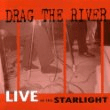
Drag the River – Indianapolis.  Superb cover of the Bottle Rockets gem, off of Live at the Starlight.

image

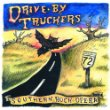
Drive-By Truckers – Women Without Whiskey, off the excellent 2001 album Southern Rock Opera.  When someone gives me shit about being Southern, I pour a pint of Maker’s Mark down their throat and make them listen to this record.  Loud.

image

6 String Drag – Gasoline Maybelline, from their 1997 record High Hat.

image

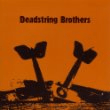
Deadstring Brothers – 27 Hours.  This is the song that first turned me on to this excellent band.  From 2003’s self titled album.

image

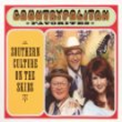
Southern Culture on the Skids – Funnel of Love.  SCOTS channel Wanda Jackson, from their mandatory 2007 album Countrypolitan Favorites.  An awesome collection of country covers, done in kick-ass SCOTS style.

image

J.J. Schultz Band – Speedtrain, from their 2005 record Something to Me.  This is a perfect alt. country song.

image

Baker Maultsby – Pee Dee Man, from his 1998 record Bingo = Sin.  This fantastic song by a buddy of mine mentions my hometown, Cheraw, SC.  More Baker Maultsby at his MySpace page.

image

Seigel-Schwall Band – Corrina.  Excellent version by this excellent blues band, from their The Wooden Nickel Years (1971-1974) compilation.  If you look for this excellent record, be sure to buy the one with Corrina as the first track, and not the other, lesser version that has the same cover and title.

image

JT and the Clouds – Scattered Leaves.  Jeremy Lindsay’s band does his excellent song, from the album Delilah.  The best version, of course, being by the Be Good Tanyas.

These are great records, by some fantastic bands.  Go buy these records and support people who make this great music.

Artist Notice: I am a musician and songwriter.  I do these posts to draw attention to great music in the hopes that our readers will buy these records and allow these artists to continue making great music.  If you don’t want us to feature your music, let us know and we’ll take the song file down immediately.  On the other hand, if you are an artist who does the sort of music we feature, let us know.  We’re always looking for new artists to feature.

Is Something Rotten at the Apple Store?

First, here’s my Apple story.  I think Macs are way overpriced, and I think the Mac OS is terrible.  Now that I’ve offended those Apple fans that are still in the denial stage, here’s the other side of the story.

I love much of the other stuff Apple makes.  The sadly under-marketed and overlooked Apple TV is a wonderful device for serving audio and video to home theatres.  I have two (well, actually only one- see below).  I think the iPhone is a world-changer as far as phones- and handheld devices in general- are concerned.  My kids love their iPods.

Heck, I happily ordered my iPad the first minute I could do so.  Even though this dude thinks I’m an idiot for doing so.

The point is that, other than Macs (which, by the way, will ultimately be saved when Apple ports the grandchild of the current iPhone OS to its computers), I am a loyal Apple user.  1 iPod mini, 2 iPod Touches, 3 iPhones, a prematurely dead Mac Mini, 2 Apple TVs, and an iPad on the way.

One of the things I used to cite as a reason to love Apple products was the existence of, and great support at, the local Apple Store.  But somewhere between the launch of the company saving iPhone and today, something changed.

Thomas Hawk thinks so too.

A few years ago, my first iPhone stopped charging.  I took it to the Apple Store, without an appointment.  After a short wait, I spoke to someone at the Genius Bar, and got a new one on the spot.  I was happy enough to buy all of the additional gear listed above.

image Lately, however, my Apple Store experience has been decidedly less positive.

First, one of our Apple TVs stopped booting, for no apparent reason.  It has all of the symptoms of a bad hard drive.  We took it to the Apple Store, hoping- but not expecting- that Apple would replace the hard drive at little or no charge.  Realistically, all I expected was a good, helpful attitude and a reasonable labor charge to replace the hard drive.  After all, don’t hard drives generally have good warranties?  Surprisingly, the genius at the Genius Bar didn’t seem to want to diagnose the problem.  When we insisted, we left the device to be diagnosed, hoping the attitude was just a blip on the radar.  A few days later we got a call saying the hard drive was bad, and we should just buy a new Apple TV.  For $229.

So based on my Mac Mini and Apple TV experience, are these things disposable?  Seriously, I love Apple products, but based on my experience and the sense I have from talking to others, the failure rate must be enormous.  Which, of course, makes support critical.

And, presumably, expensive for Apple.  Who has to support that stock price.  Hmmm.

Then came the customer happiness-killing blow.  My wife, who destroys electronics  like Sherman destroyed Atlanta, pays, via ATT, for some sort of insurance that promises to replace broken iPhones.  Her ringer silence switch fell off.  She went to the same Apple Store to get it fixed.  This time the genius told her he could tell that the switch fell off due to water-damage, which is not covered by the insurance plan.  While the ATT salesman told her water damage was covered, that’s not the point.  The point is that the phone is not water damaged.  The darn switch fell off, and Apple is refusing to fix it.  Again, the proposed solution: buy another iPhone.

This just sucks.  Period.

By itself, I could explain away parts of this.  But taken as a whole, and compared to my past experiences, something smells at the Apple Store.

Consultants, Questions and Some Dude’s Secret Formula

As we all know, I have recently moved to WordPress after years of blogging via Blogger and FTP publishing.  The move went well, and so far I am happy with WordPress.  As noted in my WordPress Process series, I hired Aaron Brazell to help with some of the more difficult parts of the switch.  Aaron did a great job, and I recommend him for anyone needing a WordPress expert.

image We took the final step of the trip today when we set up the new permalink structure, and redirected the old-style permalinks to the new permalink pages.  During the process, I asked a some specific questions about some plug-ins I had read about and a back-up solution,  and ended with “is there anything else/different you recommend?”

Presumably in response to this, and no doubt other similar questions he has received over the years (as my job was less than miniscule compared to big corporate gigs), Aaron wrote an interesting blog post, that is a good read for anyone looking to hire a consultant, or anyone else who provides services for a fee.  I agree with some of it, but I’m not so sure about some of it.

First, some preliminary matters:

1. In no way, shape or form am I offended by Aaron’s answer, which was a short version of his blog post, or the post itself.  Aaron’s post is intended to help those who hire consultants save money.  It just raised some issues that got me thinking enough to write this post.  In sum, Aaron’s cool by me, and I will without a doubt turn to him if the need arises in the future.

2. I don’t know squat about the business of consulting, as it relates to the stuff Aaron does.  So my experience may not be completely relevant to that arena.

3. Having said that, I know a little bit about making a living via the sale of professional services, having managed large practices at two mega-law firms.  I can’t help but believe there are similarities.

So let’s look at this a little bit further.

One of Aaron’s points, which I whole-heartedly agree with, is that everyone benefits from clear, defined expectations.  If I think I’m selling you something for X and you think you are buying something more for 0ne-half of X, no one is going to be happy.  Only those looking for an unfair gain want to go into transactions with undefined expectations.  It is, stated simply, a recipe for disaster.

So we all have some concept of good practices that we should try to adhere to.  The best laid plans, and all that.

Because, to one extent or the other, market conditions will determine what is and is not the custom when it comes to professional services and the delivery of and price for the same.  I can only charge you X for my services as long as there isn’t a giant population of others who are similarly qualified and will do it for less than X.

The qualified part cannot be overlooked, but it doesn’t always carry the day.  Falling tides, all ships, etc.

I got a lot of responses to my RFP, and most of them were less than what I happily paid Aaron.  He has a reputation as the best.  I wanted the best.  A deal was made.

Likewise, I charge more than many others who do what I do, having spent 25 years building my personal brand (I’m not going strangle myself with a self-embrace, but let’s just say I have a pretty high profile in the industry).  So I’m all about the “getting what you pay for” thing.  I’ve preached that sermon for years.

But these aren’t the good old days.

Which means two things.  One, most of us have to work harder to keep the same level of business, at least until the economy gets better.  And two, questions and requests that used to be buzz kills are now sometimes life lines.

Stated another way, I think there is a middle ground between scope creep and a blank checkbook.  And I think there are many, many cases when an open ended question is both unavoidable and appropriate.  I recently hired a top notch landscaper, who charged me a lot of money.  I told him what I wanted, we came up with a plan and he did the work.  When it was done and I could visualize how I might use the new area,  I asked the same question: “is there anything else I should consider?’”  He said I should think about some lights.  I did, and I hired him to do it.

He made more money.  I got lights that let us play soccer at night.  Good times.

Sometimes you can’t really know where you want to end up until you’re on the journey.

I get open ended questions in my business all the time.  Sure, sometimes it’s an attempt to expand the scope of my work or get my time for free.  But most times it’s another way of saying “OK, I’ve bought this and that from you and I like it.  What else do you have that I might be interested in?”

Show me what else you can do for me.

Additionally, for a fair-minded, reasonably sophisticated person to ask that question shows a level of trust.  No one would ask that question to someone he or she felt was only interested in making a quick buck.

So maybe it comes down to the difference between jobs and relationships.  In my business, you can’t really be successful in one-off jobs.  You need a stable of clients who over time will need a bunch of your services.  So when I hear an open ended question or two, I see a horse thinking about entering the barn.  It may be different in other fields.

All of this certainly could result in doing work for free or busting the budget, as Aaron points out.  It could also be grounds for a new budget.  For a new job.

Now about that one dude.  The one who won’t take a job under $50K.  I don’t know what world he’s living in, but unless he has some secret formula, he’s not living in the same one I am.  I know lots and lots and lots of really well qualified, highly sought after people (lawyers, doctors, architects, plumbers, indian chiefs and rodeo clowns) who would be living under a bridge somewhere if they took that approach.  Particularly in this economy,

In other words, I want that dude’s job.

Evening Reading: 3/1/10

Start that Gaming Addiction Now: Color Me Happy looks like a neat little app for kids.  I’ll have to get a copy for Luke- on Raina’s iPhone.

The Once and Future M.U.L.E.:  One of the best games ever has been reincarnated.

Great Video, Great Cause: This is one of the best music videos I have ever seen.  Led by the great Shane MacGowan.  Recognize the guitar player near the end?

Speaking of Videos: Camera Plus Pro brings video recording to older iPhones.  So does iVideoCamera.

Ain’t I Groovy:  And Phototropedic makes your iPhone photos cool.

image

My Dog Can Kick Your Honor Roll Dog’s ButtAt surfing.  Caption inspired by a hilarious bumper sticker I saw today.

Apptic Blast: RunKeeper, already a must-have iPhone app, has been updated and improved.  Ground Effect, which looks cool, is free today.

Your Life is an Empty Void:  Until you email something to a fax machine.

Speaking of Spam:  Answer me this- what is a bigger spam-fest, fax machines or trackbacks?  Spam killed fax machines for me (I unplugged the one in my study years ago).  90% of the trackbacks I get are spam.  That’s a pity, as trackbacks were the blog version of a handshake.

Cat (Cougar?) Fight:  Marcia and Jan are fighting again.

Netflix Sucks Now:  Netflix’s capitulation to the greedy movie industry is bugging me.  I am thinking about bailing.  Sad.

Why Google’s Shot Across Twitter’s Bow Missed the Mark

Erick Schonfeld has three interesting theories as to why Google pushed Google Buzz out the door and into the email client of millions of users, before it was ready for prime time.

I’ve tried Google Buzz, and found it to be pretty uninspiring.  I’d been thinking that one of Erick’s theories might be at play.  A theory that, if true, is going to backfire on Google.  I also came up with a fourth theory that I think plays at least a part in this drama.

The Twitter Negotiating Power Theory

One of Erick’s theories is that Google really wants to buy Twitter, and launching Buzz was a shot across Twitter’s bow, indicating that if Twitter doesn’t come to the bargaining table, Google will use some of its war chest to do battle with Twitter on the micro-blogging front.  Certainly Gmail provides Google with a ready-made user base, and you would think that Google could easily be a force to be reckoned with.

The ability to put Buzz front and center in the Gmail email app gives Google a clear path to the stream.

Or does it?

image 
image via TechCrunch

If the Buzz as a negotiating tactic theory is even partially correct- and I’ve been thinking the same thing, it’s going to fail epicly.  I’m sure somewhere in the bowels of Twitter Control, the powers that be have been worrying about what Google might do to steal some of Twitter’s stream flow.  Google is the potential exit strategy and Death Star for most start-ups, so it gets complicated.  One way or another, anyone operating on the web has to keep a constant eye on Google, who could bring pleasure or pain at any moment.  If Google came out of the gate with a mature, elegant and at least evolutionary  micro-blogging alternative, it would combine naturally with Gmail’s massive user base, and it would be game on.

Which means that the swoosh sound you heard in the halls of Twitter Control on the night Buzz was heaped front and center onto the world’s email screen was a giant sigh of relief.

Other than infesting our inboxes with needless Buzz-related email, Buzz isn’t horrible.  But it’s not evolutionary either.  It’s just another Twitter clone.  If anyone other than Google had released Buzz, it would be almost universally referred to as Butt.  As in of jokes.

Stated simply- if this is how Google intends to scare Twitter back to the negotiating table, this effort won’t only fail.  It will actually increase Twitter’s bargaining power.

The Toss Apps Against the Wall Theory

I have another theory that I believe may also be at work here.

Google has done some great things, and is, for many, the backbone of the online experience.  It owns search, which was its lightning in a bottle beachhead in the battle for the ownership of the web.  Ads spring naturally from search and page views, and Google was able to leverage the first to dominate the second.

But after that, there is no denying that Google has had a decidedly mixed record with new projects and apps.  It got there with email, because of its search presence, and because Yahoo and Microsoft were asleep at the wheel.

But it has also had its share of failures.  Google puts on a brave front, but Google Docs is still, at best, a work in progress.  Google Apps looks and acts like a bunch of unrelated applications haphazardly tossed together.

And there have been plenty of others.  Remember Google Catalog?  That’s OK, neither does anyone else.  What about KnolLively?  Something called Orkut?   Dodgeball?  Shoot, even Wave, which came out to a parade of hype, seems to have already lost its mojo.

Google has a track record of tossing a lot of stuff against the wall, and waiting for something to stick.  Some things do, and some things don’t.  It’s too early to tell how Buzz will turn out, but I can say with confidence that it is not now- and is very unlikely to ever become- a threat to Twitter.