Gatekeeping on a Flat Earth

Steve Rubel makes a good point about gatekeeping in a flat world.

Everyone’s a gatekeeper- not for keeping people out, but for putting information in.

Also note Amy Gahran‘s always interesting perspective in Steve’s Comments.

Steve’s post was inspired by this one by Jeff Jarvis. Jeff’s post is mostly about gatekeeping in the news media and public relations context, in preparation for some radio or TV show Jeff is appearing on to talk about Walmargate.

I don’t have any strong opinions one way or the other about Walmargate, other than to wonder what’s so different about what Walmart did and developers wining and dining bloggers, giving them free access to products and applications, and writing emails asking a blogger to review their product that contain feature summaries (parts of which often find their way into a blog post), etc. I’m not saying that opaque is good- I’m simply saying that if transparency is required, it should be required across the board.

Anyway, there are some other things in Jeff’s post that I find interesting.

Let’s start with this:

The problem with gatekeepers is that they try to control, to get in the way, to keep us from getting what we want.

Sort of Jeff, but in the context of the blogosphere that’s the indirect result of the bigger concern- keeping control of the microphone. Sure, that means that readers don’t get content they might want, but many of them probably don’t know they want it because the microphone holders fill the space pretty well.

Wanting to be the only one talking is different from wanting to be the only one being heard. The concern is not so much that a reader is getting a new perspective on an issue; it’s that “someone else is trying to use my platform to be heard.” It’s more of a musical chairs sort of thing. If that new guy is sitting down then one of us might be standing up when the music stops. It’s front end, not back end.

Again, I’m largely over the gatekeeper thing, which is why I focused on and started with Steve’s flattened earth comment. There are people out there who still want to silence the new voices, but:

(a) there are less of them than I originally thought; and

(b) the flattening forces at play in the blogosphere make it very hard to keep people out of the proverbial club.

Clearly some folks have a conscious or (perhaps, but not likely) unconscious desire to withhold conversation from without their favored peer group. Jeff strongly implies he’s not one of them, and I’ll take him at his word.

More often than not, the lack of a response is because the intended recipient didn’t see the post, as opposed to some sort of exclusionary practice. Not all the time, but more often than not.

He later updated his post to mention Steve’s post and say he hopes we’re not all gatekeepers. I think it’s a matter of semantics.

We are gatekeepers, the same way entrance ramps are gates to the freeway.

For example, I wouldn’t have heard about much of the stuff I write about if I hadn’t seen a reference to it somewhere- on My Yahoo, on a blog in my reading list, in the newspaper. Someone was an entrance ramp and put that information on the – tired metaphor alert- information superhighway (ugh!).

The onramps are always open- anyone can drive.

We just need to keep working to make it like that in the blogosphere.

More on Second Life

Eric Rice has posted the first installment in his series about Second Life. I posted a little about it the other day.

second life avatar

Since then I have been back a couple of times and done a little more exploring. I haven’t tried to build anything yet, but I did make a little money (by dancing and then sitting in a chair by some slot machines). Of course I spent what I made and more on the slot machines, which was the idea.

I have only barely scratched the surface of the application, which is part game, part chat room and part virtual world. The first two don’t really interest me, but I am intrigued by the third. The more I look around Second Life, the more impressed I am.

One thing I want to do next time is explore Second Life’s music aspects. Fred Wilson found some good music stuff there.

And I still want to know if Second Life is related to that deal that AOL (or maybe it was Compuserve?) launched or almost did 10 or so years ago? See my other post for more details about that.

Cousins

Cousins

Uncle Scott, Aunt Kelly, Hunter and Hayden are visiting from Fort Worth on their way to Galveston for spring break.

The girls were so excited they camped out by the front door waiting for their cousins to get here. As soon as they did, it was into bathing suits and off the big wall.

Cloudy Water in the Thinktank

If there’s anything I understand less than all these conferences and unconferences and all the fuss over who gets to speak and who doesn’t, it’s the thinktank. I imagine it as a gathering of navel gazers, with a big dose of arrogance thrown in.

So all these brainiacs are sitting around thinking about the next mensa convention, when all of the sudden the silence is broken by a high pitched, nasal sound.

Brainiac One: “I’ve got it! Everyone else in the world who thinks that net neutrality is a good idea is wrong! Net neutrality is bad! Yeah, that’s it. Bad. Bad, I tell you!”

Brainiac Two: “Well, if everyone says it’s good and we say it’s good too, then what good is our thinktank?”

Brainiac Three: “Good point, Rothschild, we must do out part to eradicate net neutrality. Let’s all think about how we can do that.”

[hours and hours of tense silence]

Brainiac Two: “I have it! Let’s write a report that says net neutrality is stealing! Let’s throw some words in there like regulatory and infrastructure, and, if possible, a few latin phrases.”

Brainiac One: “Yes, if we publish said report, people will talk about it and they will bow down before our tiding.”

Janitor (who has a masters degree, but not mutliple PhD’s) [looks up from sweeping the floor]: “Yeah, and that there will also compy with that durned old Rule of the Reallies becaus’n some o’ dose idgits will thunk it’s wrong!”

Brainiac Three: “Harcourt, go take out the trash and let us smart guys do the thinking. Besides, we are above publicity. It would be beneath us to take an absurd position just for the attention we would get.”

Brainiac Four: “Fellows, I urge that we table this important discourse for an hour as our navels need a break.”

The 5 Possible Reponses and the Conversational Blogosphere

Adam Green posts today about the conversational and sometimes reactionary nature of the internet. He makes some good points, not the least of which is the Rorschach test title and discussion, which is as humorous as it is thought provoking.

When we developed all those message board sites back during Bubble 1.0, we quickly mapped the response tendencies of our users. This is a bit of a generalization, but response patterns tend to fall into one or more of five categories:

1) The Chorus: I agree, with little additional content. These were good for page views, but didn’t do much to further the conversation.

2) The Heckler: You’re wrong and/or an idiot. These were even better for page views, and only helped the conversation a little by forcing a response.

3) The Critic: I think you are partly right, but what about this. These were the best replies of all, because generally they initiated a semi-thoughtful discussion and debate.

4) The Hijacker: I know you’re talking about that, but what do you think about this. Things can get chaotic, but not as badly as you might think because the hijacker either fails and gets ignored or succeeds and the conversation just takes a right turn and continues, just like they sometimes do around the dinner table.

5) The Hater: I don’t just want to join in- I just want to be disruptive and aggressive and attack people. These folks generally got banned from our message boards at some point.

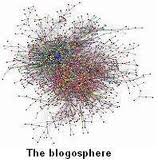
I think those same categories largely apply to people who converse in the blogosphere, whether via Comments or cross-blog conversations, like this one.

blogosphere

The X-factor in these conversations, just like the ones around the dinner table, is emotion. Once you touch the emotive membrane, passion goes up and logic sometimes goes down. This is both good (more spirited conversation) and bad (the potential to miss the point and turn from a discussion to a fight).

So yes, I think sometimes people react more quickly and perhaps less logically when they are talking about something they like a lot or don’t like a lot.

Now, about my reply to Adam’s memetracker post.

First of all, he is exactly right when he deduces that part of my reaction was based on my feelings about committees in general. A guy I once worked with once said (loudly) that anytime someone asked him to be on a committee, he knew they were only trying to take advantage of him. Now I don’t feel that way (thus I’m still here and he has moved on), but I do understand what he’s saying. There’s a little truth in his statement.

But the real emotive reaction that made me “just about fall over my chair trying to get a response written” is my great dislike of any process that might be designed or used (even if not designed) to let some people inside and keep others outside (paging Seth Finkelstein).

I had nightmares of some self-important advisory committee holding a secret vote to decide who could participate in the group blog- not so much as a memetracker developer, but as a user participant. I love the distributed conversations that occur naturally in the blogosphere and don’t want anyone to dam the river and stop that flow.

Adam is absolutely right, however, that while I tried hard to be objective and conversational, my emotional reaction to the issue may have led me to sense trouble between the lines where there was none.

That’s why it’s important to read posts carefully and try to be sure you understand what someone is saying before you respond. Especially if you intend to take a strong and contrary position. People write blog posts quickly, and sometimes you can’t be certain. Heck, I’ve gone as far as diagramming Dave Winer‘s sentences to try to decipher whether he’s for or against the flattening of the blogosphere- and I still don’t know. I’m not entirely sure he knows.

But even if I get something wrong, someone will let me know.

Because we’re just talking here.

And that’s what’s great about blogs and the internet.

Web 2.0 Wars: Round 12

It’s time for Round 12 in Newsome.Org’s Web 2.0 Wars. The contestants and rules are here.

This is the final heat of the first Round. The playoffs will be next.

Other Rounds:
1 | 2 | 3 | 4 | 5 | 6 | 7 | 8 | 9 | 10 |
11 | 12 | 13 | 14 | 15 | 16 | 17 | 18 | 19 | 20

Here are the contestants for Round 12:

dPolls.com
Flickr
Ning
Ookles
Strongspace.com
ZoomInfo
Castpost
YubNub
Associated Content

dPolls.com allow you to create polls and incorporate them into your blogs and web sites. I have used dPolls a little and I like the application, though the last time I tried it the in-post polls didn’t make it into my RSS feed.

Flickr is simply the best photo storage, organization and sharing site, period. It will be a tough contender in this contest, though when we get to the playoff, I am going to announce a handicapping system that will remove any affection advantage for the applications I already use a lot.

Ning lets you build your own social web applications. For example, you can create an app to let people collaborate on an online story (we had big fun doing that here back in the day). There’s a lot to Ning, and I’d have to say I’m pretty impressed.

Ookles is in “stealth mode,” which means it’s also in disqualified mode.

Strongspace.com is an online storage and file sharing space. $8/month for 4G of space seems pretty reasonable.

ZoomInfo is a person search application. I searched for me, and found only 8 links. Granted, the first link was to my bio at my day job. But the others were old and irrelevant, and there was no link to Newsome.Org.

Castpost is a media storage and sharing site. I’m a long-time alpha tester for this service and use it to serve the videos I make, like this one. Very neat service, but Stickam is some serious competition.

YubNub is a command line for the web that lets you search specific places with a single click. For example, you could create a YubNub link that searches Amazon for books by Robert Heinlein, and you should if you like good books.

Associated Content is a site where you can upload and share your video content. It seems to be a little more selective than others, more like a content exchange site. If your content gets used, you get paid a little.

Before Today I’d Heard of:

5 out of 9.

And the Winner of Round 12 is:

Ning and Castpost could have won several heats, but they get hosed by being in the same bracket at the Round 12 winner, Flickr.

Technorati Tags:
,

Techcerpts: 3/10/06

As promised the other day, here are a couple of tech-related excerpts from the most recent edition of my RanchoCast podcast.

My take on Google Office.

My take on Nerd Camps & Dave Winer’s new Memeorandum plan.

There’s more tech talk and lots of good music on the full podcast.

RanchoCast – March 10, 2006 Edition

I did a new podcast tonight.

The theme is the Young Bromberg Show. I played some great songs by Jesse Colin Young, the Youngbloods, David Bromberg, the Pixies, Dave Gleason and others.

I also talked about Google’s office application initiative, why all nerd camps are not created equal and my new Sprint mobile phone.

57 minutes of country rock, classic rock, tech and blues.

10 Applications I Can't Live Without (Part 1)

I named this post like an Isely Brothers song. I don’t know why I noticed and feel compelled to point that out, but there you go.

My original love of computers back in the 80’s arose via gaming. I can’t tell you how many hours I spent swapping out big floppies while playing Starflight. The first one is always special, and this still may be my favorite game of all time.

Now I love my computer because it makes me more efficient. At working, writing, communicating. There are so many things the computer helps me do better and faster.

Here is the first half of the 10 applications that help me the most.

1) Nero

Between my backup needs, my songwriting needs and my desire to take stuff with me when I go places, I use CD and DVD burning software all the time. Many years ago, I dumped that often pre-installed bloatware Easy CD Creator and started using Nero Burning Rom. Even Nero has gotten a little bloaty by adding in a bunch of ancillary stuff no one ever uses, but Nero is still the best at doing what counts. Burning CDs and DVDs.

2) J. River Media Center

I have been way into music since the late 60’s. I have over 26,000 songs (all legal; none shared) on my music server. I have tried every music library manager and player in the book. Winamp (killed by AOL), MusicMatch (killed by Yahoo), Windows Media Player (actually not a bad choice), jetAudio, Real Player (bloatware) and teens of others.

And the best one by far is J. River’s Media Center. It’s the best for large libraries, and for network use, and for playing. I love this program and cannot understand why it doesn’t get more run in the music space.

3) ACDSee

I love digital photography, and as a result I have a ton of digital photos. And the best photo organization and management program I have found is ACD System’s ACDSee. The batch renaming works great, and its lossless rotating is great. I like Paint Shop Pro (in the process of being ruined by Corel) better for pure editing, but for one stop shopping, ACDSee is the answer.

4) UltraMon

The only power users who don’t use two monitors on their computers are the ones who have never tried it. Nothing else, and I mean nothing, has ever increased my productivity as much as a second monitor. And UltraMon makes it even better. It allows you to move windows and maximize windows across the desktop, manage more applications with a second taskbar, use different wallpapers and screen savers and much more.

If you have multiple monitors, it’s a must have.

5) PaperPort

I went to a paperless document filing system for my personal statements and data years ago. I tried all kinds of scanning programs, but the one I settled on back then and the one I still use every day is PaperPort.

It makes scanning and filing a breeze. Combine it with a scanner with an automatic document feeder and the scanning job becomes much easier. It lets you easily scan 2 sided statements and is very reliable.

These are some of my most valued applications. Tell me about yours in the Comments.

Stay tuned for Part 2 in the next day or two.