Claus Valca has a good post outlining the extensions he uses with Firefox. I found some good stuff in the list that I didn’t know about before.
Tags:

Claus Valca has a good post outlining the extensions he uses with Firefox. I found some good stuff in the list that I didn’t know about before.
Seth Godin has a wonderfully satirical post today that provides 56 tips to increase your blog traffic.
Among my favorites:
11. Don’t write about your cat, your boyfriend or your kids.
13. Write about your kids.
10. Encourage your readers to help you manipulate the technorati.
19. Do email interviews with the well-known.
21. Use photos. Salacious ones are best.
31. Write about stuff that appeals to the majority of current blog readers–like gadgets and web 2.0.
37. Keep tweaking your template to make it include every conceivable bell or whistle.
15. Be sycophantic. Share linklove and expect some back.
44. Don’t interrupt your writing with a lot of links.
This is good stuff.
The point is that there is no recipe you can follow to ensure a popular blog. All you can do is write hard, try to write well, join in the conversations and wait.
I am a songwriter, and have been for many years. There is a camp within the songwriting community who believe that writing a song is like baking a cake. You put the right ingredients in, mix it up and bake it for the specified length of time and, presto, you’ll have a good song.
Of course when you listen to excellent songs by Bruce Springsteen or Van Morrison or Bob Dylan, you quickly notice that many of their songs ignore many of the so called rules. I’ve had people who claim to be songwriters tell me all the reasons why some of my songs that have been recorded by more that one artist will never get cut. Normally, I just let them go on, without telling them about the cuts, because the purpose of that conversation is for them to talk, not for me to hear. I know that, more times than not, their strict adherence to the songwriting recipe will keep them from the experimentation that can lead to great art.
Recipes are fine for science. Blogs and songs are not science. They are art. And while there are some basic principles you can follow to make better art, good art is what people who see it like.
It’s the same way with blogs.
Henry Blodgett reports that there is an article in the Walled Street Times (which I can’t read because I’m not going to pay for it) about Time Warner and it’s out of favor stepchild, AOL. It seems that Time Warner has decided that all of that synergy that was going to be realized upon the marriage of Time Warner and AOL isn’t going to come to pass after all.
In fact, Time Warner’s president calls the synergy concept “bullshit.” That’s pretty much how I feel whenever I hear one of those fancy words that mean let’s do this even though there’s no demonstrable benefit to be gained.
Henry sums up this ill-fated deal beautifully:
“Perhaps synergy is, in fact, bullshit–perhaps the merger was doomed from the moment it popped into Steve Case and Jerry Levin’s bubble-addled heads.”
AOL is like the oldies concert circuit- there’s my former hero up there on stage, but man he looks old and I can’t believe he’s come to this.
Blogspotting has an interesting post today about Technorati and its spam problem.
 One of my 5 Things That Would Make the Blogosphere a Better Place the other day was if Technorati would work the way it’s supposed to. I mentioned the fact that I come across links to Newsome.Org all the time that never show up in Technorati. Stephen Baker of Blogspotting was talking with Dave Sifry about this issue. It turns out, unsurprisingly, that it’s spam-related.
Everyone who’s been on the net for more that a day knows that spam is a gigantic problem. I continue to be a little amazed at the ridiculous spam I get, both via email, Comments and trackbacks. I am even more amazed, however, at the fact that some idiots somewhere must be responding to spam or else it wouldn’t still be happening. It’s like the rest of us are subsidizing the idiot tax for those who think random strangers are doing them great favors by sending them get rich quick schemes and online degree offers.
I don’t feel a bit sorry for people who lose money by responding to spam. But I do feel sorry for the rest of us who have to weed spam out of our email and blogs.
These problems present a great challenge to Technorati, as they try to filter out the massive amounts of spam blogs that litter the blogosphere. Occasionally, legitimate blog posts get flagged as spam and quarantined- i.e., not indexed. Dave says that Technorati has people who manually try to resolve these issues, but that they are “a little backlogged.” I can’t imagine how much effort it would take to separate the spam blogs from the real ones, so it’s understandable that they are backed up.
Here’s the thing- more of this filtering should be done on the front end, by the blog platform provider and ISP provider. Granted, some spam blogs probably have blogging platforms installed on private servers, but the majority of the spam blogs I have come across seem to be half-assed attempts by some idiot to make some easy change by tossing up a blog on blogspot or some other online services. If these spam blogs were filtered more effectively at the platform level, Technorati’s job would be a lot more manageable.
Even the blogs that don’t reside on the major platform providers seem to be hosted on other, likely spam friendly, services. These domains should be blocked at the domain level and their ISP providers notified and blocked if action is not taken.
AdSense and other ad servers should also be more proactive in identifying this sort of thing and closing those accounts sooner rather than later. A nudge from their customers wouldn’t hurt either.
Like cockroaches, you’ll never kill all the spam blogs, but you can kill enough to make the infestation manageable.
The war on email spam has been raging for years, and we can learn from the successes and failure there. Unlike email spam, however, blog spam can’t be filtered on the end user level, like Outlook now does fairly effectively. Blog-related spam has to be addressed more adequately on the front end (domain and platform) level, before it multiplies and spreads.
It’s a big problem, and I don’t think Technorati can win the war by itself.
I love lists and PC World keeps bringing them. The latest is their list of the 100 Best Products of the Year.
Here are some notes for each grouping of 10.
1-10
Lots of dual core chips, which I haven’t used. Craigslist, the newspaper killer, is a well deserved number 3. Google Earth seems a little high at 6. Mine and Doc‘s new camera comes in at number 8. YouTube is 9, which sounds about right.
11-20
Photoshop Elements is too high at 11. Give me a program that edits like Paint Shop Pro and organizes like ACDSee 8 and I’ll be so happy. Firefox is 12, but that seems too low. Google is 17.
21-30
Photoshop CS2 is number 22, proving that somebody at PC World has the Adobe love and a fat wallet. The new Yahoo mail (still in beta) is about right at 30.
31-40
TIVO, my dying on the vine favorite, is 31, which would have been too low two years ago and is too high today. Blogger gets some AOL-like bring the masses to the party love at 33. The Thinkpad X60 (I like the tablet model) is also about right at 37.
41-50
Opera, which is the new Firefox, is number 48. Vonage, which is to IPOs as Brittany Spears is to parenting, rolls in at a generous 50.
51-60
Scads of devoted fans will rejoice at seeing StumbleUpon at 51.
61-70
Rhapsody, which would be fine if not owned by Real Networks comes in at a DRM infested, must telephone to cancel, never again for me number 69. I know zip about any of the others in this group.
71-80
Flickr comes in at a far, far too low 78. It should be way higher. Likewise, Nero should be teens higher than 79.
81-90
Other than the Xbox, which I’ve never used, and EvDO, which I use all the time, I haven’t heard of anything in this group.
91-100
Del.icio.us squeaks in at 93. Because most people have never heard of it, that’s probably about right. If the list was blogosphere-oriented, it would be in the top 10 for sure. WordPress (95), Greasemonkey (98) and FeedDemon (99) demonstrate a desire to appease the tech savvy with some toss-ins at the end.
Outside Looking In
Where is Digg, Techmeme and Technorati? For that matter, where’s MySpace?
No Treos, no blackberry devices?
No Feedburner or Odeo or Audacity? No Skype?

Roy Blumenthal is an incredibly talented artist from South Africa who paints portraits on a TabletPC. I saw this very cool drawing of Dave Wallace on Dave’s blog.
More of Roy’s amazing work can be seen on his Flickr page.
 I’ve been doing a lot of work around the house this holiday weekend. Changing light bulbs, cleaning out the garage, fixing the gate so Lucky Dog can’t poop on the soccer field. That sort of thing.
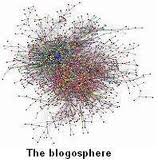
As I work, I have been thinking a little about the blogosphere. I still enjoy blogging, but I’ve been doing it long enough to see the little flaws and imperfections that I would fix if I could do the same sort of fix-it work in the blogosphere that I’m doing around the house.
Here, in no particular order, are 5 things that would make the blogosphere a better place.
1) If Steve Gillmor and his buddies would be happy just being a part of the crowd and stop trying to separate themselves from the rest of us.
I’ve said all I need to say about Steve‘s attempt to toss up walls around his so-called blog by declaring that he won’t link out to anyone. As I have said before, that merely turns back time by making what was an interactive blog into a 1996 era personal home page, neighborhood newspaper, mini-magazine sort of thing. There’s nothing wrong with that- we all had them back in the day. The problem is that, unfortunately, Steve is associated with blogging and all of these grand plans to recreate the blogosphere into a caste system where he writes and the rest of us read is wholly inconsistent with the conversational nature of the blogosphere- which is what brought most of us to blogging in the first place. It also ignores the indisputable fact that none of us were born with an innate knowledge of Steve’s URL and thus has to get it from, yes, a link (props to OmegaMom for pointing that out via a Comment).
My 8 year old daughter and her friends went through a phase this past school year where they began setting up little secret clubs and then inviting those of their friends who were currently in favor to join. It’s human nature to want to affiliate with others, but this behavior was detrimental to the classroom and so it was rightly discouraged. The same thing should apply in the blogosphere.
Looking down your nose at those who disagree with you and calling them “trolls” is a recipe for the summertime blues. The cure might be to take a long look in the mirror and then embrace the blogosphere that exists instead of trying to recreate it to your advantage.
We should resist any attempt to build walls and work to nurture the flattened earth policy that allows everyone to participate equally – without trying to promote new and unnecessary concepts in the name of personal gain.
2) If old media people and new media people would focus on the commonalities and stop fighting for perceived blog superiority.
This is a battle that can never be won or lost. It just goes on and on. Old media writers have years of training that cannot be cast aside just because they write a blog. New media bloggers have a lot to say and the fact that they don’t have journalism degrees doesn’t make their writing frivolous or pedestrian. If we focus on the common ground, there will be less of a need for Nick Carr et al. to make extreme statements and talk about how dumb the rest of us are merely to generate readers (which is an old media trick that many new media writers also use), and there will be less of a need for new media writers to defend themselves in the face of what they rightly or wrongly believe is a claim of journalistic superiority. We’re simply talking about topics that interest us. If I am a dummy or if you are Hemingway, people will figure that out on their own. We don’t have to keeping trying to convince them.
While I am by no means old media, I have co-written several books and a lot of newspaper articles over the years. I don’t mention it here every time one gets published for the same reason I don’t mention it at dinner- it’s not really relevant and to do so would seem immodest. But the fact that I have written for traditional media doesn’t make traditional media better or worse than blog writing- they are different animals.
Blogs are the offspring of the personal web page and the internet message board. They have little to do with traditional newspaper, other than the fact that some old media has smartly embraced blogging. The fact that the traditional newspaper is in trouble has more to do with Craigslist and eBay and CNN and Yahoo than it does with some blog. Stated another way, while blogs may not be old media-friendly, they are not the biggest enemy of old media.
If we put the differences aside and focus on what we have in common, we can get back to the conversation. It’s always better to learn from each other than to fight with each other. That sounds trite when I read it, but so do a lot of the blogospats that keep popping up in the blogosphere.
3) If Technorati would work the way it’s supposed to and Share Your OPML would be embraced by the masses.
I still use Technorati as my primary method to find new blog content and to listen for cross blog conversation. Sadly, it still seems to suffer from growing pains. At least once or twice a week, I come across links to Newsome.Org via my reading list that never show up in Technorati. Additionally, my link count seems to change only rarely and when it does, it goes up and down like the temperature. I still find Technorati to be incredibly useful, but it would be so much better if it were more reliable.
Dave Winer‘s Share Your OPML (a perfect example of an application that does what it is supposed to do without a bunch of needless fluff) has a ton of potential to supplant Technorati as far as blog rankings go, but in order to do that, it needs to be promoted to and embraced by more and more people. If you haven’t explored Share Your OPML, go take a look. You’ll like it.
We still need a way to track inbound links to specific posts and to search for content. A working Technorati and a widely used Share Your OPML would be a great combination.
4) If people would fight the urge to try to make a quick buck every chance they get.
I wrote about the sportsification of the internet last week, and my sermon about the dangers of greed and avarice on the internet can be found there.
Human nature applies to the blogosphere just like it does to the rest of life. And one thing you can be sure of is that someone will try to make money off of anything that happens. Care must be taken, however, in the context of collaborative creations like the blogosphere to make sure that the first person to break ranks and try to monetize the creation doesn’t succeed in co-opting the work of others for personal gain.
Because just like in the case of Stowe Boyd’s brilliant no-assholes rule, once the first person succeeds in doing so, there will be a mad rush to the bank and chaos will ensue.
Blogs started out as more interactive personal web pages. Soon someone tossed up some ads to help a little with the expenses. Before you know it, someone decided that blogs, in and of themselves, could be a business and the race for the almighty dollar was on.
Making money from blogs is not the problem. But treating the entire blogging experience as a way to make money is like the neighbor who treats every acquaintance as a prospective tupperware or Amway buyer. It’s OK to make money in the right context, but treating all of blogging as a money making endeavor is wrong and destined to failure.
Blogs can be a very effective part of your business (see Steve Rubel for a great example of this), but they cannot be your business. Otherwise, it’s only a matter of time before the forces that lead to the decline of the traditional newspaper (primarily the fact that people won’t pay to read online content and that there’s nothing other than ads to sell) will find their way to the blog as a business arena.
Now comes CMP Media trying to trademark the slogan “Web 2.0” for conferences purposes. Are you kidding me? First of all, there is evidence that the slogan was used prior to the O’Reilly conferences in question. Secondly, as Cory Doctorow points out, the slogan “Web 2.0” is used by so many people for so many different purposes that, from a trademark perspective, the cat has long since left the bag.
Again, every single thing in our lives does not have to be about money. We need to collectively draw the line around parts of the blogosphere and refuse anyone who tries to hijack our collective efforts for personal gain.
5) If bloggers learned how to listen as well as they talk.
As I have said many times, I am thrilled by the great content I find via my reading list, cross blog conversations and links people email me. The blogosphere allows me to converse with and become friends with people from all over the US, the UK, Canada, Australia and many other places. It’s like a virtual watercooler where we gather once or twice a day to share information and discuss topics of mutual interest.
Part of sharing, however, is listening to what others have to say. Bloggers talk with their posts and listen with their links. Talking comes natural, but it takes work to become a good listener. I have given lip service to being a good listener in the blogosphere, but the truth is that I could be a lot better at it.
Listening is something I am going to work on over the coming weeks and months. We should all work on it, because a watercooler without listeners can turn into a cacophony of noise that drives interesting voices, both old and new, away.
That’s my 5 step program to improve the blogosphere. I’d love to hear yours via Comment or Trackback.
My deepest sympathies to Robert Scoble, whose mom died this week. Losing your mom is one of life’s inevitable heartbreaks that you can’t prepare for, even if you have time to prepare for it. Back in 1998, I wrote about the last 5 days I spent with my mom. It was a time of great sadness, followed by a time of even greater sadness once she was gone.
Upon the reflection that follows the death of a loved one, Robert writes one of the most thoughtful and reflective posts I have ever read about life perspectives and priorities.
It’s a must read for everyone on this Memorial Day weekend.
PC World has an article ranking the worst tech products of all time.
Here are my thoughts about the ones I used.
15. Iomega Zip Drive
My intense dislike for zip drives has been well documented. 15 is too low. I’d rank zip drives a strong number 2.
13. IBM PCjr
I didn’t have a PCjr, but I had one of its many clones. I used that computer from 1986 to 1990 and it served me well.
12. Pointcast
I actually think the Pointcast screensaver back then was better than anything similar we have today. It was push technology a little before its time.
4. Windows ME
I thought ME was pretty awful as an upgrade, but I didn’t have the massive problems with it that others experienced.
5. Sony BMG Music CDs
Sony did a stupid thing and got rightly trashed for it.
2. RealNetworks RealPlayer
This is my least favorite software of all time. 2 is too low- it should be number one by a mile. Bloatware that is hard to get rid of. It’s better to never install it.
1. AOL
This is a choice engineered to gain approval by the technical elite. AOL has lots of problems, but it has also helped bring millions upon millions of people to the internet. AOL is the bunny slope of the internet ski mountain. I don’t use it, but I recognize its value, particularly historically, to lots of people.

Stowe Boyd’s blog is like golf or photography. There are some good shots, a few bad ones, and then, every so often, the magical, perfect shot that keeps you running back for more.
Not too long ago, he nailed the noisy blogosphere thing so well, I quoted his post like scripture.
Today, he talks about the downside of Advisory Capital and in the process gives a sermon that applies just as much to business, relationships and life. Much of what he says is completely consistent with my experience with business, both big and small. And much of what he says is equally consistent with encounters we’ve all had in conference rooms, board rooms and our neighborhoods.
Here’s the part that made me stand up and shout Amen this time:
“[O]nce rule #1 is broken — the “No Assholes” rule — then there is no hope. People can learn to moderate their behavior, but never their basic psychological makeup. Once they start [screwing] you over, there is no end, because if they rationalize doing it once they will always be able to go through the same thinking process again and again.”
This precipitating event for the violation of the “No Assholes” rule (a first cousin of my long held and often applied “That Just Ain’t Right” doctrine) is when someone has to choose between doing the right thing and the easy thing. Between telling the truth and saying what they believe is in their best interest. Some people will make the right choice, but many won’t.
And someone who lies about one thing is a sure bet to lie about the next thing, and the thing after that.
Stowe is generally correct that suing someone over a resulting breach of a contract is generally a waste of karma that only enriches the lawyers (of which I am one). Unless there is a lot of money at stake, our legal system often doesn’t provide realistic options for the wronged.
All you can do in that case is, as Stowe suggests, avoid the offenders like the plague. I have walked away from some big clients over the “That Just Ain’t Right” doctrine, and I have let budding friendships die on the vine for the same reason.
It’s not a perfect solution, but the more people who demand compliance with the “No Assholes” rule and the “That Just Ain’t Right” doctrine, the better off we’ll all be.
 Newsome.Org