Christmas Comes Early: Evernote Has Folders!

evernote

I’ve moved from an Evernote evangelist to an Evernote activist and back to a happy Evernote customer, all thanks to the inexplicable absence and now presence of folders within its desktop app.

Without rehashing the dark and bloody past, and asking what in the hell took so long and whatnot, let’s move straight to the good news.

The just released version 4.1 of everybody’s favorite information storage and retrieval app finally lets us organize notebooks in folders.  They are called Stacks in the app, but that is just semantics.  Folders are here, and I am happy!

image

See the little white arrow to the left of “Work” up there?  Click on it and the Notebooks in the folder magiciliously  expand.


image

Wonderful!

The process is a little kludgy.  When you create a Stack, by right clicking on a Notebook, you don’t get the opportunity to name it right away.  The selected Notebook gets added to a generically named “Notebook Stack.”  You can then select (important step), right click and rename the Stack.  It’s not elegant, but doggone it it’s folders.

The upgrade process was also a bit of an adventure.  I upgraded at work, and things went swimmingly.  After updating, I quickly made some Stacks.   When I upgraded at home, things went a little amiss.

First, my app somehow ended up in an Asian language very much indecipherable to me.   So I deleted that installation and reinstalled from scratch.  I got my English back, but the Stacks I created at work did not sync over.  I am apparently not the only person having this problem.

Someone suggested deleting your local Evernote database and resyncing (IMPORTANT NOTE: copy and paste or otherwise preserve your local, non-synced Notebooks somewhere before you do that; I learned that step the hard way when I reformatted my hard drive a few months ago).  I tried that, but it didn’t work.

So I had to recreate my Stacks.  That’s a little bit of a drag, but it doesn’t change the fact that…

Evernote has folders.

Hallelujah!

Why Facebook Groups Will Revolutionize Social Networking

The secret to an enjoyable social networking experience is the ability to properly manage your content.  Better content management control equals a better experience.  Despite the fact that it originated from a user-unfriendly design that was aimed at college kids looking to poke (online or off) each other, Facebook finally seems to get this, and they are constantly introducing new features that will serve both Facebook’s purpose (internet domination) and ours (a better user experience).

As I was dragged, typing and clicking, onto Facebook (Friend me if we are), the first thing that struck me was the sheer volume of posts relating to Farmville and other similar nonsense.  For a while I was amazed at the amount of gibberish that crossed my screen.  It was almost as chaotic as Twitter (Follow me), except that nothing else can be that chaotic.

Facebook filters were the first and biggest step in my Facebook content management initiative.  In one or two clicks I can forever rid my stream of Farmville and all sorts of other so-called games that inspire so many seemingly sane people to obsessively hunt for and/or give away livestock and implements (or whatever one does in Farmville) while the developers of Farmville undoubtedly pinch themselves repetitively on their way to the bank.

Filters helped me avoid much of the bad stuff, but I wanted a way to find the good stuff.  Like most people, my list of Facebook “Friends” spans various segments of my real life.  I have hometown friends, college friends, local friends, and tech friends.  Lists allow us to separate content into buckets of people, but separating content by person doesn’t work very well.   For example, if one of my college friends says something interesting about a tech topic, I won’t see it if I’m reading my “Tech” list.

We needed a way to manage content by topic.  The recently released Facebook Groups feature gives us this.  It’s really early, but I think Facebook has hit a homerun with Groups.  Here’s why.

They Are Topic Based and Deeper

As noted above, segmenting your Facebook stream into buckets of people is not an elegant solution.  Groups, at least the ones I am involved in so far, are generally topic based.  My  favorite Group so far is a tech group, set up by one of my Facebook friends.  It allows me to quickly consume lots of good, non-spammy content written by people who are invested in the topic.  Additionally, it allows me to share information and interact with a lot of people who share the interest but are not my Facebook “Friends.”  As long as the Groups can be properly managed (more on that below), I think Groups will quickly become the go-to place to discuss topics on Facebook.

Being topic based also helps reduce the amount of other content which, while not quite Farmville-stupid, isn’t interesting to me.   I’m primarily talking about party-spoon-fed political hate-regurgitation (I’m really bored with all the Obama-bashing) and supposedly, but not really, uplifting quotes.  If I can tune my Facebook content like a TV channel, my Facebook experience will be more efficient and more enjoyable.

All of this makes me think Groups will very quickly become the default Facebook hangout for most people.

In fact, I think Groups will eventually become the backbone of Facebook, content-wise, design-wise and revenue-wise.  Think about what topic-based Group pages will mean for advertisers.  Sounds a little Google-like, huh?

There’s No Imported Content Which Leads to More Interaction

Unlike my main Facebook stream, where many people import content they create other places (such as Twitter), all of the content in Facebook Groups originates from within the group.  I have actually filtered out real-world friends on my main Facebook stream because so much of their content is imported that they don’t even see Comments and stuff.  If we can’t talk, then all you’re really doing is spamming me.  That is much less of a concern within Groups.

Meaningful interaction is the primary mover for much of the internet herd.  And it is about 100 times better in the main Facebook stream than on Twitter, and it’s about 10 times better in Facebook Groups than in the general Facebook stream.  That’s a lot.  Of content, interaction, and potential ad dollars.

There is the Potential for Proper Curation

Over time Facebook is going to have to give Group administrators a way to police members and probably even membership.  Years of online community building has taught me that there will be a segment of any group (lower or upper case) who only wants to harass and/or spam.  This is an absolute.  It will, at least initially, be less of a problem in “closed” Groups, like the tech group I am spending a lot of time reading, but it will be an issue for all Groups.  Probably sooner than later.

Note that I said “proper” curation.  The one thing that will drive me away from Groups and possibly Facebook as a whole is if Groups become like merit badges, and we end up in some new Gatekeeper controversy.  Proper curation should toss troublemakers out, but not serve as an implement of exclusion.

Done correctly, however, Facebook Groups can increase the quality of content geometrically.  Quality content, properly managed is the holy grail of online communities.

Facebook has some work to do, but I think Groups are going to be huge.

And About Google.Me (or Leave My Email Alone)

As a brief aside, the only other platform that has the potential to create this sort of curated interaction is Google Reader.  It’s too bad Google has largely abandoned Google Reader in its now redundant effort to create a content management tool inside of Gmail (which was obviously done to co-opt the huge Gmail user base).  I’m so in love with Chrome, that I’d try like hell to support any sane attempt by Google at social networking, but I am not optimistic that Google is going to present us with anything compelling.  My one hope (and remember this) is that Google.Me ends up embedded in Chrome (both the browser and the OS) instead of Gmail.  By itself, that won’t guarantee success, but it would be enough to make me take a long look.  And to pull for them.

Is It Time to Dump Netflix?

netflix

I love me some Netflix.  Well, at least I used to.  But lately I’ve been thinking it might be time to cancel my subscription.  Here’s why.

First and foremost, there’s nothing I want to watch.  I have had the same three DVDs sitting on a shelf in my office for months: The Hangover (I think I’d like it, if I ever get around to watching it), Yellowstone: Battle for Life (I have no idea what I was thinking), and The Hills Run Red (I don’t even recognize that name, but I generally like B-movie horror films).  I’d either watch these or send them back for something better, if I could find something better.  And there lies the issue.

It has been literally months since I have seen anything on the Netflix new releases list that I really want to watch.

Here’s the list of new releases for this week.

image


Seriously?

For one, there’s the consumer-be-damned 28 day delay for new releases.  I’m not going to buy a DVD to watch it once, and I’m sure as hell not going to drive to a brick and mortar video store (do people even do that anymore?).  So all this does is irritate me, and hurt Netflix.  Because the result is that I spend a lot more time browsing iTunes looking for something I can watch, you know, immediately.

It’s crazy that what used to seem so fast (2-day shipping) now seems so incredibly slow.  Anything I’m really excited about gets watched via iTunes, before I would otherwise get it via Netflix.

At this point, only inertia and the low monthly cost is keeping me from abandoning ship.

Clearly, the future of movie rentals is online, via downloads and streaming.  Now that Blockbuster is giving Toni Braxton and Hollywood Video a run for their money in the bankruptcy filer department, maybe Netflix will hang on long enough to become the other primary source of online video (behind Apple, of course).  Progress is clearly being made, but there is much work to be done.

Netflix better hurry, because new release lists like this won’t keep me around for long.

Why Chrome is Going to Win the Browser War

Jolie O’Dell reports that Internet Explorer’s share of the internet browser market has fallen below 50% for the first time in a very long time.  Meanwhile Firefox’s share grew by half a percent during September 2010.

Three things seem pretty clear to me.  One, Internet Explorer is fighting a war it can’t win.  Two, Firefox is going to have to scramble to stay in the game.  Three, Chrome is going to beat everybody.  Maybe sooner than later.

Internet Explorer had a good ride, replacing Navigator and becoming the people’s (default) choice for a decade or so.  I moved from Navigator to Internet Explorer back in the day (after much urging from my IT friends at my old firm), and then from Internet Explorer to Firefox a few years ago (also at the suggestion of my IT friends).  Internet Explorer seemed bloated, and Firefox seemed lithe and nimble, and offered a web-full of excellent extensions that allowed me to create something akin to a custom-made browser.  But over time, Firefox started to get a little pudgy.

Then came Chrome.

I tried Chrome when it was first released and was very under-whelmed.  I ran straight back to Firefox for another year and a half.  A few months ago I tried Chrome again, and, wow, what a difference!

Chrome, at least so far, is the best combination of efficiency (e.g., non-bloat), speed, good design (both looks and usability) and customization.  It’s both minimalist and robust.  I love it.

The universe of extensions kept me tethered to Firefox for a long time- probably too long.  When I took another look at Chrome I realized that you don’t need as many extensions with Chrome.  And I realized that the ones I really need are available.  I only use 7 extensions, but they are 7 great ones:  AdBlock, Google Dictionary, Google Mail Checker, Google Voice, iReader, NPR and RSS Subscription Extension.

Chrome is, hands down, the best browser right now.  Add Chrome’s elegant (and strategically advantageous) integration with other Google products, and Google’s obvious commitment to push out upgrades and new features, and I just don’t see how the other browsers can compete.

I’ve moved my entire family to Chrome and, unlike my disastrous attempt to move my family from Word to Google Docs (which resulted in an immediate and simultaneous mutiny on the part of every other member of my family), everybody is happy.

Are the Boy Scouts Trying to Self-Destruct?

Look, I was a Boy Scout.  Heck, I am an Eagle Scout, and went to the 1975 Boy Scout World Jamboree in Norway.  Boy Scouts were a material part of my youth.  So I’m not a hater.

But (and this is a big ol’ but, oh yeah), in order to stay relevant, organizations have to evolve smartly.  By smartly, I mean in a way that preserves your fundamental goal and purpose, while reflecting the overall direction of society.

boyscouts

Need some examples?  Freddy losing the ascot is smart evolution.  Every major network TV show glorifying tobacco, drugs, sex and general disrespectful behavior is bad evolution.  In other words, there is a sweet spot somewhere between Father Knows Best and 16 and Pregnant.

I’ve expressed previously my concern about the direction the Boy Scouts seem to be taking.  At that point, my mental jury was still out, but I was trying to be supportive.  My son is only 4, so I have some time to decide if and how I will nudge him towards scouting.

But when the Boy Scouts ignore technology, cultural trends, copyright law and common sense at the same time, then I’ve had enough.

In fact, I could sit in a quiet place all day and not come up with anything more ludicrous than the idea that parents shouldn’t listen to legally burned CDs because they look like pirated CDs:

So how can Scouters teach ethical behavior related to music downloading? One way: Set a good example. When you haul around Scouts in your car, for example, only play CDs that you’ve purchased. If you play CDs that you’ve burned—even if they’re legal—your Scouts may not recognize the difference between those and the pirated CDs friends have given them.

Seriously?  Do these guys have any idea how the world works now?  Does the dude who wrote this drive a horse and buggy to work?  Take off the ascot and look around you, dude.

There’s more:

Piracy relates to the concept of honor, but Aretz points out that it also relates to bravery. “Technology makes it easier to be dishonorable in some ways. Therefore, you have to have more courage to act honorably.”

Maybe mathematically, but under the same logic, not only do guns make it easier to kill, but doors make it easier to run away.  I have a feeling all of this data and much of this bad logic was hand-fed to whoever decided to hit the publish button on this unfortunate article by the RIAA and the MPAA.

I don’t pirate music, and I haven’t bought a CD that was available in downloadable format in years and years.  Almost all of my music comes via MP3 download from Amazon.  Even on the rare occasion where MP3 versions of old records I want are not available for purchase, I buy the CD, rip it to my (non-shared) music server and shred the CD.

So. . .

If I ever want to listen to my legally purchased music in my truck, I have to legally burn the purchased MP3s to a perfectly legal and ethical CD-R.

Furthermore, none of my kids or their friends own any CDs, burned or otherwise, as far as I can tell.  They get all of their music via iTunes and tote it around on their iPods and iPhones.

In sum, avoiding CD-Rs because kids are too dumb to know the difference between legally burned media and pirated music was bad advice in the nineties.  It’s ascot-level idiotic in 2010.

Current odds of me nudging my son towards Boy Scouts: down 20% based on this.  Currently standing at 39%.

Facebook Etiquette: Cruel to Be Kind, in the Wrong Measure

I’m a little punch drunk and heart sore after reading another example of narcissism, hatred and polarization in America***.  The lack of self-awareness and empathy in this country is epic, and saddening.  We need to relearn logic and civility.  We need less hate and more love.  Less anger and more kindness.  It sounds trite, but it is absolutely the truth.

Which leads me to Facebook (if we are, “Friend” me).  I have learned to live with Facebook’s nonsensical organizational and navigational structure in the name of meaningful and efficient social interaction.  Unlike Twitter, which I completely don’t get, there is actual social interaction to be had via Facebook, largely because the non-nerds have embraced it.  This is good.  We also need less nerdity, but that’s a topic for another day.

One of the reasons people flock to Facebook is because Facebook imposes some rules that, at least in theory, improve the experience.  In general, I agree with this.  But Facebook’s sense of etiquette is odd, in at least two ways.

We Need a “Dislike” Button

Why in the world isn’t there a native “Dislike” button for Facebook posts?  Is it really a breach of etiquette to disagree with something?  Are we a nation of sissies or what?  How in the world can you even have a conversation when the only possible responses are to say yes or give a sermon?

Like our polarizing society at large, there are a lot of haters on Facebook.  Much of the hate is politics based.  I haven’t been excited about politics since Jimmy Carter’s acceptance speech (what a great night that was) at the 1976 Democratic Convention, so I generally ignore political rants.

What my conscience won’t let me ignore is thinly disguised racism or hate masquerading as patriotism.  There are a lot of what, at first glance, look like religious and patriotic gestures on Facebook that are actually the opposite of both.  I badly need the ability to succinctly register my disapproval of that sort of thing.  A “Dislike” button would do that.  Without one, I have to either ignore something I find offensive or write a Comment expressing my disagreement.  Writing a Comment is much more confrontational than simply “Disliking” something.  Plus, having “Likes” and “Dislikes” would allow people to quickly gauge group sentiment on things.

The absence of a “Dislike” button, which seems to be an attempt to encourage civility, actually has the opposite effect.  We need a “Dislike” button.  Etiquette demands it.

It’s OK Not to Be Friends

Facebook seems to think that we all have really fragile karmas.  Otherwise, why wouldn’t there be an option to say say “No” to a “Friend” request?  Sure, you can now say “Not Now,” but as TechSpot points out, this results in the bizarre situation in which the rejecting person’s public posts show up in the rejected person’s stream.  You don’t have to suffer the horror of someone saying no, but you get to be constantly reminded that they did.  Crazy, no?

I recently sent a “Friend” request to Craig Newmark.  He and I are by no means real world friends, but we have emailed a few times over the years, and have a lot of mutual friends.  I thought he was getting unduly crapped on over the Craigslist thing, and decided to reach out.  Anyway, he didn’t accept my request, which is perfectly fine.  The problem was that, because I sent a “Friend” request to him, his public posts started showing up on my Facebook wall.  Since he and I are not Facebook “Friends,” I was not able to comment on those posts or join in the conversation.  In effect, I was being excluded from conversations on my own Facebook wall.  Since there is, for reasons that escape me, no easy way to withdraw a “Friend” request, I had to block Craig and then un-block him, just to go back to square one.  This is perfectly illogical and unnecessary.

It would be so much more efficient- and so much less offensive for everyone involved- if someone could just say no to a “Friend” request, and have the requesting person notified.  If your sense of self-worth is dependent on whether someone accepts your Facebook “Friend” request, maybe you should step away from the computer.  Heck, I’ve had lifelong real world friends un-“Friend” me, and I still manage to get up and live my life every day.

*** For the record, I largely agree with the points Mike is making, if not the way he chose to make them.  Having said that, I also think our government and economy is generally set up to favor the super-rich over everyone else, and if there is a tax increase (which would be fine if used for the right purposes), the super-rich will figure out a way to avoid or recoup much of their losses, in one way or another at the expense of the rest of us.  John Scalzi, author of one of my favorite books, has the best take on this latest brouhaha.

Will Google.Me Cure Our Social Blues or Just Our Insomnia?

It’s looking more and more like I was right about Google.Me.  It’s sort of good to be right (particularly in the face of all the internet hype about how Google.Me is going to reinvent the internet and so forth), but bad that Google.Me is shaping up to be an expanded Google Buzz, mashing together a disparate bunch of applications, some of which Google is buying as we speak, into an inelegant, Gmail-captive mess.  I hold out hope that I’m wrong about this, but the likelihood that I am diminishes with every new leak and rumor.

Google.Me will apparently be built on the back of Google Buzz (as I predicted long ago), which exists as an awkward bolt-on to Gmail.

TechCrunch says:

We’ve also heard more from sources who’ve worked with Google on the product. “Google Me is not a product, it’s a social layer across all products” (not so helpful). But there’s more – “Google Me will produce an activity stream generated by all Google products. Google Buzz has been rewritten to be the host of it all. And the reason Google Buzz isn’t currently working in Google Apps is because they’ll use the latest Buzz to support the activity stream in Apps…All Google products have been refactored to be part of the activity stream, including Google Docs, etc. They’ll build their social graph around the stream.”

This is very bad and all the huffing and puffing in the blogosphere is not going to make it good.  When someone describes their world-changing product with a bunch of gibberish that sounds vaguely like a ton of other failed products, that’s reason for concern if not full-on panic.

What Google should do is build a completely new service, largely from the ground up, using its own technology and that of the many, many applications and services it has acquired over the past few months.  Gmail could be the digital hub for our online lives.  For example, the recent expansion of more services into Google Apps has already led me to try (and fail, but at least it made me try) to like my Start Page (e.g., iGoogle).  But stuffing more tossed together junk into Buzz, which was already tossed into our Gmail accounts sounds like the opposite of elegant.  Candidly, it sounds like a snoozefest of meetooism.

I really hope I’m wrong, but at this point I can’t help but believe that the general reaction to Google.Me is going to be one big yawn.

Once More, With Ennui: RSS Is Not Dead

RSS is dead.  Long live RSS!
RSS is dead. Long live RSS!

My buddy Robert Scoble gets a lot of stuff right.  But he has a habit, shared by many of the internet technorati, of trying to make things into bigger things.

You know, everything is the next big world-changing technology.  Facebook is the Google killer.  Google.Me is the Facebook killer (actually, even the most impassioned technorati can’t say that with a stright face).  On and on.

Now the story is, again, that Twitter and Facebook are killing RSS, and as a result RSS readers.

Sigh…

No, they aren’t.  Bloglines died due to neglect.  Seriously, before today when was the last time you heard of Bloglines?  I figured it was already dead.  Is Bloglines the new Franco?

This past weekend, I drove a big U-Haul truck from Grand Rapids, Michigan to Bellaire, Texas (Lambert’s Café, home of the throwed rolls, in Sikeston, Missouri is the coolest restaurant on the planet) in less than 36 hours.  As such, I’m too tired to write another dissertation on why Robert is kidding himself.  So, I’ll just share two relevant thoughts.

One, while Bloglines and Franco are still dead, Google Reader is actually growing.  Yes, Google (being Google) doesn’t really have a plan for Google Reader, and has stuffed some unnecessary bloat in there, but Google Reader is, simply stated, the best tool on earth for managing, reading and sharing a lot of information in a reasonable time.

Those who think Twitter is the place to get most of your news and content (1) are lovers of the chaos and/or (2) have WAY more time to screw around on the internet than I do.

Two, an example, in pictures.

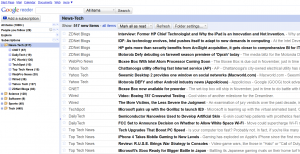
greader2010-300x154

While I was driving and driving and driving, my news items got a bit backed up.  Thousands over all, and 517 in my Tech News folder.  It would take days and days, and be a profoundly miserable and frustrating process, to find and consume this much content via Twitter or Facebook.  It’s just not feasible.

With Google Reader, it’s easy and fun to quickly scan the headlines, read the articles that interest you, and share (via the Send to feature) the most interesting stuff.  Total catch-up time: 25 minutes or so.

Long live Google Reader

When Did Craigslist Become the New Hamsterdam?

Netizens (there’s that word again) everywhere are taking brief Farmville breaks to express outrage over the fact that pimps and hookers are suddenly not allowed to sell their goods and services on Craigslist.  What is the world coming to if we have to get in our cars and drive around seedy areas to buy illegal services that may be exploiting other human beings?  What’s next, are they going to tell us it’s not OK to kill people?

bunnycolvin-300x180

We need a revolution, and we need one now.  Paging Fidel.

Seriously, could this whole brouhaha be any sillier?

Danah Boyd does a good job of presenting the Bunny Colvin plan.  You know, let’s gather up all the criminals and give them a designated place on the internet, where they can ply their illicit trade while we . . . you know, watch them.  That way, the rest of us can go about our business of raving about Twitter and trying to become the mayor of Taco Bell without worrying that some cyber-dwelling prostitute will flash her boobs at us. Well, except for the Facetime thing, but let’s not get distracted from the dogged pursuit of justice here.

Lots of other defenders of our right to party have chimed in as well, including the usually reliable TechDirt.

Let’s face it, this is all about the “c” word.  No, not that one.  Censorship.  And everyone knows that just the mention of that word will guarantee that you win the debate.  Any debate.

See?

Look, if we’re going to do this, let’s at least do it right.  We shouldn’t require that Craigslist take down the Adult Services (what a hoot of a word) section.  We should make them add a Murder for Hire section.  A Ransom Notes page, where kidnappers can freely express themselves.  Why spend all this money on national security and Iraq and whatnot, when all we have to do is put a Terrorism category on Craigslist?

It worked for Bunny.  By George Bush, it will work for us.  I said that just so I could say bush in a blog post.  Freedom is a wonderful thing.  Well, except for the women who allegedly get traded like rookie cards via Craigslist ads.  It’s probably not all that wonderful for them.

On a semi-serious note (but only semi-so), Craig Newmark has always struck me as a good guy who genuinely cares about people (even if he hasn’t accepted my Facebook friend request).  As such, I sort of hate to see him dragged over the coals about this, particularly since he has long made it clear that he does not have operational responsibility for Craigslist.  Having said that, he shouldn’t be terribly surprised that this issue came up, and it is, after all, his list, at least in name.  I guess I wish this were a golf game instead of a gigantic PR nightmare, so we could give him a mulligan.

All we can hope for now is a resolution that strikes the proper balance.

I just don’t know that Hamsterdam 2.0 is the answer.

Live Writer Beta + WordPress 3.0 = Jumbled Mess (for Now)

NOTE: This blog post is going to be all jumbled up.  I am trying to show the Live Writer developers a problem that exists with the current beta and WordPress 3.o

I love Live Writer.  I’m even willing to learn to live with the Ribbon in the beta version.  I love WordPress, and find 3.0 to be a nice advance of the platform.

But, at least for now, the Live Writer beta and WordPress 3.0 do not play well together.  The problem is that the photo or other graphic layout (location, placement, etc.) created in Live Writer does not make the trip through WordPress 3.0 and onto the applicable blog page.

Here are some examples, using some random screen caps.

image

There’s a screen cap of my Facebook profile.  I am a Go Dog Go-ocrat, because I think just about every single problem we face in society originates from the moment the first person decided it was really important to differentiate himself from all the other people.  In other words, once dogs start driving cars, it’s all over.  More importantly for purposes of this post, that graphic is supposed to be above this paragraph.

Here’s a picture of a book I just read.  I liked it.  That graphic is supposed to be below this paragraph.

image

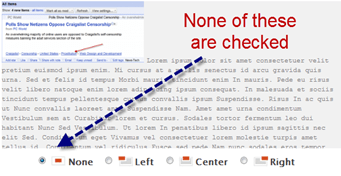
For some reason, the alignment and other information is getting lost between placement in live writer and publishing to a WordPress 3.0 blog.  When I look at the published and jumbled post under the WordPress dashboard, the graphics appear to have no placement information associated with them.  By that I mean nothing is shown under the graphic, not even “None.”  That graphic is supposed to be under this paragraph.  None of these images should have words beside them.

image

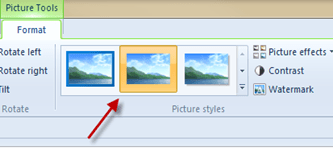
I suspect that this problem has to do with the photo setting “Inherit from Blog” in Live Writer.  It may be that you need to specifically set the information for each photo or graphic to “None” by double clicking on the image and selecting the second choice under Picture Tools.  Let’s see if that helps.

image

Nope.  It’s still a mess.

Live Writer and WordPress are two of the three applications (along with Google Reader) that I use the most.  I’m sure this will get fixed.

I’m just doing my part to try and help.