Morning Reading: 8/28/06

While I love the show, I too was disappointed in the Deadwood season finale.

According to Download.Com, Yahoo Finance now has free streaming stock quotes. Note that streaming does not equate to real-time- they are still delayed by 15 minutes.

Jeneane Sessum to Robert Scoble: “Close the Dave Winer playbook and be yourself.” Sounds like good advice to me. Follow up.

And on the topic of Scoble, this post criticizing him for not allowing his content to be stolen and reused without attribution is either a weak stab at satire or the most ridiculous post ever. James Robertson agrees. Scoble responds. Thankfully, the offending blog seems to have been suspended by its ISP.

I missed the whole Lonelygirl15 debate, but Mathew Ingram has a good primer on it, including links to a couple of others speculating on whether this is a real person or some sort of viral marketing. I watched about 10 seconds of one episode on YouTube, and lost interest- in the video itself. But it does occur to me that too much artifice in the name of viral marketing would dilute the beauty of video blogging as a medium.

Tags: ,

Google Makes Its Move

googleappslogo

Dan Farber reports on tomorrow’s release of Google Apps for Your Domain, a grouping of online applications Google hopes will allow it to compete with Microsoft’s highly entrenched Office suite.

The initial package will contain email, calendar, IM, and web site creation applications. Obviously missing are word processing and spreadsheets, which Google plans to add later this year when Writely and Google Spreadsheets will be added to the mix. Like everything else Google-related, the applications will be ad-supported.

Google is smartly couching its package, at least initially, not as a replacement for Microsoft Office, but as a way to add collaboration features.

While it seems odd that Google would push its package out the door now, without the most important applications, word processing and spreadsheets, the forthcoming upgrade to Office promises better collaboration features. Google probably figured it was better to get its product out the door now and generate a little buzz (and likely a bit of second guessing) than to wait and be drowned out by the buzz that will erupt when Office 2007 is released.

As I have said many times, corporate America is not going to embrace online applications and storage for a long time- privacy, security, fear of a bad decision, and confidentiality requirements ensure that. But the more individuals and small businesses that opt for Google’s free alternatives, the bigger Google’s toehold is- both in the office productivity space and in connection with its master plan to be the keeper of all of our data.

Bold but troubling is word via InformationWeek that “Google’s plans include prompting people who send Microsoft Office documents using Gmail to translate those files into Google’s formats for editing on Google.com, presumably in a forum where ad space is up for sale.” One of the great and valid fears of IT managers is data spread- when your data is spread all over the place, it becomes harder to protect and manage.

Which is not to say that Google’s package won’t one day be a legitimate option for individuals. An open question is whether the almighty ad dollar Google is chasing will be content to hawk its wares to personal users.

The obvious criticism of Google’s offering is its patchwork origins, as the Information Week article points out:

“The Google solution is what I’d call patchwork, or Frankenstein, software,” says Tom Rizzo, a director for Office SharePoint Server at Microsoft. “You have to put it all together yourself.”

Will Google succeed in wrestling the office productivity crown away from Microsoft? Not a chance.

But as Dan points out, there is “disruption in the air.” The unanswered question is whether mere disruption is the goal.

Or something bigger.

Tags: , ,

I Understand the How, But What About the Why?

Om Malik talks about Dave Winer’s recent obsession with surfing the net, setting up news river feeds for his buddies and doing blog posts on Blackberries and other handheld devices. Dave even has a video that shows how he does it (sort of).

I’m now on my third Blackberry, so I know Blackberries. They are great phone/PDA combinations. And my new one doubles as a wireless broadband modem. I use it all the time to access the internet- with my laptop. Blackberries are woefully behind the curve as far as media goes, but there are new models on the horizon that will hopefully close the gap a little.

So I understand how to do a blog post on a Blackberry. Well, actually, you simply do it via email. But it’s certainly possible to do it the hard way like Dave shows in his video. I’m OK with all of that. Really.

What I don’t understand is why you would want to surf the net, read your news and write blog posts on a Blackberry?

I assume no right thinking person would if they were at home or at work, where there’s always a big, visible computer nearby. With a screen you can read, a keyboard, and a fast internet connection.

When traveling? Well maybe, but wouldn’t anyone who has a blog also have a laptop with them?

The true mobile computing value of a Blackberry is its ability to serve as a wireless broadband modem and allow you wider access without high hotel and airport day rates. But oddly that angle isn’t part of the new push.

I think people are treating this Blackberry as a web surfing and blogging tool the way mountain climbers treat a mountain. They move right past the why and just start climbing. Because they can, because it’s cool, or because they’re bored. Or maybe so they can try to convince more people to use their mobile computing products.

Perhaps it’s just that Dave has a new toy and he’s putting it through its paces. Like the way we used to make choppers out of our bikes.

People will fall all over themselves trying to rationalize it away, but everyone who is actually trying to get content, as opposed to push content, knows that other than text based headlines and the occasional weather forecast, surfing the net on a Blackberry is sort of like running a race in wooden clogs. You can do it, but it’s slow and painful.

Creating web content on a Blackberry? Surely you jest.

Until someone addresses the why, I’m going to sit here in front my computer and watch- with amusement.

Tags: ,

You Can Own the Podosphere!

Following the trail blazed by Kiko, Stowe Boyd has put the podosphere.com internet domain up for sale on eBay.  Domains have been available on eBay for years, but thus far eBay has not really achieved any traction as a domain auctioneer.

In the wake of the Kiko buzz, that might change, at least as it relates to techy sounding domains.  Stowe’s experiment will be interesting to watch.

At least one savvy podcaster has already bid $17.95 🙂

Tags: ,

Morning Reading: 8/27/06

Kiko sold for $258,100, therby validating my belief that eBay is a legitimate exit strategy for Web 2.0 companies.

Rahul Sood, the president of Voodoo PC on his email conversations with Michael Dell (good stuff in the comments as well).  (via Dwight Silverman)

Psychology Today on the Hidden Side of Happiness.

Make a paper star and throw it at somebody.

This might be the funniest site on the internet. I’m laughing so hard I can barely type.

Tags: ,

Saturday Night’s Alright for Playing: Tompall Glaser

I mentioned the other day that I bought a USB turntable and have started coverting some old, out of print records into MP3s and putting them on my music server.

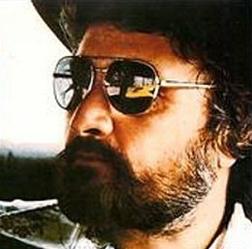
tompallTonight I converted two records by the great Tompall Glaser. Tompall is the father of the outlaw country movement, and it’s a crying shame that more people don’t know and appreciate his music.

One of the records I converted tonight was Tompall Glaser and His Outlaw Band, from 1977. On this record, more than others, the conversion was hard due to scratches and mixing issues. But if you want to understand why I go to the effort, just listen to Tompall and his band stretch out on I Just Want to Hear the Music.

I realize that the sound, on this record in particular, is a far cry from CD quality. But it’s such a treat to be able to queue up some of these old records that I don’t even care.

Fine music by an American master.

Tags: ,

Morning Reading: 8/26/06

Steve Rubel likes Original Signal, an aggregator of the 15 most popular Web 2.0 blogs.  I prefer Techmeme where the coverage is broader and more inclusive.

Mashable has an interesting and comprehensive history of Facebook.  We didn’t have computers, much less the internet, when I was in college, so I know nothing about Facebook other than what I’ve read, but I like the fact that Facebook is limited to students.

Dave Winer responds to the recent river of news criticism.  I like the last part, where he talks about working with Josh Bancroft.  I hope he does.  Meanwhile Scoble gushes over Dave, compares him to Douglas Engelbart and apologizes on behalf of all of us for doubting him.  Wow, even The Commander and Jetstream never had Hero Support like that.

Christopher Carfi has a great series about getting found in the long tail.  Read the whole series, because it is good stuff.

When I hit 60 I hope I don’t start having stupid ideas like this.

I told you the real world doesn’t view the internet through tech colored glasses.

Karl Martino on influence in the blogosphere.

Tags: ,

Blog Theory

Earl Moore posts about the difficulty of finding time to blog amid life’s larger responsibilities- like the job, the family, the outdoors and having fun. Richard Querin adds his thoughts as well. It’s a challenge for sure. While I don’t always do it well, here’s my approach to blogging, which shares much in common with Earl and Richard.

Early in the morning, before work, I read my RSS feeds (via Bloglines), Techmeme, my personalized My Yahoo page and my personalized Netvibes page. If I see something I want to write about, I’ll either begin a draft post and save it to finish later or, if I’m in a hurry, bookmark it via Del.icio.us.

My ability to read or post from my office depends entirely on my schedule for that day. If I’m in the office, I can generally finish and publish a quick post over lunch. Because I often have lunch meetings, I try to have several posts finished and in the queue to be published, so all I have to do is take a few seconds to publish them during the day. At any time I generally have 5-6 completed or nearly completed posts sitting in my queue for this purpose (a series, like my Web 2.0 Wars, is very good for stacking your queue). Writing a bunch of posts in advance sounds like a pain, but since I do a lot of my writing late at night on weekends (after the kids go to bed), it happens naturally.

If I’m in the office all day, I try to read my RSS feeds over lunch and then again near the end of the day. One thing I regularly do throughout the day is tag things, again using Del.icio.us, that I might either respond to that night or include in the next day’s morning reading post. At night before I go to bed, I do a draft of the next day’s morning reading post so all I have to do in the morning is add any new items that I come across during my morning read.

Late Friday night, after the kids go to bed, is generally devoted to doing my weekly podcast. I keep a mental list during the week of the songs I want to play. The tech talk is generally ad libbed, based on whatever I’m writing or thinking about at the time.

It’s not a perfect system, and sometimes I get woefully behind. But the more I write, the easier it is to keep things moving along.

I really like Richard’s notebook (the non-computer kind) idea. I may give something like that a try.

How do you manage your blogging?

Tags: ,

Reinventing the Music Industry

Mike over at Techdirt has a very interesting read about the music business. As a long-time musician, songwriter and, most importantly, music fan, the parade of bad decisions made by the music industry over the past few years has just about driven me nuts.

As Mike points out, a large part of the problem is that portions of the music industry, primarily the record label cartel represented by its henchman the RIAA, is trying desperately to hold on to what is quickly becoming an obsolete business model. Beginning with the re-examination of industry economics that led up to Courtney Love’s excellent piece in Salon back in 2000 (which proves either the value of ghost writers or that Courtney isn’t the complete nincompoop she generally appears to be), through the emergence of online distribution as the channel of choice for the new generation, and up to the current spate of lawsuits against children and dead people that have coalesced all manners of opposition into a line of defense that is starting to turn the tide of battle, the music industry has struggled to figure out a way to preserve what has long been the highly profitable role of both gatekeeper and banker to the music.

The music industry in general and the record labels in particular have not faced the fact that the world has changed- and all of the lawyers in the world can’t change it back. The bag is empty and the cat hasn’t been seen in years.

Which leaves the music industry with two choices, and only two choices: find a new business model or hold on as hard as you can until the cash pipeline dries up. The smart choice is to take some pain now to become a part of the new world order. The dumb choice, which seems to be the way the industry is going, is to sue everybody in sight for moving your cheese. Those lawsuits work on underfunded individuals who have no choice but to capitulate. They don’t work on an entire movement or on moms from Oklahoma.

Other than the fact that you can’t turn back time, the most aggravating and self-destructive part of the record label’s strategy is that it is attacking the very people whose goodwill is a requirement to sell records. It takes biting the hands that feed you to a new level. No one would complain too loudly if the RIAA sued people who share thousands and thousands of songs with anyone who wanders by. But the RIAA decided early on to sue all comers, thus the public relations war was lost at the first battle. Sometimes it takes more than money to prove you’re right, and sometimes even the Deathstar blows up. I don’t think that ever occurred to the record label executives, even though the automated voice has to be saying in the back of their minds “auto-destruct sequence initiated, this ship will self destruct in 4 minutes.”

In my opinion, driving force behind the record labels insistence in trying to stuff the cat back into the bag is that the record labels historically made so much of their money via the creation and distribution of the media (meaning the actual CDs and before that LPs and tapes, as well as the album art, etc.), and they know that the margins of old are not going to be available under the new distribution system.

When your entire industry is based on huge margins, it’s not surprising that you’d resist anything that threatens the status quo. Additionally, if songs are sold online for a buck a piece, the artists are going to quickly realize that it’s cheaper for them to rent some studio time, pay a producer and take the finished product directly to the online distributor.

Without the ability to serve as the gatekeeper, the record labels recognize that their position in the entire process is precarious. That’s why the RIAA isn’t going to buy into Mike’s plan of artist promotion, more product and resulting loyalty. Which means that the only alternative is to take the record labels out of the equation- their own short-sighted actions in effect becoming a self-fulfilling prophecy.

Like it or not, the world has changed. While the change was bad for the record labels, they should have known the gravy train wouldn’t last forever. And over time this change will prove to be very, very good for artists and consumers.

It’s time to clean up the milk and go back to work. Let the record labels keep searching for the cat.

We know they’ll never find it.