
Dell's Dilemma

I can’t argue too much with Nick Carr’s take on Dell’s problems. I think Nick is correct that the support side of the business is dragging Dell, and its profits, down.

But I think there’s even more to it. Part of it isn’t Dell’s fault and part of it is.

The part that isn’t Dell’s fault is the fact that Intel and Microsoft aren’t doing their part to get new technology out the door that will spur lots of users into computer buying action.

The part that is Dell’s fault is the fact that Dell has become one of the giant companies it was created to slay and its regrettable decision to try to go cheap and off-shore where support is concerned. Most of the people who buy Dells are not computer geeks- at most they have read in the trades that Dells have traditionally been reliable and well-supported. These people have trusted the Dell brand, not so much for the cutting edge technology as for the reputation for reliability and good support. For Dell to take the cheap route where support is concerned is, to put it mildly, not taking care of the goose.

Adding to the problem is that Dell’s notebook line is faltering at a time when more and more businesses are moving to laptops. My firm just replaced our Dell desktops with HP laptops. From what I hear and read, I suspect some other large companies have done so as well.

Back in the day, buying a Dell and not a Compaq or an IBM was a little bit of a rebel move- and Lord knows the establishment-hating computerites of the world are always willing to take a shot at the man. Unfortunately for Dell, it has moved from the right side of the table to the wrong side. Now, along with Microsoft and Intel, Dell is the man. Its former place is now occupied by a new generation of small shops, who take their own shots at the man by building generic (but, generally speaking, quality) machines with AMD chips and Linux operating systems.

Making matters worse is that all of this is happening at the same time the desktop computer market matures, making computers less about tech and more about commodity.

Given that, Dell has to figure out how to make the transition from tech company to commodity company. In 2006, Dell has more in common with Ford or GM than it does with a tech company.

Making money in commodities is almost entirely a contracts and cost business. I think that explains, but does not excuse, the failed attempt to cut support costs.

It’s going to be a tough ride for Dell, but Dell is not without some advantages.

The advantages in the direct sale approach are still there. It costs money to operate and maintain retail distribution channels. Plus, Dell is expanding its services into storage and IT services. Its experience in building quality equipment cheaply will serve it well in those areas too. And there is still growth to be had overseas.

I still recommend Dells to my friends who ask. But I have to admit that, other than one trusty Latitude I keep around for guests, none of my current computers are Dells.

DISCLAIMER: I am a long-time Dell shareholder.
Adventures in GPS- Update

As I mentioned in my last post, Garmin’s customer support is only open between 8:00 a.m. and 5:00 p.m. Monday through Friday- banker’s hours during which 99.9% of their customers are also at work. I’m sure this cuts down on support expenses, but it’s so pitifully transparent that I suspect it mainly operates to further piss off the people who are already pissed off about the problem that led them to call product support in the first place.

I left work early yesterday so I could run some errands and then try to get my GPS Unit updated so it would actually be useful. At 4:04 p.m. I called and sat through a message that tried over and over to convince me to use their unhelpful web site for support. I don’t know where the answer to my problem is, but I know the one place it ain’t is on Garmin’s vintage-looking web site.

After waiting on hold for 47 minutes and listening to some classic soul in between pleas that I hang up and visit their web site, I got to speak to Chuck. Chuck was friendly and seemed knowledgeable. I explained my problem to him and, lo and behold, it seems that the City Navigator, Version 8 that I bought from Amazon was NOT the City Navigator, Version 8 that I need. It seems I need the City Navigator, Version 8 HD, which of course is not available.

I told Chuck that they ought to make their DVD packages a lot less like a puzzle and more like something someone can actually understand.

About all I can do is call Garmin back in “a couple of weeks” and see if the City Navigator, Version 8 version that I need is available by then.

Wonderful.

Tags: ,

How Zune Can Win the iPod War

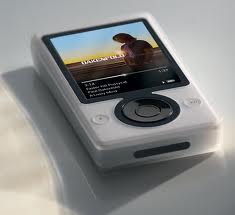
zuneMicrosoft has confirmed what we already knew: that it is going to take its shot at knocking the iPod off the portable music player throne. TechCrunch has a story about it, in which Marshall Kirkpatrick sums up what I and others said a couple of weeks ago when the Zune rumor first hit the blogosphere:

“It’s an ambitious project that some critics are already saying goes too far outside Microsoft’s core strengths and could end up joining other media projects on the junk heap of tech history.”

Trying to pick up where Scoble left off, Microsoft’s Cesar Menendez is blogging about Zune at the aptly named Zune Insider blog.

I don’t own an iPod, and I would love to see someone provide a successful alternative to the proprietary iPod/iTunes semi-monopoly. I’m just not convinced Microsoft is ready to take on the musical equivalent of trying to convince Coke drinkers to switch to some new cola.

But here’s my roadmap for how to do it, in case Cesar and the rest of the Zune crew are serious about it.

First, embrace the saying “the enemy of my enemy is my friend,” and go cut a deal with Yahoo to embrace Zune as a part of its looming war with iTunes. France and America don’t like each other either, but they unite every 50 years or so in the face of a common enemy. If you have to, make Yahoo a partner in this venture. Otherwise, I can’t envision a way to unseat iPods to any significant degree.

Second, make the players work with as many formats as possible- do not try to force people to formats they don’t want to use. Windows media may or may not be a better format, but millions of people have millions of MP3s that they are not going to convert to another format just to use Zune. Couch yourself as the open standards player. Play the proprietary technology card when talking about iPods.

Third, be thoughtful about DRM implementation. DRM will be necessary to get the music providers to play ball. But don’t forget the horde of people, including me, who have never and will never buy a DRM infested song. We want the ability to move our music to and from our players without any DRM-related hassle. DRM should be invisible to us.

Fourth, be wary of feature overload. Don’t try to make the Zune all things to all people. Make it a quality, reliable and intuitive music player. Period.

And finally, market the player as aggressively as you market the new versions of Windows. You don’t need to hire the Stones again, but go hire a bunch of new artists to do commercials for Zune. Come up with a slogan- maybe “Set Your Music Free,” and use it over and over and over, until people associate a positive shift in music management with Zune.

There you go, Microsoft.

Have at it. We’re all watching.

Tags: ,

Anatomy of a Molehill

Or how you just can’t win for losing in the Web 2.0 arena.

In an era when user generated content is the soylent green for all that stuff people on the payroll used to generate, the quickest way to success is to become part of the interconnectivity infrastructure. Digg has done it. Technorati is in the process of doing it in spite of rolling indexouts that rival waves in their persistence.

YouTube has done it by becoming the central depository for online video.

And then someone tried to tried to decipher some language from its newly revised Terms and Conditions:

“[B]y submitting the User Submissions to YouTube, you hereby grant YouTube a worldwide, non-exclusive, royalty-free, sublicenseable and transferable license to use, reproduce, distribute, prepare derivative works of, display, and perform the User Submissions in connection with the YouTube Website and YouTube’s (and its successor’s) business including without limitation for promoting and redistributing part or all of the YouTube Website (and derivative works thereof) in any media formats and through any media channels. You also hereby grant each user of the YouTube Website a non-exclusive license to access your User Submissions through the Website, and to use, reproduce, distribute, prepare derivative works of, display and perform such User Submissions as permitted through the functionality of the Website and under these Terms of Service. The foregoing license granted by you terminates once you remove or delete a User Submission from the YouTube Website.”

molehillIt’s not so much the legal implications that are the problem. Read carefully, I don’t find these terms to be so onerous- the license terminates if you remove the video. And since the whole purpose is for YouTube to serve video to blogs and websites everywhere, it shouldn’t be criticized for asking for a license to do so. If you think I’m drinking the YouTube kool-aid, just read the sentence before the language that has been the focus of so many blog posts today:

“For clarity, you retain all of your ownership rights in your User Submissions (Emphasis theirs).

The problem is that too many Web 2.0 users want it all three ways. They want stuff to be free, they want these companies to be treated like real businesses, and they freak out when they act like real businesses.

Let’s not forget that YouTube is free. Trying to make money off of user generated content is the Web 2.0 mantra.

As Valleywag helpfully points out, the termination provision makes it impossible for YouTube to sell DVDs with your content on them. About the most it could do is create some sort of premium service that gives users additional features for a fee.

In sum, this is the biggest much ado about nothing since Y2K.

Tags:

My Adventures in GPS

The other day I flew to San Antonio to give a speech. The cabdriver who drove me from the hotel to the airport on my return trip had a GPS device on his dashboard. On the way, he told me all about it as it showed him and told him where to go. When the primary exit to the airport was backed up, it even automatically adjusted the route for him once we passed that exit.

I was intrigued. But not enough to spend the $1200 he told me he spent on his unit.

So I looked around and found a slightly newer version of the unit I saw on eBay. Factory refurbished and with a manufacturer’s warranty. For around $400.

garmin2620So I bought it. A Garmin StreetPilot 2620.

Out of the box, it booted up easily and I had maps and navigation immediately. Except I had 2 year old maps. Ones that didn’t have, for example, the Westpark Tollway, which I use several times a week. No biggie, I figured. I’ll just buy the newest map program and all be all set. Right?

Hardly.

First, I went to the Garmin web page, which looks straight from the nineties. I couldn’t find any reference to the map program on my unit- City Navigator, North America (Version 6). So I called the customer support line (before 5:00 p.m., when it inconveniently closes). A nice lady told me that the new version of that program (Version 8) was not yet available, but that Garmin would send me the DVD in August for free. Then I could buy an “unlock code,” via an anti-piracy system that would make both the RIAA and Strat-O-Matic feel inadequate.

The next night I was looking around Amazon, and lo and behold, what did I see, but the not yet available City Navigator, North America (Version 8) for sale and definitely available. My red flags were beginning to flap in the wind, but I took the plunge and bought the DVD for a little over $100. When it came, it had a date of April 2006, so I was excited about having maps that work.

Once I tore the DVD package in frustration over not finding my “unlock code” in the materials and noticed it inside of the cardboard container (not inside the DVD case, but between the front and back of the sealed cardboard container that the DVD case came in (you have to see it to appreciate how uber-Easter Bunny it was placed), I installed the maps on my computer- a required first step to getting them on your GPS unit. Then after watching the first tutorial I have had to watch in a decade or so in order to figure out the highly non-intuitive map program, I selected some maps to download to my unit.

It had been a hard climb, but I was almost there.

Hardly.

First, the unit could not- and still cannot- maintain a connection to my computer. After preparing the maps for download, the connection is always and consistently lost and I get an error message that the application cannot communicate with my device. Like sunrise and sunset, it happens everytime. The exact same way.

That leaves my device displaying its own special version of the BSOD, with a hopeful, but false message: “Transferring Data…” Fraid not.

In sum, it simply does not work. Garmin has created a process that only a confederacy of PhDs could understand merely to install new maps on your GPS unit. It is beyond frustrating, and as soon as business hours roll back around, I’ll take time out of my business to give them the business (to quote Wally Cleaver).

One gigantic mistake I made was buying the internal hard drive version, as opposed to the memory card version. 20+ years of computer geekdom tells me it would be much easier to load these freakin’ maps on a memory card than to try in vain to keep my unit talking to my computer. Plus, with a memory card you can get more memory to add more maps if you, unlike me, can get the application to actually add the maps you have purchased.

I may change my tune once I call Garmin tomorrow, but so far my verdict on this Garmin GPS is that it is a highly frustrating piece of doo-doo.

It simply shouldn’t be this hard to install updated maps on a GPS unit. And the most frustrating thing about it is that, at least to a large extent, it is difficult by design.

AOL Retention Policy Uncovered

As I predicted the other day when the Vincent Ferrari (not to be confused with Vincent Vega) story was all over the blogosphere, the zealous AOL rep who really, really, really didn’t want Vincent to cancel his AOL subscription was simply doing what AOL’s retention manual required.

Some juicy excerpts from Consumerist, the site that unearthed AOL’s retention manual (see the Consumerist post for more excerpts and discussion):

“Allow your callers to talk comfortably about their concerns…watch their concerns and resistance drop.”

“The reason that many Members are going to high speed is, because the actual internet connection is much more stable….we now have the perfect solution…a free modem.”

“Consumers believe everything is a commodity, i.e. where can I buy the service for the least cost. My objective as a salesperson is to prove otherwise.

The retention policy talks about “redirecting the Member if necessary” by restatement and questions.

There’s nothing particularly unusual about AOL’s retention policy, but it does show that this was more than simply the work of a rogue customer rep.

Tags:

Recipe for a Killer Podcast Application

podcastingWhile doing last night’s RanchoCast, I thought of an application that would not only bring podcasting to the masses, but would also be very useful for current podcast listeners. I’m going to tell some smart guy or gal somewhere how to put themselves on the Web 2.0 map.

I have said before and I’ll say again, that as long as podcasting is technologically or psychologically tied to iPods and other portable music players, it will never reach the mainstream. Nobody I know, either socially or professionally, uses an iPod or other portable music player. Not one person. A couple of people I know have iPods, but they tell me that after the initial thrill of having one wore off, the iPods got relegated to a drawer somewhere, rarely to see the light of day.

Granted, I’m sure lots of kids and college students have iPods, and if you don’t mind ignoring millions and millions of grownups with lots of disposable cash, then so be it.

But if you want to bring podcasting to the masses, some things are going to have to change.

First, you have to understand that grownups who listen to podcasts generally do not listen on an iPod. We have made some progress integrating computer-listening features into podcasts. The Delicious playtagger supports this (as an aside, am I the only one who noticed that all of the Delicious buzz went stone silent as soon as Yahoo bought it?), as does the new play button in Feedburner feeds.

But there is another place where grownups listen to even more of their music, talk shows and audio books- in the car. Which leads me to my recipe for a killer podcast application.

Want to be famous and actually make some money too? Then create this-

An application, online or local, that allows a user to subscribe to podcasts and organize their subscription lists.

Allow them to listen to the podcasts online or to download them into an iPod.

Here comes the new and important part…

Create an easy to implement way to have selected podcasts automatically burned to a CD-R every week or so, with each podcast to be a separate track. After it is set up, the application would simply prompt the user to insert a CD-R every so often, at which time it would burn that week’s podcasts onto a CD-R that could be listened to in the car.

The application would also create a text document with the track numbers, names, dates and descriptions of the podcasts. That document could be printed and used as a listening reference. Label maker developers could write plug-ins that would allow the automatic printing of jewel case labels or, even better, templates for applications, like my Primera printer, that print on the CD-R itself.

Have the podcast name and date burned on the CD-R as CD Text.

Most car stereos can play MP3’s now, so that would be the default setting- for more capacity. But there would also be an option to burn the CD-R in CDA format so older car stereos could also play it. CD-R’s are almost free these days, so cost is not a factor.

Plus, the CD-R’s would allow the user to create an archive of podcasts and to share good ones with friends.

People would happily pay for this product. And if you wanted to be true to the Web 2.0 mantra and get some of the allegedly infinite ad revenue, you could place ads on the application pages, if it’s an online application, or on the CD-R between the podcasts themselves. Perhaps there would be a cheaper version of the application that has brief ads between the podcasts and a full-priced version that doesn’t.

I realize that you can burn podcasts to CD-R’s now, but it’s simply more trouble than most people are willing to go to for a concept they don’t fully understand or embrace. To get to where the population and the dollars are, you have to make it easy for people to say yes.

Let me say it again, the customers we are trying to sell to are not geeks like us. They want something that is (a) easy, and (b) cool and useful, but in that order. Too many Web 2.0 developers get it backwards. You have to make it easy to say yes, because it will always be easy to say no.

Take podcasting into the cars and trucks of the masses and you’ll see podcasting really take off.

Otherwise it’s just too easy to say no.

Reaping What You Sow: Generosity in the Blogosphere

Steve Rubel has an interesting post about generosity in the blogosphere. It seems that Steve had lunch recently with Keith Ferrazzi, author of the bestselling book Never Eat Alone. Keith made the comment that to build a network (the business and social kind), you have to be generous. That got Steve thinking about the blogosphere and the importance of generosity there.

Steve concluded, and I agree, that the generous bloggers are the most influential. Steve identifies Robert Scoble and Mark Cuban as generous bloggers- blogger who create great content and generously link to others. I’d add Steve (for sure- remember the day he took off to visit with podcasters on a first come, first served basis), Doc Searls and Guy Kawasaki to that list.

All of those guys are flat earth guys who welcome new voices and want to use the blogosphere- and their position in it- for the common good. I won’t get on my soapbox again, other than to say that blogs are nothing more than extensions of our pens and our words. Anyone who isn’t kind and generous on the internet probably isn’t all that kind and generous in real life.

Blogs are like cars- they create a false sense of invincability that releases your inner asshole.

Yet the same forces that make people good networkers in life make them good and influential bloggers in the blogosphere. The reasons why Robert, Steve, Doc and Guy have so many friends in the blogosphere are the same reasons why Keith Ferrazzi became the youngest partner in Deloitte Consulting’s history.

Contrast that to the ones Steve describes thustly:

“Then there are others – and I won’t name them – who are not generous. In fact, even worse, they are grievous. They syndicate snippets rather than publish full text RSS feeds. They don’t credit other bloggers who they clearly steal content from. They are filled with just nasty criticism, rather than a balance of ideas and constructive advice. They focus solely on themselves and not an iota on others.”

I don’t know who Steve is referring to, and it doesn’t matter. But when I think of people who are not generous in the blogosphere, I think of guys like Steve Gillmor who spend much of their time trying to separate themselves from other bloggers- via artificial paradigm shifts and country-club tactics. The greatest irony of 2006 so far was when Steve referred to those who dare to disagree with him as trolls. Most of us think of people who disagree with us as great candidates for a conversation. But that’s just it- inward looking people don’t want conversation.

And then there are the pseudo-intellectuals like Andrew Keen (who is the blogosphere’s version of the party guest who can’t stop talking about how smart he is long enough to notice the PhD’s shaking their heads as the walk away). Or the Nick Carr types whose many thoughtful posts get lost in the flood of Mary, Mary posts made in the name of fame or traffic.

All of those guys are well known. But so is the blustery guy at the party. You know them, but you are not influenced by them.

You are influenced by the people who realize that being generous is a win win proposition.

It’s good for us, and, as it turns out, it’s good for them too.

Something to think about.

Joe Jobbed

Last night through this morning, my server got joe jobbed. I got bombarded with thousands and thousands of spam bounces. Last night I was getting about 3 bounces a second.

The message was a bunch of randomly generated prose, sometimes with a random photo that appreared to be an ad, but wasn’t a real ad.

Fortunately, my server host was able to get things fixed and more or less back to normal by this afternoon.

This is yet another example of the chat room, message board, etc. mentality that I have written about before, where a certain percentage of the population is compelled to try to screw things up for the rest of us.

Anyway, if you got spam from me last night or today, it was not from me. Check the headers.

Here’s the story of the first joe job.

Tags:

AOL & the Myth of Infinite Advertising

toomanyads

I mentioned the other day that I thought AOL’s decision to drop its subscription fees in exchange for the faint hope of more and more advertising dollars was a bad idea- and wondered why so many people have bought into the myth of infinite advertising.

Henry Blodget explains exactly why it is an act of desperation that is doomed to fail.

If you want a primer on the myth of infinite advertising, read Henry’s post.