Kids & Music: Are the Allman Brothers the New Vic Damone?

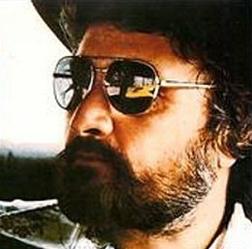
vicdamoneMike Miller at Be a Good Dad has a post today about kids and music. Specifically transitioning kids from kids music to non-kid music. He talks about a new CD that, he says, has Metallica songs done in a more kid friendly manner. I’m not a Metallica fan, but I have tried, and mostly failed, to introduce my kids to the music I enjoy.

When I was a kid, I thought most of the music my parents listened to was horrible. I remember records by Johnny Mathis, Vic Damone, Perry Como, etc. I still think that stuff is horrible, so it wasn’t purely a parent/child issue. So how do you expose your kids to your music in a way that minimizes the chance they will write all of it off as music for old fogies? In other words, how to you keep the Allman Brothers from becoming your kids’ Vic Damone?

I’ve tried a few approaches. Initially, I would occasionally call one or more of my kids into my study and play selected songs for them- Grateful Dead, Beatles, Muddy Waters, etc. Other than briefly making my oldest a James Brown fan, this plan didn’t work. They viewed it as a chore and couldn’t wait to be freed to resume playing, etc.

Then I bought them some “transitional records,” like any of the excellent records by former Del Fuegos frontman Dan Zanes. Dan calls his records “family music,” and that’s a great description. Other great transitional records include Jerry Garcia and David Grisman’s Not For Kids Only and Jonathan Edwards’ Little Hands. (Warning: if you have daughters, you better have a crying towel or two ready the first time you listen to the title track on Little Hands).

While I got some good new music out of the deal, that plan didn’t really work either, as my kids are much more interested in the Cheetah Girls, Hannah Montana, High School Musical and the other music they hear on the Disney Channel, etc. In other words, they are interested in music being made by kids- not so much music made by grownups for kids.

All of which led me to my current approach. Other than pointing out the occasional guitar riff or piano solo, I don’t try to teach them about my music. I just play it and hope they’ll come to appreciate it via osmosis.

Only time will tell if it works, but it’s the only chance I have to save the Allman Brothers.

Saturday Night’s Alright for Playing: Tompall Glaser

I mentioned the other day that I bought a USB turntable and have started coverting some old, out of print records into MP3s and putting them on my music server.

tompallTonight I converted two records by the great Tompall Glaser. Tompall is the father of the outlaw country movement, and it’s a crying shame that more people don’t know and appreciate his music.

One of the records I converted tonight was Tompall Glaser and His Outlaw Band, from 1977. On this record, more than others, the conversion was hard due to scratches and mixing issues. But if you want to understand why I go to the effort, just listen to Tompall and his band stretch out on I Just Want to Hear the Music.

I realize that the sound, on this record in particular, is a far cry from CD quality. But it’s such a treat to be able to queue up some of these old records that I don’t even care.

Fine music by an American master.

Tags: ,

Reinventing the Music Industry

Mike over at Techdirt has a very interesting read about the music business. As a long-time musician, songwriter and, most importantly, music fan, the parade of bad decisions made by the music industry over the past few years has just about driven me nuts.

As Mike points out, a large part of the problem is that portions of the music industry, primarily the record label cartel represented by its henchman the RIAA, is trying desperately to hold on to what is quickly becoming an obsolete business model. Beginning with the re-examination of industry economics that led up to Courtney Love’s excellent piece in Salon back in 2000 (which proves either the value of ghost writers or that Courtney isn’t the complete nincompoop she generally appears to be), through the emergence of online distribution as the channel of choice for the new generation, and up to the current spate of lawsuits against children and dead people that have coalesced all manners of opposition into a line of defense that is starting to turn the tide of battle, the music industry has struggled to figure out a way to preserve what has long been the highly profitable role of both gatekeeper and banker to the music.

The music industry in general and the record labels in particular have not faced the fact that the world has changed- and all of the lawyers in the world can’t change it back. The bag is empty and the cat hasn’t been seen in years.

Which leaves the music industry with two choices, and only two choices: find a new business model or hold on as hard as you can until the cash pipeline dries up. The smart choice is to take some pain now to become a part of the new world order. The dumb choice, which seems to be the way the industry is going, is to sue everybody in sight for moving your cheese. Those lawsuits work on underfunded individuals who have no choice but to capitulate. They don’t work on an entire movement or on moms from Oklahoma.

Other than the fact that you can’t turn back time, the most aggravating and self-destructive part of the record label’s strategy is that it is attacking the very people whose goodwill is a requirement to sell records. It takes biting the hands that feed you to a new level. No one would complain too loudly if the RIAA sued people who share thousands and thousands of songs with anyone who wanders by. But the RIAA decided early on to sue all comers, thus the public relations war was lost at the first battle. Sometimes it takes more than money to prove you’re right, and sometimes even the Deathstar blows up. I don’t think that ever occurred to the record label executives, even though the automated voice has to be saying in the back of their minds “auto-destruct sequence initiated, this ship will self destruct in 4 minutes.”

In my opinion, driving force behind the record labels insistence in trying to stuff the cat back into the bag is that the record labels historically made so much of their money via the creation and distribution of the media (meaning the actual CDs and before that LPs and tapes, as well as the album art, etc.), and they know that the margins of old are not going to be available under the new distribution system.

When your entire industry is based on huge margins, it’s not surprising that you’d resist anything that threatens the status quo. Additionally, if songs are sold online for a buck a piece, the artists are going to quickly realize that it’s cheaper for them to rent some studio time, pay a producer and take the finished product directly to the online distributor.

Without the ability to serve as the gatekeeper, the record labels recognize that their position in the entire process is precarious. That’s why the RIAA isn’t going to buy into Mike’s plan of artist promotion, more product and resulting loyalty. Which means that the only alternative is to take the record labels out of the equation- their own short-sighted actions in effect becoming a self-fulfilling prophecy.

Like it or not, the world has changed. While the change was bad for the record labels, they should have known the gravy train wouldn’t last forever. And over time this change will prove to be very, very good for artists and consumers.

It’s time to clean up the milk and go back to work. Let the record labels keep searching for the cat.

We know they’ll never find it.

Adventures in Long Play

ionThere are a lot of old, rare and out of print LPs that I want to add to my music collection and access via my music server.  So I took a flyer and ordered an Ion USB turntable.  It came today, and I tried it out tonight.  Here are my first impressions.

It was very easy to assemble and connect to my computer.  I already use Audacity for making podcasts, so I didn’t need to install the version that came on the CD.  I just put the CD in my CD Drive and plugged the turntable into a USN port and, presto, it installed the drivers and I was ready to convert an LP to MP3.

I selected the most excellent and hard to find 1969 self-titled debut by Area Code 615, a band comprised of some of the best musicians in Nashville, including Mac Gayden, who I know a little through a mutual buddy.

Recording from the LP to the computer was simple, once I got the levels right- all LPs will record too low and need to be boosted up, which Audacity makes simple.  Splitting the tracks took a little more time than I’d hoped, but overall the process was easy and relatively quick.  I haven’t tried it yet, but you can save a little time by recording 33 rpm LPs at 45 rpm and adjusting the speed via Audacity.  There is a preset adjustment for doing that.

I’m sure there are other software applications specifically designed to record LPs and convert them to MP3s. I’ll look around for some of those and see what I come up with.

But I can already tell that I’m going to be trolling eBay looking for some hard to find LPs.  I’ve aleady bought one out of print LP by Billy Swan.

Here’s Nashville 9, N.Y. 1, an excellent song off the recently converted Area Code 615 LP.

This is good news for our podcast listeners who like hearing the hard to find stuff we like to play.

Tags: , ,

Music Industry Tells Budding Musicians They Must Pay to Play

Not satisfied with suing people, both alive and dead, who enjoy listening to music, now the priority-challenged music industry is threatening to sue guitar tablature sites, where users exchange tips on how to play songs.

For those who aren’t familiar with tablature sites, they are web sites that contain a database of guitar tabs, usually indexed by artist and by song. I use tab sites regularly to learn songs. Sadly, my site of choice, Olga.net (Olga standing for On-Line Guitar Archive), and others have bowed to the pressure and taken their once expansive database off-line.

Normally, the way it works is like this. Let’s say I wanted to learn CCR’s Bad Moon Rising. I’d go to a tab site and search for either CCR or the name of the song. The page I would find would look something like this:

D         C   G    D        D     C       G      D
I see the bad moon rising,  I see trouble on the way
D     C    G          D          D     C   G     D
I see earthquakes and lightning, I see bad times today

Chorus:
G                                   D
Don't go around tonight,  well it's bound to take your life
C         G               D
There's a bad moon on the rise

(I have no idea if my tabs will translate to a feed. If not, see my blog for what it is supposed to look like.)

The letters, of course, are the chords used to play the song. Guitar players will recognize that these chords are the easy way to play the song. And that’s just the point- most tab sites are all about easy and none contain the full music notation found on purchased sheet music. In addition, tab sites often contain easier tunings that make songs easier for novice guitarists to play.

All of which tells me that the music industry is once again engaging in knee-jerk lawsuits (or threats thereof) that are addressing a problem that isn’t there. Lawsuits that will ultimately hurt the music industry from an economic as well as public relations perspective. Here’s why.

Many people who use tab sites for learning songs are either novice players or intermediate players trying to learn how to play more songs. Expert guitarists and most professional musicians typically either play by ear, use traditional sheet music which they purchase or use one of the various numbering systems that are completely different than traditional music notation. I’ll never forget the first time I was in a recording studio while someone recorded one of my songs. The session players listened to the demo tape once, without pausing, and then listened to the chorus and the bridge a second time as they transcribed the chord progressions into a numbering system. Then they sat down and played the song better than it had ever been played before.

This, of course, means that the typical user of a tab site is not going to run out and buy sheet music they likely can’t read to try and learn a song. They’ll just learn some other song or give up altogether.

Sure, they could go buy a fake book (a book that has chord notations similar to what I did above in addition to music notation), but those books are created for professional musicians, formal music students and others who are doing more than just trying to play Wild Thing and Louie Louie using the only three chords they know. Many of the people playing Wild Thing and Louie Louie today may continue into more formalized lessons later- or not. But it does nobody any good to stop them in their tracks before they have a chance to decide.

All it accomplishes is to quash someone’s musical ambitions before they have a chance to become a lifelong customer of the music publishing industry.

The music industry should stop suing all the music fans or there won’t be anybody left to buy their products.

I would really like to interview the decision maker behind this latest scorched earth attempt at stuffing the cat into the bag. If anyone can hook me up, please let me know.

Technorati Tags:
, ,

My Favorite Records:The Hangdogs – East of Yesterday

This is the another installment in my series of favorite records.

If you’ve been reading this blog for more than a couple of days, you know that I am a huge fan of New York City’s finest alternative country band- the Hangdogs.

Between 1998 and 2003, they put out some of the best alternative country music this side of the Star Room Boys. Virtually every song is excellent, and the playing and singing is nearly perfect.

Any of their first three records, Same Old Story, East of Yesterday or Beware of Dog could easily make this list. The latter two are available on eMusic.

But I’m going with East of Yesterday on the strength of Speed Rack and Drift, two of my all-time favorite songs. Speed Rack, which I’ve played more than once on our podcast, might be the perfect ode to an ex-girlfriend. Drift virtually reeks with wistful resignation. Hey Janeane shows that the usually mid-tempo band can rock. I’d Call to Say I Love You would have been a number one country hit if Travis Tritt had recorded it before country music died. They Don’t Play No Country Music on the East Side of New York is a romp that any music loving Big Apple dweller should love.

I have to assume the Dogs have broken up, since they haven’t released a record since 2003 and their lead singer and principal songwriter Matthew Grimm seems to have relocated to Iowa, from where he released a Pete Anderson produced solo record last year. It’s a shame that bands can be as good as the Hangdogs and not make a noticeable splash on the national music scene. I guess I’ll toss them in with the Star Room Boys and Steve Pride as my favorite artists that should have huge stars but weren’t.

I listed to some clips from Matthew Grim’s solo record and it sounds pretty good. A lot more rock-edged than the Dogs’ work- sort of the way Ryan Adams’ first few solo records were. I’d love to see Matthew take the cycle back to roots music the way Ryan did. Anyone who can write an alt. country song as good as St. Claire of Cedar Rapids (off of Beware of Dog) should write lots and lots more of them.

Tags: ,

RanchoCast – The Dedication Edition

I did a new podcast tonight.

In honor of the lovefest that resulted from the newest gatekeeper discussions, the theme was the Dedication Edition.

I played great songs by Wagon, the Push Stars, World Party, Cowboy Junkies, Richard Shindell, Blind Faith and more. Each song was dedicated to a blogger, including Shel Israel, Robert Scoble, Seth Finkelstein, Mike Arrington and others.

Get Your Music Here

Tom over at Twangville, the best alternative country music web site in the world, has formed a new Last.fm group based around alt-country, americana, rock, indie, folk, blues, etc. This will be a fun way to discover great music.

I just joined. If you share our love of this sort of music, come on along. It will be fun.

If you aren’t a Last.fm member, it’s fun and free. Here‘s my Last.fm page and here‘s Tom’s.

Once you sign up, be sure to get the AudioScrobbler plugin for your music player(s) of choice.