Possible Sony/BMG Settlement

BetaNews reports today that there is a possible settlement in the Sony/BMG spyware case.

According to the report, Sony will agree to:

(a) continue to replace the spyware-affected CDs with clean CDs

(b) allow the affected customer to choose to receive either (i) $7.50 and one free album from a list of 200, or (ii) no cash payment and three free albums from the list.

(c) stop manufacturing CDs with a specific type of DRM program until 2008.

To be eligible, customers must provide evidence that they bought a Sony/BMG CD containing the DRM spyware and that the hidden DRM program was uninstalled from the computer or updated with the software fix released after the initial outcry.

While this seems like a pretty fair compromise, there are a couple of troubling parts.

First of all, the settlement does not prevent Sony from using DRM on its CDs. It only prohibits the use of hidden DRM. Sony is allowed to use DRM prior to 2008 as long as no programs are installed on the customer’s computer without the customer’s consent and only certain data is collected by the DRM program.

Additionally, we need to see the list of 200 albums. If it’s a decent list, then this sounds like a fair solution. If it’s not, it doesn’t.

While this is certainly a win in the war against DRM, this is really about Sony’s bad decision, initally bad management of the reaction and ultimate admission of fault and agreement to fix it. The greater war against DRM will continue to be waged.

Technorati Tags:
, ,

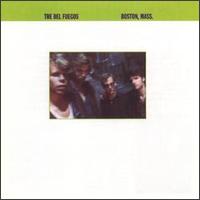
My Favorite Records:The Del Fuegos – Boston, Mass.

This is the another installment in my series of favorite records.

I remember the first time I heard a Del Fuegos song. It was Backseat Nothing off of their first record. I went out that same day and bought the cassette tape. That record, called The Longest Day, could easily be on this list. But since the first one is virtually impossible to find, I’m going to pick their equally excellent second record.

df-728536Boston, Mass., their second record, is unfortunately also out of print, but you can find a CD for sale now and then on eBay.

From the first verse of Don’t Run Wild, you can tell this is a more produced record than their first, with a little sharper edge to it. My favorite songs on the record are the very wistful I Still Want You and the rootsy Coupe DeVille, but every song on this record is excellent and still sounds fresh after 20 years.

The primary songwriter and singer, Dan Zanes, still makes music. He has released some of the best family records I’ve ever heard. I highly recommend them for both kids and adults.

The Del Fuegos didn’t become the major rock stars I thought they would after their first two records, but they made some fine music. If you can find either of their first two records in a format you can play, buy it. You won’t be sorry.

Technorati Tags:
,

Top Underrated Apps of 2005

Gina Trapani over at Lifehacker has posted her list of the top underrated applications of 2005. I love lists like this because it helps me find out about good stuff I don’t know about.

Of the eight things on the list, I have only heard of half of them. Of the others, I am going to check out Instiki and GTDTiddlyWiki first. I need a good list management tool and these seem promising.

Technorati Tags:
,

Are Podcasts Really Just a Guy Thing?

Jonathan Skillings posts over on C|Net today that a survey has indicated that 78% of those who have ever listened to a podcast are male? Could that be right? Is podcasting really just a guy thing?

First of all, I wonder what the numbers are for music buying in general. I have no empirical data to cite, but over my 45 years it has been my experience that guys are generally, for whatever reason, more into music than women. My wife listens to the radio all the time in the car and she’s been married to a musician/songwriter/music nut for 12 years, but she doesn’t care enough about music to go out and buy a CD. In fact, I don’t believe she has bought a CD for herself since I’ve known her. Her friends are mostly the same way as far as I can tell. Most of my non-musician male friends buy at least a couple of CDs a year. Some many more.

So my question is: are the numbers for podcasting different from the numbers for music as a whole or merely representative of the numbers for music as a whole?

I can add two podcast-specific points. First, the only people I know who actually own an iPod are both women. While I have no idea if they listen to podcasts, they have the gear to do so, which puts them at the musical frontier of my little world. Second, 3 of the 4 people who have ever commented to me in the real world about my podcast have been women. And all of them wanted to know how to listen over the internet- without having to download something into a computer program and then move it to a music player. Again, I think most people want easy and clicking the play button is easier than downloading and moving. Especially when you listen at a computer. And I bet more podcasts are listened to at a computer than in the car (again, I have no empirical data; this is just my hunch).

So I don’t think podcasting is only a guy thing. I hope not. Either way, the generation of very tech savvy girls that are growing up here in my house, in my neighborhood and the world will have something to say about that one day. If podcasting becomes a permanent part of our culture, I believe that “girl power” will have a lot to do with it.

Technorati Tags:
,

Interesting Post on TV Shows and DVDs

TV Squad had a post yesterday on how music licensing problems have killed or delayed plans to release some classic TV shows on DVD.

The studios have to negotiate with both the record label cartel for the right to use the recording (to play the recording of the song on the DVD) and the music publishers who control the copyright to the song (to use song itself, as opposed to the recording of the song, on the DVD).

These costs are why advertisers are getting play for sponsoring the music on some current TV shows. This happens every week on Nip/Tuck and may happen on other shows (I don’t watch many current TV dramas, so I can’t tell if this is a trend or not).

Anyway, the point is that the record label cartel continues its war against the consumer. The goal, of course, is not to keep the songs off of the DVDs. The goal is to make them more expensive, with the additional money to find its way into the cartel’s pockets.

Technorati Tags:
,

TIVO Deathwatch: Clash with a Titan?

Variety reports that TIVO, through its new deal-a-day CEO, is moving towards a showdown (cue Archie Bell song). Seems the TV networks, who presumably are the requiring force behind the DRM functions TIVO has been experimenting with, are all a tither about the forthcoming feature (or maybe it’s already here- I have a $1000 HD-TIVO/doorstop that doesn’t get any of the new features rolled out to the $100 boxes) that will allow people to download network TV shows to their iPods (really- will anybody actually do this?). Of course the networks are also worked up about the fact the TIVOs allow you to fast forward through commercials, even though (a) VCRs have allowed this for decades and (b) that’s one of the main reasons people buy TIVOs (along with the ability to hold doors open once they are pre-maturely obsolete).

Here’s my thing:

1) People can record network shows for their own use. The networks fought and lost that battle a long time ago.

2) No one is going to do this purely to rob the TV networks of their rights. While I will never experience it firsthand, I’m pretty sure a show on an iPod is less fulfilling experience than a show on an HDTV big-screen.

3) These shows are broadcast for free. I get most of my network HDTV over the air and so do most other DirecTV customers. It’s not like people are stealing unreleased movies and putting them on the internet.

I honestly believe that the networks and the record label cartel are so freaked out by the gradual decline of the goose that has laid golden eggs for so long that their knee-jerk reaction any time they hear the word download is to start screaming and flailing around wildly.

The cat is out of the bag as far as media distribution goes. These companies need to start adapting to the world, because I don’t think the world is going to stop turning just because their gravy train has slowed down a little.

Technorati Tags:
, ,

More DRM Madness

rootkit

If you want to read more reasons while I will never buy a DRM-infested song or CD, check out David Berlind’s article over at ZDNet.

He mentions a couple of problems that the record label cartel’s beloved DRM forces on the unwilling and perhaps unsuspecting public- one of which is the inability to easily pass your music collection on to someone else when you die. That’s a good point that I’d never thought about before. For the casual music fan who has a couple of hundred songs on an iPod, DRM probably isn’t that big of a deal. Where it is a gigantic problem is when you are a huge music fan with thousands of records comprising a vast music collection that you spent a lifetime and tens of thousands of dollars putting together. In other words, the record label cartel is screwing its best customers the hardest.

Let’s think about the practical effects of this problem. I have over 20,000 songs in my music library, all of which came from LPs, cassettes and mostly CDs that I have bought. All of them have been ripped onto my music server (which after several evolutions is now a dedicated hard drive in my computer and a synchronized back-up drive on my network). The CDs are all stacked in boxes in my garage- hard, tangible assets my kids can dust off and enjoy when they hit 40 and realize that dad’s music isn’t as lame as they thought (this happened to me when I had my “blues epiphany” back in 1994 and realized that most of the old blues songs I thought I hated were awesome songs). While I have some songs from my old LPs and cassettes that would never be recovered if my digital music library got destroyed, most of the songs are on those CDs in those boxes. On the other hand, if I had compiled my music collection via DRM-infested downloads, what exactly would I own? Or would I own anything? Is it truly an asset if you can’t sell it at a garage sale or on eBay or leave it to your children? What’s next, DRM on your mutual funds?

Whatever I would have (and I tend to think that conceptually I wouldn’t own much), I would not be able to legally and easily pass that music on to my kids and even if somehow I could and/or did, the music could stop at any moment if I or they run afoul of the ever-growing list of restrictions that the record label cartel is putting on the downloaded music (some of the fine print relating to DRM indicates that additional restrictions can be added after you buy the song). In sum, you don’t truly control (read truly own) DRM-infested song files and that’s a deal-stopper for me.

The record label cartel uses fact that someone might allow others to acquire unauthorized (read unpaid for) copies of a CD as a carte blanche to sell us crippled and broken goods. If CDs do go away and the only music available is DRM-infested downloads, I simply won’t buy any more music. I’ll just listen to the radio (online and satellite- not over the air, since commercials are almost as unacceptable to me as DRM). Talk about an industry in trouble, traditional music radio is in a world of hurt, but that’s a topic for another day.

David’s article also links to a story about Elliot Spitzer’s probe into the pricing of downloadable music. I suspect the Spitzer probe has to do with the record label cartel’s desire to have variable pricing at iTunes and other online stores- that way if some song becomes a huge hit, they could charge more than a buck for the download. Funny how the ten bad songs on a CD never cost less than a buck. This is another proposed screw-job on the American public, and I hope Spitzer can beat the cartel back under its rock, but as far as I can tell this isn’t really about DRM.

The only way I see to solve the DRM problem is for enough of us to vote with our pocketbooks. That’s what I’m doing.

Technorati Tags:
,

2006 Tech Trends

top10The Mercury News published its predictions for the Top 10 Tech Trends for 2006 today. It’s a broad list that covers some areas I know something about and some I don’t.

WiFi expanding seems like a sure thing. The big hurdle will be city-wide wifi, which would level the playing field and free us from Starbucks, McDonalds and price gouging hotels. Here in Texas the phone companies are trying to get the legislature to prohibit municipal wifi. Hopefully they will not be successful. If ever there was a bill that should result in an immediate cleaning house (and senate), that would be it. If municipal wifi gets legs, it could be the story of 2006.

Internet phone calls may be a trend, but someone has to convince millions of people like me that if we dial 911 on VOIP, someone will answer who can help and knows where we’re calling from. There are often no mulligans when it comes to a 911 call, so creating certainty in the minds of the masses will be critical to the trend-ablility of internet phone service. Otherwise it will be a utility for a few and a toy for many.

Video blogging seems like a good bet too. I suspect video blogging will become a complimentary feature to a blog (much like a podcast is now), as opposed to a substitute.

I’m a bit mixed on office moving to the web. Yes, Microsoft Office will be more “web like,” which is a very good thing, but no major corporation (and certainly no law or accounting firm) is going to allow mass storage of documents online for two reasons: one, liability; two, the fear of a bad decision (“if it’s always been done this way and I keep doing it this way, I’m not responsible if it doesn’t work; but if I change how it’s done and it doesn’t work, I’m toast”- I’ve actually had clients say this very thing to me before on more than one occasion).

I hope clean technology is a trend, but unfortunately the environment loses to the almighty dollar like the Generals lose to the Globetrotters.

I agree with Frank Gruber that RSS will also be a trend for the reasons I have already mentioned. RSS and the open-source movement are creating some incredible technology, and this trend is in its infancy. A lot of the great technology in 2006 and beyond will come from the cyber-garages that brought us Firefox and all of its extensions and add-ons. If I was trend hunting, that’s where I’d start.

Technorati Tags:
,