Podcaster’s Hill

Doc Searls had some very nice things to say about my podcast. Thanks Doc, I really appreciate it.

As I mentioned on my most recent podcast and as Doc mentioned in his post, it’s sort of hard to get a podcast started. With blogs, you can tell via comments and links and whatnot roughly how many people are reading and responding to what you write.

With podcasting, it’s a little harder to tell. Yes, you get subscriber numbers (I forgot they made numbers that low), but a lot of people, myself included, listen to podcasts via their computer, without subscribing. Heck, I don’t even own an iPod. Plus, podcasts are not yet the interactive creations that blogs are, so there’s less of a chance for people to give you feedback.

Doc is a member of my favorite podcast, the Gillmor Gang, and has some podcast related content on one of his web sites. I listen to the Gillmor Gang regularly and have wondered aloud why no one has done a Texas or other regional version of the group tech podcast. As an aside, if anyone who knows how to do a group podcast is interested in talking about doing one, drop me a line.

Anyway, I have been doing my RanchoCast podcasts since early December of last year. The mix is country rock, Americana, tech talk and blues. Over the past few episodes (and primarily on the last one), I have started talking a bit more about topics I have written about here. Surprisingly (at least to me), a few people have written me to say they enjoyed that part of the episode. Richard Querin tells me I explained my position on the whole Gatekeeper business better verbally than I did in writing.

All of this got me thinking a little about my podcast strategy.

Here’s my current plan, but I welcome suggestions. I’m figuring this out as we go, so don’t hesitate to tell me what I should or shouldn’t be doing.

First, I am going to make tech talk a regular part of the mix. My ideal split would be about 60/40 music to tech talk. I’d love to have guests, but I think it would be presumptive to think anyone would want to guest on my podcast. But if you write or think about tech and would like to guest, drop me a line. I would be happy to have any of the Web 2.0 developers on to talk about their product (just be ready to answer my first question: other than ads, what are your revenue streams?). So guests or not, I’m going to make tech talk a slightly bigger part of the mix.

Second, I am going to excerpt the non-music stuff and make it available separately- like I did with part of the tech talk last time. I don’t know if this is necessary, but I don’t want to lose listeners who only want to hear the tech talk- particularly if I have guests. If it looks like I should tweak the split or even split the podcast in two (I’d probably just alternate weekly between talking and doing music), I’ll consider that as well.

Third, I am going to do what I can to join up (either as a guest or in a group thing) with some other podcasters. I don’t know what opportunities are out there, but I am going to look around for them. I really like the give and take of the Gillmor Gang and would love to be a part of something similar to that. Of course, that’s sort of like saying I want to do something similar to David Letterman. So I’ll keep my expectations in check.

The more experience I get listening to and creating podcasts, the more I enjoy them.

So that’s my current plan. Please let me know if I’ve got it all wrong, or if you have any thoughts or suggestions.

Bloglines, Dwight & the Email Support Blues

After trying many online feed readers and after a rough start, I settled on Bloglines as my primary feed reader. I want an online reader, because I want things read here to show as read there.

bloglines

In general, I think Bloglines does a lot right. It’s faster than the other online readers I have tried, including some that you have to- gasp- pay for.

But it could be so much better.

Why, for example, are there some feeds that just will not work in Bloglines? I read Dwight Silverman every day, but not via Bloglines. It simply will not pull his feed (and I have the new RSS feed address).

And why aren’t there more options when you subscribe to a feed? I organize my reading list by the name of the blogger, as opposed to the blog name. So I have to sign up and then go back in and edit the name. Not the end of the world, but there’s no reason this can’t be handled on the front end.

Finally, has anyone ever had a problem resolved by emailing Bloglines? For some frustrating reason Bloglines shows my main page as “index.html,” which is both unnecessary (you don’t need to page address; just use http://www.newsome.org/) and wrong (it’s index.shtml). This means that people who try to click over to the main page from within bloglines get an error message (fortunately, the post pages have the correct URLs so clicking to a post page works properly). I’ve emailed tech support three times about this and no one has replied, other than via a canned response that they received my email and will look into it. Blah, blah, blah.

Dwight has a very timely article today on email tech support. Someone at Bloglines needs to read it. Put it on the bulletin board. Memorize it.

Here’s the thing.

No one has a secret formula where feed reading is concerned. So all of the feed readers do the same thing, as far as the big stuff goes. The war for market share will be won on the battleground of the little things.

And Bloglines isn’t doing the little things right.

I’m not ready to switch yet, but I’m starting to think about it. And that’s not the way to keep customers.

Tags: ,

Time Keeps on Slippin’

timeslippingSlippin’, slippin’ into the future.

And in the time wasting department comes news that consumer groups are going to fight the AT&T Bellsouth merger.

After that, maybe Pee Wee Hermann can fight Lenox Lewis. And then maybe Dr. Ruth can play one on one with Shaquille O’Neal. Dino from the Flintstones versus Godzilla and King Kong.

I’m all about being heard. And I’m all about the little guy. Heck, I’m a long time subscriber to Consumer Reports and I give money to Greenpeace.

So some part of me wants to applaud when I read that Consumers Union and the Consumer Federation of America are going to fight the man. But not really.

Because the U.S., particularly the business part of it, is all about the almighty dollar. And at some point if you continue to stand between the man and his money, you’re just wasting your time.

Why not take that time and money and use it where it might be able to make a difference.

Tags: ,

The Digital Trickle?

An article today at SiliconValley.com confirms what people have been expecting for some time: that the flow of new internet users in the U.S. has slowed dramatically.

This is the first cousin of the early adoption effect I talked about in the context of growth in the blogosphere and, while certainly a little troubling for the internet industry, shouldn’t be surprising.

And I don’t think it’s as bad as it may appear.

Two things will result in new user growth over the coming years. Both have to do with my suspicion that a disproportionate share of non-internet users fall into the categories of senior citizens and the economically disadvantaged.

To the very young, the internet is as integral to their daily lives as the telephone and the television. Most teenagers use the internet the way my generation used the phone when we were kids- as a way to stay connected with friends. They can’t remember a time when there wasn’t an internet, so there was no learning curve to overcome. As these kids grow up and have kids, the percentage of people who use the internet to one degree or another will continue to rise. Even economically disadvantaged kids have increasing access to the internet, either at school or via afternoon programs and neighborhood facilities.

Greater availability to the economically disadvantaged will be the other factor that drives growth. The problem is getting computers in the homes where people can more fully integrate them into their lives. There are a couple of factors that will help. One, computers are no longer the mystical, expensive devices they once were. Today, for about the price of a cell phone, you can buy a good computer. Two, the move by Google and others to create a cheaper method to access the internet may afford these computers an on-ramp to the internet. I made fun of Google’s plan to build another internet, but a computer with ads is certainly better than no computer at all.

Part of the 18% who say they aren’t interested in the internet are in one of both of those groups. And some part of that number, be they old or young, rich or poor, would develop interest in the internet if they knew more about it and had easy, affordable internet access.

The bottom line is that the early adopters have adopted, as have a lot of the utility users- the second phase who use the internet not because it’s cool, but because it is useful. But there are a lot of other potential users who will join the party as their generation ages and as the cost of admittance goes down.

Tags:

Blogospat II: When Geeks Attack

catboxingSo Dave Winer says there are too many blogospats and calls out Nick Carr for being snarky. I don’t know what snarky means and I’m not interested enough in learning an unnecessary synonym to go look it up, but I don’t think it’s a compliment.

I seem to either wildly disagree or wildly agree with whatever Nick writes, and he may be as smart as his bio. Once again, I’m not interested enough to try to figure it out. I find smartness for smartness sake profoundly boring. But clearly he got under Dave’s skin like an imaginary advisory board.

Dave then goes on to dump on Memeorandum because there are too many stupid people posting there. So Dave is mad at Nick who might be really smart for posting stupid things on a site that used to be the exclusive realm of smart people until all the newbies “arrived (and arrived and arrived and on and on).”

It’s very confusing, but then I’m one of the stupid newbies, so that’s not surprising. But I jumped to Scoble’s defense in yesterday’s blogospat, so I guess Dave needs one of those shirts that says “I’m with Stupid.”

Then Scoble reads Dave’s words of wisdom and decides to take a Memeorandum break in favor of RSS feeds because reading feeds from smart people lets you learn about the Hubble telescope and get smarter.

And then Scoble says smart people in his RSS feeds “could give a f**k about all the traffic.” I need to get to Bloglines quick because I’m feeling stupider by the minute. Fish don’t care about water either, at least until it dries up.

By my count most of the bloggers who wrote about yesterday’s blogospat were solidly on Scoble’s side. I don’t think you can avoid people who use the so called “Dvorak approach” (though proving for the third time in one post that I’m stupid, I like to read John’s stuff). That sort exists in the real world and perhaps in even greater quantities in the remote blogosphere. If you have any sort of a profile, unfair and unfounded criticism comes with the territory. But as long as you believe you’re doing the right thing and as long as you have people (even stupid ones) in your corner, you just ignore all the foolishness.

Smart is like pretty- it is as it does.

I think all this fighting over who knows more about tech, or whose nerd camp is better or whose IQ is only 145 is silly- and I’m a geek. I can’t imagine how it looks to a regular person who happens by.

But look on the bright side. If someone wanted to kick it old school, without being bothered by all these newbies, a few more blogospats ought to do the trick.

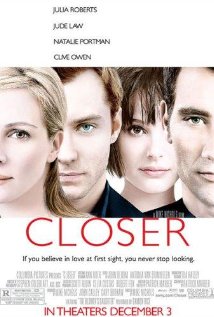
From My Netflix Queue: Closer

Here’s my video watching history with Natalie Portman.

I thought she was great in The Professional, one of my favorite movies which made Jean Reno one of my favorite actors.

closerfilmThen I rediscovered her in the last two Star Wars films and in Garden State (another very good movie).

Then this weekend, I saw her in two videos. First, on a friend’s recommendation, I watched Closer, which was a fantastic movie. Although the entire cast did a fine job, I thought Clive Owen stole the show. That scene where he is talking to her in the private room at that strip club was some incredibly great acting.

Then today I see a link on Marc Canter‘s page to this hilarious video.

Padme is being a naughty girl.

Explaining My Play Dough Theory

playdoughIn yesterday’s edition of the RanchoCast podcast, I talked a little bit about Bubble 2.0 and explained why I think Web 2.0 is less that meets the eye.

For anyone who’s curious to hear my thoughts, but doesn’t want to sit through some good music to get there, here’s an excerpt from that portion of the podcast.

Tags:

RanchoCast – March 4, 2006 Edition

I did a new podcast yesterday afternoon, while Raina and the girls were at the ballet and before Luke woke up from his nap and went nuts.

Lots of good, hard to find songs, including songs by Country Joe McDonald, Daniel Moore, Ray Riddle, Hasil Adkins, Mason Proffit and more. I end the show with a great blues jam by Wet Willie.

Also there’s a little more talking than normal, as I talked about the gatekeeper business, Steve Rubel’s social media tour, lessons from Bubble 1.0 and why Web 2.0 is less than it may appear.

Almost 58 minutes of country rock, tech and blues.

Bloglogic and the Litmus Test for Link Love

litmusDoc Searls adds his perspective to Dave Wallace’s post about second opinion, affirmative traction, connections and flow.

Dave did a little analysis of his traffic after being mentioned in one of Mathew Ingram‘s second opinion posts and concludes that he got a little subscriber boost, but that the better by-product of such links is the initial connection that might lead someone to return to a blog because of the content.

Doc points out that he doesn’t blog for traffic, popularity or money. He blogs for effect- to get topics he cares about on the conversational agenda. That’s a true statement for Doc, as well as a lot of us who aren’t trying to monetize our blogs. It’s a synopsis of the approach to blog building that I have ended up with, by one of the guys who taught it to me.

But let’s not throw the baby out with the bathwater just yet.

Goals and Focus are Not the Same Thing

Many people on both sides of the traffic argument confuse a focus with a goal. As a result they often talk across each other.

Here’s what I mean by that.

For all the reasons I’ve talked about recently, making traffic and links your focus is not the most effective way to build a blog. Most of the people who have been at the table when we’ve talked about it seem to agree with that.

But just because traffic and links aren’t the focus doesn’t mean they aren’t legitimate goals. To tell someone that traffic and links don’t matter at all is a little like a rich guy telling a poor guy not to be so concerned about money. I don’t obsess about money, but making some is certainly one of my goals when I head out the door each weekday morning.

The key is to have many goals, but a narrow focus.

The Litmus Test

Here’s the only question you have to answer to determine whether traffic is one of your blogging goals: would you blog happily for an extended time if no one ever read your blog? No Comments, no clicks, no links. Just a dark corner of cyberspace where your blog sits idle and completely unnoticed.

If the answer is yes, then traffic is not one of your goals. And you are either fooling yourself or you are a rare bird indeed. Let’s do some bloglogic: if blogging is conversation and conversation takes at least two people, then is an unread blog really a blog?

That’s not to say that traffic is the be all, end all of blogging. It isn’t and it shouldn’t be. To say it is is like joining a conversation with the hidden agenda of selling something to your new friends. It might work for a while, until you show your hand. Then it all falls apart.

So What’s for Dinner?

Here’s how I see our little corner of the blogosphere. There are a lot of bloggers, including, but not limited to, Doc, Scoble, Stowe Boyd (who, just for the record, is seriously link obsessed), who live pretty close to where the tech action is, have jobs that are at least somewhat related to tech and, by now, all know or know of each other through non-blog means. There are others who have joined the party to varying degrees over the months (we have to talk in months when speaking of the blogosphere), including, but not limited to, Steve Rubel, Dwight Silverman, Fred Wilson (who needs to check out Vault Radio), myself and a few of my fellow wagon trainers. This is the blogosphere’s equivalent of the Friday night dinner group. Some sit at the head of the table, some sit with me at the foot of the table (which, having done my time at the kiddie table, is not such a bad place to sit), but we’re all involved in the conversation.

When the longtime members get to the table, there’s no need for an introduction or even a greeting. They just fall into comfortable conversation. There’s nothing in the world wrong with that- it’s just the way life, dinner groups and the blogosphere work. In fact, the prospect of going to dinner is what leads a lot of us to the blogosphere.

But if you’re new to the party, you have to walk up and say hello- just like you would in the real world. I have learned that the diners will gladly welcome you into the group if you can carry on an interesting conversation, but they don’t sit at the table and watch the door for someone new to walk through.

You come in, say hello and over time earn your stripes. Again, that’s the way it should be.

The Beautiful Chair

But just like at the dinner table, it’s polite to wait to be asked to sit down. It’s very rewarding when one of the old guard pulls out a chair and it’s equally rewarding to pull out a chair for someone you find interesting. And in the blogosphere, the chair is made of traffic and links.

So I think it’s perfectly normal to have traffic and links as a goal, or at least something you hope for. Because they are the by-product of being a part of the conversation. Sure, they matter more to the new person at the table. But that’s usually because he or she is striving for acceptance.

It’s a little intimidating to walk up to a table where people who know each other are talking. It’s also a little scary to start blogging in a room full of people who are already deep in conversation. All of us need to remember the way it felt when we hit the “Publish” button on our first blog post.

So Enjoy Links

Give ’em. Get ’em. Love ’em. Just remember they are evidence of the thing and not the thing itself.

And look forward to the Friday night dinners. There’s a lot of fun to be had. Even at the foot of the table