UMPC/Origami: Tablet PC Killer or Turbo-PDA?

Actually, neither. It proposes to fill the huge and likely profitable space between the two.

Rob Bushway has a interesting post today that raises questions, both about Tablet PCs as well as the effect of the forthcoming UMPC/Origami on the love affair between mobile technology users and their Tablet PCs.

A UMPC/Origami is an “ultra mobile PC” (thus the name UMPC) that is significantly smaller than a Tablet PC. It has a 7″ screen. Here is an FAQ with a little more information about them.

Rob points out that even though Tablet PCs are designed to be mobile and easy to take with you, a lot of people don’t carry them around any more than a traditional notebook. They are too big to be unobtrusive and some people have found the notetaking features less productive than they hoped.

I agree with both of those concerns. I use my Thinkpad X41 Tablet PC all the time, but as a laptop replacement, not something to carry around with me like a super-charged PDA. Sure, I use it around the house a little, when I want to be outside, but need to stay connected for some reason. But mostly I use it on business trips in lieu of a traditional laptop.

We have an old Fujitsu tablet (no keyboard) that we keep downstairs for people to check weather, email, etc. My wife loved the idea in concept and she used it a bit when I first set it up, but now it gathers dust as she thinks it’s too big and too slow (I agree with the first part, but I think she’s making the slow part up).

But the fact remains that there is a big space between the current Tablet PCs and a PDA. Tablets are too big to carry around unobtrusively and PDAs (sorry, even Treos) are too small to use regularly for computing and internet functions.

So what do I think about the UMPC/Origami? I think the devil will be in the details, but if it does what reports claim it will application and internet wise, I agree with Rob that the future of mobile computing may very well include a UMPC/Origami along with a traditional laptop or tablet PC.

I’m not so sure that I wouldn’t still have a Tablet PC, since I continue to believe that a Tablet PC will do everything a traditional laptop will do and more. But I can certainly envision UMPC/Origami taking a big role in the mobile technology space.

Fellow Houstonian James Kendrick provides a preview of how a UMPC/Origami might fit into your mobile technology plans (interestingly enough by looking back at his prior discussion of how to use a Sony U71).

I’ll certainly want to take a long, hard look at a UMPC/Origami when they become widely available, but based on what I know so far, I expect one will end up in my briefcase.

Tags: ,

Second Life: The Future of Online Interaction?

Scoble, quoting his son today, said about the truest words I have read in a while. He said that Second Life is addicting.

secondlifehoverMan, is it ever. After I had my own little temper tantrum this past weekend brought on by my inability to figure out how to build a suitable home in Second Life, I ventured back into the Second Life world. Six hours later, I was all fixed up.

With a nice, big house in an active area, with a pool, a plasma TV on the wall and a radio that plays classic rock music for anyone who happens by. My old house, in a quiet residential neighborhood, is up for sale.

It took some time, but I had no choice. I got hooked. At dinner Sunday night I found myself thinking about buying the land next to my new crib. Not since Civ. III has something like that happened.

Second Life may or may not be an OS, but it is, for many, the future of online interaction. It’s not Microsoft that should be quaking in its boots- it’s Myspace, et al.

As soon as enough people figure out how to get set up and do cool stuff in Second Life, I believe it will take dominant control over the interactive space. It’s what Sims Online should have been combined with what many of the social networking sites are trying to become.

There is certainly the potential for an insider crowd or crowds to develop in Second World, but that’s to be expected if it is to mirror the workings of our first lives. For example, I see all kinds of cool stuff being done by Eric Rice and others, but I have no idea how to get involved in that sort of mega-private development. You can buy a private island, but it is very expensive at over $1000 for the land, plus $195 a month for maintenance. But like anything else, if I want to know bad enough, I’ll hang around the action and ask questions until I figure it out.

In the meantime, if anyone wants to visit my Second Life house, it’s called Rancho DeNada and is located at Sibine (138,79). There’s a pool, a dance floor, a couple of hot tubs and some music.

And, with any luck, that’s just the start.

Unconferences: Out of Chaos?

I continue to be intrigued by the idea of an unconference. I posted on the topic a few weeks ago and Christopher Carfi was kind enough the give me a primer via a blog post and a Comment.

I’ve never spoken at an unconference, but I’ve spoken at a lot of conferences and I’ve been to and presided over a lot of meetings. And I’ve listened to a few meetups via podcasts, which I like everyone else in the world listen to at my computer.

So I’m starting to get a handle on the conference/unconference business.

Today Dave Winer posts about unconferences and links to a cheat sheet he and some others pulled together about how to structure one. I have a couple of thoughts about all of this.

First, it seems to me that the key to an unconference must be a strong, impartial and fair-minded moderator. One who won’t favor his or her friends and perspectives. One who will be fair to all. And most of all one who will keep some order to the event and avoid the inevitable descent into chaos that occurs when everyone wants to talk at the same time.

boring meeting

It’s interesting that Dave posted the how-to on unconferences, since his attempt to bring up a 6 year old fight with John Markoff during the Berkeley Cybersalon is exactly the thing that should not be allowed to happen at a conference- un or not. If someone wants to pick a fight, do it offline. There are better things for the group at large to talk and hear about.

The hardest job of anyone who is presiding over a meeting or, I presume, an unconference, is to keep the issue from becoming personal or personality based. And if something is conference-worthy, there will always been some emotional buttons that, if pushed, can result in a loss of control and focus.

In theory, I am highly in favor of unconferences. I often wonder why I’m at the podium and the audience is in the seats when I speak at conferences. I have certainly wondered why others were at various podiums while I was in various seats. If done correctly, the unconference solves this dilemma by putting everyone on equal footing.

It’s another tool used to flatten the earth. I like the flat earth.

Moderators will still have to deal with the fact that sometime a person’s desire to be heard is inversely proportional to what he or she really has to say.

On the whole, I think the unconference idea is sound. But I suspect many of them can, do and will become chaotic, particularly when there is a large number of voices in the crowd.

The trick will be to create an equal right to be heard while maintaining order and a little structure.

And yes, the title to this post is a tribute to one of my favorite books of the 70’s.

Technorati Tags:
,

Web 2.0 Wars: List of Winners and Playoffs

Aften almost 200 applications reviewed and 20 winner take all rounds, here are the winners of the preliminary rounds.

The Web 2.0 Wars March Madness will consist of 4 quarter-final matches, 2 semi-final matches and a champship round. During the playoff rounds, I will spend a little more time digging into each application, which will result in a more detailed review.

The teams will be grouped into the following groups for the playoffs.

Pageflakes
YouTube
Poddater
Tailrank (replaced Tagworld)
FireAnt

Last.fm
iKarma
Memeorandum
AllPeers
Riya

Wikipedia
Flickr
Myspace
Blogger
Pandora

Digg
Basecamp
Backpack
Technorati
Mercora

Look for the first quarter-final match in the next day or two.

Web 2.0 Wars: Round 20

It’s time for Round 20 in Newsome.Org’s Web 2.0 Wars. The contestants and rules are here.

This is the final heat of the first Round. The playoffs will be next.

Other Rounds: 1 | 2 | 3 | 4 | 5 | 6 | 7 | 8 | 9 | 10 | 11 | 12 | 13 | 14 | 15 | 16 | 17 | 18 | 19 | 20

Here are the contestants for Round 20:

Mercora
StumbleUpon
ClipShack
MeetWithApproval
HomePortals
SpinSpy

Mercora is a music search service. It requires you to install software on your computer, so I can’t comment on how well it works.

StumbleUpon is a browser extension that let’s users rate and recommend web sites of interest.

ClipShack is a video hosting and sharing service. Crowded space.

MeetWithApproval lets users schedule and confirm meetings.

HomePortals returned error messages galore when I tried to visit. DQ’ed.

SpinSpy is a news by contest site, sort of like Digg

Before Today I’d Heard of:

0 out of 6.

And the Winner of Round 20 is:

Mercora in a very small and very weak heat.

Technorati Tags:
,

5 Things Second Life Needs to Improve

I’ve been spending a little time in Second Life, and have written about it here, here and here.

ezra-760097I still think it is a brilliant business plan (I’ve already spent around $100 there, without even trying), but I have seen some areas that need improvement.
I’d love to set up a major Newsome.Org or perhaps Err Bear Music presence in Second Life. Maybe get a little exposure for my music, etc. Maybe even do a Second Life concert series.

But as of the moment, I’ve concluded that it would be far too hard to set it up.

Here are 5 things Second Life Needs to do now:

1) Make Building a Lot Easier.

And I mean a whole lot easier. I bought a house and tried to add to it, but it was completely impossible, at least for me. In fact, I accidentally picked up my entire house and couldn’t even get it back on my lot (which is pretty small). My placements were either unlevel or more often over the lot line. Granted, I’m sure there are a lot of people who can build stuff as easy as I can play a D chord, but it was impossible for me. I ended up just putting my lot back on the market and returned to the streets. With a house in my pocket.

2) Make Finding a Compatible Neighborhood Easier.

When I was looking for a place to buy, I found all kinds of land and houses and businesses for sale. It seems to me that, just like in the real world, neighborhoods in Second Life have particular characteristics. The last thing I want to do is buy and house and move into a neighborhood and find out that all of my neighbors are college kids or opera (either one) fans, or worse. I need to know where the middle aged tech-writers/musicians live. How about a Memeorandum street?

3) More Information About the Commercial Areas

And what about all those islands and commercial areas? How do you buy a condo or office somewhere? I finally gave up trying to get a place over by Scoble on Slackstreet. It’s OK if all of those places (which by the way are ghost towns with nary a person in sight) are off the market or unavailable, but I wish I knew why. I don’t know him, but Spin Martin seems to be the Donald Trump of Second Life.

4) Easy and Short Tutorials on Doing Stuff

I need to watch some very dumbed down tutorials on how to set up stuff within Second Life. For example, I’d love to set up some sort of radio station or public music player with some of my original songs on it, but I can’t figure out how to do that. Stated another way, I’m sure there are all kinds of cool things you can do in Second Life, but I don’t know how to do any of it. It gets frustrating.

5) I Need a New Name

I mentioned this before, but why are there limitations on character naming? Lots of people would probably like to take their internet presence into Second Life, but the naming conventions won’t allow it.

I imagine that if I had all the time in the world, I could figure most of this out. But I don’t, and I expect a lot of others don’t either.

So these things need to be easier. A lot easier.

I like Second Life, but candidly the hard is starting to outweigh the cool.

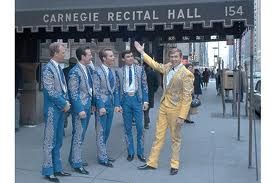
Buck Owens (1929-2006)

buckowens

Buck Owens died today in Bakersfield, California. He was 76 years old.

He was a great songwriter, a great performer and, of course, the host of Hee Haw. He wrote many great country songs, including Excuse Me (I Think I’ve Got a Heartache) and Act Naturally, which was covered by the Beatles.

I met him once when I was a kid. Pepsi opened a big bottling plant in my hometown in 1968. Buck Owens was the featured entertainer at the grand opening. Afterwards, I met him and he signed one of his 45 records and gave it to me. Of course I lost it sometime between then and now.

Along with Merle Haggard and George Jones, Buck Owens was the basis for my early and continuing love of country music (not to be confused with the drivel that comes out of Nashville these days).

Triangulating Through the Crowds

Stephen Bainbridge has a post about crowds and experts. He wonders if there has been a study on whether prediction markets limited to experts in the field do better than prediction markets open to any and all comers.

Here’s my, umm…, prediction: individually, the experts would do better, but the conventional wisdom of the all comers group would outperform most of the individual experts.

Christine Hurt follows up on that thought in the context of the Battle of the Encyclopedia Britannicas and the Wikipedias.

The answer, as far as I am concerned, is that crowds do fine as long as you remember to trust, verify and triangulate. That post by Jim McGee, which I have linked to before, is a compelling argument, at least to me, for the benefits of multiple data points.

And in the blogosphere, multiple data points requires a crowd.

The Only Time You Should Start a New Company

Earlier this week, Caterina Fake posted 6 reasons it’s a bad time to start a company. I didn’t see that post until I saw Fred Wilson‘s follow-up today.

There are three of Caterina’s reasons that I find particularly compelling, because they remind me of the build up to Bubble 1.0.

1. Everybody else is starting a company.

I remember during Bubble 1.0 there were so many tech-related companies being formed that you couldn’t keep up with them. There were companies formed just to hold stakes in some of these startups. Some of these holding companies actually went public. Of course the insiders got silly rich and the retail buyers lost everything, but that was part of the game that lead to Bubble 1.0 and the pop heard round the world.

In the sports area alone, there were a ton of companies battling for reader eyeballs. I had 5 companies fly to Houston to try to convince me to either merge with them and become an insider (which I wasn’t interested in because some part of me knew the whole game was a house of cards) or to sell one or more of my sports-related sites to them (I’ve told that story before).

Everybody was racing to get their product, network, etc. put together so they could go public and make some greater-fool money. As a backup, they could sell to Fox or Yahoo or someone with more cash who dreamed of becoming Fox or Yahoo.

4. You can’t operate in obscurity anymore

This is a very good point that may actually save us from some of the greater-fool puffery that happened last time around. Even back in the mid to late nineties, the web was not the transparent, all-inclusive place it seems to be now. When some company wanted to buy one of my websites, I could get some information off their web page, but I still had to rely substantially on information I received from the company. Now there are thousands of mini-Naders blogging away about these companies.

Granted, there are some promoter-types out there writing about how wonderful most of this new Web 2.0 stuff is, and I’m sure some of them are making money in one way or another by doing it. But if you do your homework, you can get a lot more scoop about companies and the people behind them than you could back then.

Here’s a good way to carve the promoters from the tech-enthusiasts: if someone is telling you that some new application is cool and useful, think tech-enthusiast; if someone is telling you that some Web 2.0, high school science project turned business is going to be the next IBM, the look for the money trail.

As a whole, the new internet is a check and balance against monkey business. But there will always be people who, intentionally or not, use their platform to promote as opposed to inform.

The check and balance, of course, are the posts and stories people write by the hundreds or thousands. Any of these tech-related startups who get into the IPO pipeline will be plastered all over Memeorandum and a ton of other pages (including this one) with people like me asking what about this company makes it a viable public offering?

And finally, I think a lot of people learned some hard lessons back in Bubble 1.0, which will put IPO’s under greater scrutiny now. Back then, any tech-related IPO would make you money. I’m not sure that’s the case now. I have bought exactly one IPO in the past 5 years- and I have passed on opportunities for quite a few.

5. Web 2.0 isn’t all that.

Amen, sister. Caterina’s company, Flickr, is the king of the new companies, so she knows what she’s talking about.

Just look through some of my Web 2.0 Wars series posts and try to find businesses with enough legs to warrant even dreaming of big money. They’re hard to find.

IPO’s are still largely off the table (thankfully), so the exit strategy is to get bought by some bigger company who is desperate to get into the internet race.

The odds are long and the door is closing.

When is the Only Time You Should Start a New Company?

Here it is, in one, easy to remember sentence.

When you have a product or service to sell that enough people will buy to create a reasonable profit without relying on advertising revenue.

That’s it. Plain and simple and old-fashioned. And smart.

Tags:

RanchoCast – March 24, 2006 Edition

I did a new podcast tonight.

No particular theme, but it has my favorite selection of songs so far, including songs by Goose Creek Symphony, Slobberbone, Ozark Mountain Daredevils, Toby Darling, a funk song I spent 20 years looking for and more.

The blogosphere’s been a bit slow lately, so there’s not a ton of tech talk. I did talk a little about old media arrogance in the context of the recent Berkeley CyberSalon.

50 minutes of country rock, classic rock, tech and blues.