Net Neutrality Tutorial

netneutraility

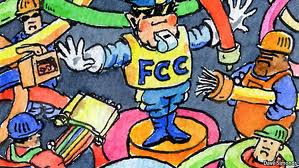
If you want to know what net neutrality is and why it’s important to you, but you don’t want to spend hours reading boring articles about it, just watch this video.

There is a dangerous combination of greed and stupidity floating around out there that could do something really bad unless we keep net neutrality front and center until the threat of non-neutrality is eradicated.

If you use the internet for anything at all, net neutrality is an important issue to you.

Vista Versions Made Easy

Ed Bott has a good post and an even better chart that explains the differences in the various versions of the upcoming Windows Vista, the successor to Windows XP.

It’s still going to be a little tough to figure out which one to buy for a home/office power user with a network. At first glance, I suspect I’ll buy the Home Premium for the computer attached to our audio video equipment and Professional for the other computers on the network.

Tags:

SEO = Spam?

Some guy named Stephen Arnold of Arnold Information Technology (that’s a name that covers a lot of territory) apparently stood up at some Search Engine Meeting in Boston and said that search engine optimization is like spam.

Stephen Baker at Blogspotting makes a compelling point about the resulting uproar:

[SEO supporters] think that they’re simply working to give the public a view of their sites, which they naturally believe are relevant and useful. But don’t many spammers make the same claim?

Exactly. They are doing us a favor, and the fact they get paid to do it is just a happy coincidence.

seoevilI have stated before my discomfort with SEO. It feels like gaming the system. On the other hand, some people I respect have defended SEO to me in Comments and via email, and many of their arguments are logical.

Having said that, while I do not have a huge problem with SEO rightly applied, I want my search engines to find relevant content based on the relevant content- not based on who is smart enough to SEO their way to the top of the listings. Stated another way, I expect my search engines to ignore a lot of SEO and find me the best data based on some algorithm that levels the playing field.

The person who knows a ton about a topic I am interested in may not know anything about SEO. To the extent that SEO pushes lesser content above better content (and no one can convince me that isn’t at least a by-product of SEO), then I don’t like it.

It’s not nearly as bad as spam.

But it’s a second or third cousin.

Tags:

Good News for Digital Photographers

Thomas Hawk, my favorite photographer and one of my favorite bloggers, has a post today containing 10 Tips for the New Digital SLR Photographer.

I have been hoping he would add photography tips to his blog. I don’t know if this is the beginning of a trend or not, but I sure hope so. I can think of no photographer I would rather learn from than Thomas.

If you need proof of what a great photographer he is, take a look at this, or this, or this, or just about every photo in his Flickr Stream.

Bubble 2.0 Watch: $26M for Jingle

web20Techcrunch reports that Jingle, which operates Free411, a free 411 service, has raised $26M in new financing from a group of VCs.

The good news is that Free411 only has 1.5% of the 411 market, yet it handles 7 million calls a month.

The bad news, of course, is that like 98.5% of the rest of the new tech-related companies we read about, Free411’s business plan revolves around that old Web 2.0 standby- advertising. Callers are required to listen to a 12 second advertisement during each call.

Those advertisements are supposedly ads for competitors of the place you are calling. You can choose to call the advertiser instead by pressing 1 during the call. If there is no local advertiser for the business you are calling, the business you are calling gets a telemarketing call about signing up as an advertiser. I doubt that will make their day (I am a little dubious of the claimed 13% success rate). Nevertheless, there is something fundamentally clever about this system.

And it’s worth noting, that while this service is based on ad revenue, it is not based on online ad revenue. While there are competitors, such as 411-Metro, the space is less crowded that many others.

But what happens if you call for a residential number? Or for a company with a name that doesn’t indicate what it does? Or a governmental number. Or, or, or….

At the end of the day, I am reasonably impressed by their structure. Not $26M impressed though. I just don’t see the big payoff here. My cell provider doesn’t charge extra for 411 calls and even if the free 411 concept takes off, what prevents the existing telecos from doing the same thing?

Bubble 2.0 Watch: Boom, Boom, Out Go the Lights

web20Adam Lashinsky has an article in Fortune (and online at CNN) today about the “new Net boom,” and how to invest in it without getting burned (again). If I’d written this article, it would have had a word count of 1: don’t.

The article makes some good points, however, and, thankfully, is more concerned with the Ciscos and the Googles than the Facebooks and the 13,451 or so online calendars.

It begins by correctly pointing out that when Bubble 1.0 burst, the internet kept on being the internet and has become more and more integral to our lives:

You don’t need us to tell you that today the Net is fulfilling many of the visions its wild-eyed prophets were preaching about just a few years ago. All the impossibly cool applications that seemed so elusive in the late 1990s–Internet phone calls, (legal) downloadable music and movies, high-speed web access on cellphones, online bill paying–are a taken-for-granted part of daily life.

Plus, many more people have broadband internet access now, making the pool of application users bigger than before.

It even addresses (kind of) my greater fool/IPOs in the making concern:

We know what you’re thinking right about now: If there’s a boom underway, then the Wall Street crowd must be fixing to sell us something. After all, we’ve been down this path before. But the investing landscape is very different this time.

In sum, the article says that new reporting requirements and the lower price of net stocks will work to prevent a bunch of silly IPOs.

Maybe. But as soon as the greater fools start believing the the lesser fools are nosing around on the net stock aisle, I suspect there will be plenty of products brought to market. They are working on the supply and waiting on the demand.

Before I invest in any meaningful way in any new net companies I need to see a business plan based on selling something other than ads and an exit strategy other than the hope of getting bought.

Too much of the new net world is being built on top of advertising revenue. I’ve said it before and I’ll say it again and again.

Advertising cannot support the weight of all these so called businesses for the medium or long term.

If you don’t agree with this, just wait. And watch.

Digg in a Hole

digg

I have talked about Digg before, and I am very impressed with the technology behind the site. I’ve also said before that I don’t use Digg very much because I don’t like the “news by contest” format. In other words, I don’t really want the content presented to me to be based on votes received by a bunch of people whose interests may or may not be compatible with mine.

Part of the problem is the potential for people to vote stories to the top of the list based on factors other than merit. I have no reason to believe that ballot stuffing is a problem at Digg. But logic and human nature has always told me that it could be.

Today brings a post at Forever Geek that may have uncovered some irregularities in the voting process. The story was fairly even-handed and while I don’t reach any firm conclusions from the data presented, I do find it troubling that Forever Geek was apparently banned from Digg as a result of the post.

I missed it at the time, but David Johnston at Real Tech News posted about a similar issue back in December.

I don’t know if people are monkeying around with the Digg process or not, but banning someone for posting objective data and raising the question is not good PR.

It’s bad PR and it makes you look guilty, whether you are or not.

Tags:

Earthquakes, Hurricanes and the Math Thing

Doc Searls has a thoughtful and scary post today on earthquakes.

Today is the 100th anniversary of the San Francisco earthquake of 1906.

Thankfully, I’ve never experienced an earthquake. But Hurricanes are a constant worry here along the Texas coast and I have stood outside my house more than once in the yellowish glow of a bad storm and listened for the train-like sound of a tornado.

I remember the very first Sim City game. I didn’t like the natural disasters, so I turned them off. Unfortunately, you can’t do that in real life.

I hope we are spared another hurricane and I hope California is spared another earthquake. But as Doc points out, the math is not in either of our favor.

All Aboard the Bubble Train

With every new funding of the latest high school science project turned business, more and more people start talking about Bubble 2.0.

I have been talking about it for a while, as have Steve Rubel and others.

Today, Mark Evans jumps onboard the bubble train:

The signs of doom are increasingly evident – VCs are scrambling to get a stake in start-ups with limited track records; valuations in the M&A market are climbing, and 20-something entrepreneurs are being seen as cool and credible again.

As I have said so many times before, these folks aren’t doing the start-up thing as a hobby any more once serious money gets involved. No, they are trying to make a lot of money.

Money that is sitting in our pocketbooks, mutual funds and brokerage accounts.

Mark cites a San Francisco Chronicle story as a sign that it’s time to head for the hills. More and more use of the term IPO means it’s time to take our money with us.