Web 2.0 Wars: Round 20

It’s time for Round 20 in Newsome.Org’s Web 2.0 Wars. The contestants and rules are here.

This is the final heat of the first Round. The playoffs will be next.

Other Rounds: 1 | 2 | 3 | 4 | 5 | 6 | 7 | 8 | 9 | 10 | 11 | 12 | 13 | 14 | 15 | 16 | 17 | 18 | 19 | 20

Here are the contestants for Round 20:

Mercora
StumbleUpon
ClipShack
MeetWithApproval
HomePortals
SpinSpy

Mercora is a music search service. It requires you to install software on your computer, so I can’t comment on how well it works.

StumbleUpon is a browser extension that let’s users rate and recommend web sites of interest.

ClipShack is a video hosting and sharing service. Crowded space.

MeetWithApproval lets users schedule and confirm meetings.

HomePortals returned error messages galore when I tried to visit. DQ’ed.

SpinSpy is a news by contest site, sort of like Digg

Before Today I’d Heard of:

0 out of 6.

And the Winner of Round 20 is:

Mercora in a very small and very weak heat.

Technorati Tags:
,

5 Things Second Life Needs to Improve

I’ve been spending a little time in Second Life, and have written about it here, here and here.

ezra-760097I still think it is a brilliant business plan (I’ve already spent around $100 there, without even trying), but I have seen some areas that need improvement.
I’d love to set up a major Newsome.Org or perhaps Err Bear Music presence in Second Life. Maybe get a little exposure for my music, etc. Maybe even do a Second Life concert series.

But as of the moment, I’ve concluded that it would be far too hard to set it up.

Here are 5 things Second Life Needs to do now:

1) Make Building a Lot Easier.

And I mean a whole lot easier. I bought a house and tried to add to it, but it was completely impossible, at least for me. In fact, I accidentally picked up my entire house and couldn’t even get it back on my lot (which is pretty small). My placements were either unlevel or more often over the lot line. Granted, I’m sure there are a lot of people who can build stuff as easy as I can play a D chord, but it was impossible for me. I ended up just putting my lot back on the market and returned to the streets. With a house in my pocket.

2) Make Finding a Compatible Neighborhood Easier.

When I was looking for a place to buy, I found all kinds of land and houses and businesses for sale. It seems to me that, just like in the real world, neighborhoods in Second Life have particular characteristics. The last thing I want to do is buy and house and move into a neighborhood and find out that all of my neighbors are college kids or opera (either one) fans, or worse. I need to know where the middle aged tech-writers/musicians live. How about a Memeorandum street?

3) More Information About the Commercial Areas

And what about all those islands and commercial areas? How do you buy a condo or office somewhere? I finally gave up trying to get a place over by Scoble on Slackstreet. It’s OK if all of those places (which by the way are ghost towns with nary a person in sight) are off the market or unavailable, but I wish I knew why. I don’t know him, but Spin Martin seems to be the Donald Trump of Second Life.

4) Easy and Short Tutorials on Doing Stuff

I need to watch some very dumbed down tutorials on how to set up stuff within Second Life. For example, I’d love to set up some sort of radio station or public music player with some of my original songs on it, but I can’t figure out how to do that. Stated another way, I’m sure there are all kinds of cool things you can do in Second Life, but I don’t know how to do any of it. It gets frustrating.

5) I Need a New Name

I mentioned this before, but why are there limitations on character naming? Lots of people would probably like to take their internet presence into Second Life, but the naming conventions won’t allow it.

I imagine that if I had all the time in the world, I could figure most of this out. But I don’t, and I expect a lot of others don’t either.

So these things need to be easier. A lot easier.

I like Second Life, but candidly the hard is starting to outweigh the cool.

Buck Owens (1929-2006)

buckowens

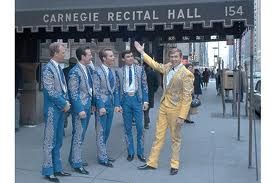
Buck Owens died today in Bakersfield, California. He was 76 years old.

He was a great songwriter, a great performer and, of course, the host of Hee Haw. He wrote many great country songs, including Excuse Me (I Think I’ve Got a Heartache) and Act Naturally, which was covered by the Beatles.

I met him once when I was a kid. Pepsi opened a big bottling plant in my hometown in 1968. Buck Owens was the featured entertainer at the grand opening. Afterwards, I met him and he signed one of his 45 records and gave it to me. Of course I lost it sometime between then and now.

Along with Merle Haggard and George Jones, Buck Owens was the basis for my early and continuing love of country music (not to be confused with the drivel that comes out of Nashville these days).

Triangulating Through the Crowds

Stephen Bainbridge has a post about crowds and experts. He wonders if there has been a study on whether prediction markets limited to experts in the field do better than prediction markets open to any and all comers.

Here’s my, umm…, prediction: individually, the experts would do better, but the conventional wisdom of the all comers group would outperform most of the individual experts.

Christine Hurt follows up on that thought in the context of the Battle of the Encyclopedia Britannicas and the Wikipedias.

The answer, as far as I am concerned, is that crowds do fine as long as you remember to trust, verify and triangulate. That post by Jim McGee, which I have linked to before, is a compelling argument, at least to me, for the benefits of multiple data points.

And in the blogosphere, multiple data points requires a crowd.

The Only Time You Should Start a New Company

Earlier this week, Caterina Fake posted 6 reasons it’s a bad time to start a company. I didn’t see that post until I saw Fred Wilson‘s follow-up today.

There are three of Caterina’s reasons that I find particularly compelling, because they remind me of the build up to Bubble 1.0.

1. Everybody else is starting a company.

I remember during Bubble 1.0 there were so many tech-related companies being formed that you couldn’t keep up with them. There were companies formed just to hold stakes in some of these startups. Some of these holding companies actually went public. Of course the insiders got silly rich and the retail buyers lost everything, but that was part of the game that lead to Bubble 1.0 and the pop heard round the world.

In the sports area alone, there were a ton of companies battling for reader eyeballs. I had 5 companies fly to Houston to try to convince me to either merge with them and become an insider (which I wasn’t interested in because some part of me knew the whole game was a house of cards) or to sell one or more of my sports-related sites to them (I’ve told that story before).

Everybody was racing to get their product, network, etc. put together so they could go public and make some greater-fool money. As a backup, they could sell to Fox or Yahoo or someone with more cash who dreamed of becoming Fox or Yahoo.

4. You can’t operate in obscurity anymore

This is a very good point that may actually save us from some of the greater-fool puffery that happened last time around. Even back in the mid to late nineties, the web was not the transparent, all-inclusive place it seems to be now. When some company wanted to buy one of my websites, I could get some information off their web page, but I still had to rely substantially on information I received from the company. Now there are thousands of mini-Naders blogging away about these companies.

Granted, there are some promoter-types out there writing about how wonderful most of this new Web 2.0 stuff is, and I’m sure some of them are making money in one way or another by doing it. But if you do your homework, you can get a lot more scoop about companies and the people behind them than you could back then.

Here’s a good way to carve the promoters from the tech-enthusiasts: if someone is telling you that some new application is cool and useful, think tech-enthusiast; if someone is telling you that some Web 2.0, high school science project turned business is going to be the next IBM, the look for the money trail.

As a whole, the new internet is a check and balance against monkey business. But there will always be people who, intentionally or not, use their platform to promote as opposed to inform.

The check and balance, of course, are the posts and stories people write by the hundreds or thousands. Any of these tech-related startups who get into the IPO pipeline will be plastered all over Memeorandum and a ton of other pages (including this one) with people like me asking what about this company makes it a viable public offering?

And finally, I think a lot of people learned some hard lessons back in Bubble 1.0, which will put IPO’s under greater scrutiny now. Back then, any tech-related IPO would make you money. I’m not sure that’s the case now. I have bought exactly one IPO in the past 5 years- and I have passed on opportunities for quite a few.

5. Web 2.0 isn’t all that.

Amen, sister. Caterina’s company, Flickr, is the king of the new companies, so she knows what she’s talking about.

Just look through some of my Web 2.0 Wars series posts and try to find businesses with enough legs to warrant even dreaming of big money. They’re hard to find.

IPO’s are still largely off the table (thankfully), so the exit strategy is to get bought by some bigger company who is desperate to get into the internet race.

The odds are long and the door is closing.

When is the Only Time You Should Start a New Company?

Here it is, in one, easy to remember sentence.

When you have a product or service to sell that enough people will buy to create a reasonable profit without relying on advertising revenue.

That’s it. Plain and simple and old-fashioned. And smart.

Tags:

RanchoCast – March 24, 2006 Edition

I did a new podcast tonight.

No particular theme, but it has my favorite selection of songs so far, including songs by Goose Creek Symphony, Slobberbone, Ozark Mountain Daredevils, Toby Darling, a funk song I spent 20 years looking for and more.

The blogosphere’s been a bit slow lately, so there’s not a ton of tech talk. I did talk a little about old media arrogance in the context of the recent Berkeley CyberSalon.

50 minutes of country rock, classic rock, tech and blues.

Jukebox, Annotated

You know the drill. Open up your jukebox of choice, point the shuffle feature to your entire library of songs and list, without exception, the first 10 or so songs that play. I like to add a little commentary about some of the artists, songs, albums, etc.

The Heart of Saturday Night – Tom Waits (The Heart of Saturday Night) (1)

Everything’s Gone – The Mertons (Girandole) (2)

Hunting High and Low – A-Ha (Hunting High and Low) (3)

Green Apple Quick Step – The Byrds (Byrdmaniax) (4)

Honky Tonk Baby – Highway 101 (Bing Bang Boom) (5)

I’d Rather Drink Muddy Water – Johnnie Taylor (Who’s Making Love) (6)

It’s a Man’s Man’s Man’s World – James Brown (Star Time) (7)

Southern Loving – Jim Ed Brown (The Essential) (8)

Old Joe – Guess Who (Canned Wheat) (9)

Sweet Thing – David Bowie (Diamond Dogs) (10)

(1) My pal G-Man and I went through a phase where we listed to nothing but Tom Waits. This is a great song from a great record.

(2) This record has come up before. Great driving alternative country. A must-buy for alt. country fans.

(3) People sometimes sell the 80’s short musically, and that’s a mistake. The alternative rock, particularly coming out of the UK, back then was pretty amazing. Beautiful song.

(4) An often overlooked Byrds record from 1971. This is a good an instrumental romp as you’re going to find.

(5) This is the lesser version of the once great band, after the wonderful Paulette Carlson left. Good workman like country music, but not a good as the prior records.

(6) A fine song from a great record by the seond best soul singer ever. Yes, ever.

(7) A fine song from a box set by the best soul singer ever. Yes, ever. I make my kids listen to The Godfather at least once a month. They have to appreciate.

(8) Normally I just play Pop a Top over and over, but this is another good song by a country legend.

(9) The Guess Who made some fantastic records, including this gem from 1969. You’ve heard their hits, but their records have a ton of great songs you’ve never heard. One of my favorite all-time bands.

(10) By far the best David Bowie record. I love this song and I love this record. It’s a masterpiece. Haunting. Rent 1984, put it on the DVD and mute it, put this record on.

Technorati Tags:
,

There are No Mulligans When Your House is on Fire

In one of the 2006 trend prediction threads, I mentioned that I was not sold on VOIP because of the uncertainty that 911 calls will work.

houseonfireI argued that while internet phone calls may be a trend, before VOIP will be a meaningful alternative to traditional land or mobile lines, someone will have to convince millions of people like me that if we dial 911 on VOIP, someone will answer who can help and knows where we’re calling from. There are often no mulligans when it comes to a 911 call, so creating certainty in the minds of the masses will be critical to the trend-ablility of internet phone service. Otherwise it will be a utility for a few and a toy for many.

Sadly, a man in Minnesota found out the hard way that, in fact, there are no mulligans. He called 911 over his Vonage VOIP line when a fire started in his house and, get this, was put on hold by Vonage while his house turned into a 5 alarm blaze.

This is why VOIP is a gadget, not a utility.

Frankly, I can’t believe companies who bungle such an important part of phone service are allowed to do business.

Tags:

Web 2.0 Wars: Round 19

It’s time for Round 19 in Newsome.Org’s Web 2.0 Wars. The contestants and rules are here.

This is the final heat of the first Round. The playoffs will be next.

Other Rounds:
1 | 2 | 3 | 4 | 5 | 6 | 7 | 8 | 9 | 10 |
11 | 12 | 13 | 14 | 15 | 16 | 17 | 18 | 19 | 20

Here are the contestants for Round 19:

Yelp
Smarkets
Inform
Filangy
Magnolia
43things
ShoZu
Technorati
Wrickr
Feedmarker

Yelp is a review aggregator with a local flavor. It catagorizes reviews by city.

Smarkets is a “stock market for products” game based on products sold at Amazon. You can buy or short. One of the most insufficient FAQs I’ve ever seen.

Inform is a new aggregation site. Users can create custom channels for topics of interest. It collects and connects the content, as opposed to relying solely on RSS feeds (they say that makes it better).

Filangy says is is “an exciting new concept in search that caters to the user’s specific searching needs and provides results that are needed.” OK, but that doesn’t really tell me anything. Needs more meat on the About page.

Magnolia is a beautifully designed social bookmarking and content management service.

43things is a goal setting and sharing service. Good mindshare, but I don’t really get it. Maybe I need to think up some goals.

ShoZu is a mobile phone service that helps you to save photos and videos from your camera-phone to your preferred online sharing site. it works with Flickr and a bunch of others.

Technorati is a blog search and tagging service. Huge mindshare, and I’ve called it the backbone of the blogosphere.

Wrickr has no meaningful information on its web page. Another example of a company tossing a web site up before there’s anything to see.

Feedmarker is a bookmarking service, that includes a feed reader and tagging. And it’s open source (good marks for that).

Before Today I’d Heard of:

3 out of 10.

And the Winner of Round 19 is:

Technorati in a photo finish with Magnolia.

Technorati Tags:
,

CyberSalon: It’s Not the Writing that Matters

It’s the control over the distribution of the writing.

Scott Rosenberg, who is rapidly becoming one of my favorite reads, has more today on the recent Berkeley CyberSalon.

The audio from the meetup can be heard via Andrew Keen’s AfterTV podcast (thanks to Sabine for the heads up via a Comment). It is a little over an hour’s worth of mostly interesting conversation, and if you doubt that Steve Gillmor has the best handle on the blogosphere, one listen will erase any doubt. He is one smart, to the point dude. My Gillmor Gang envy keeps on growing.

Anyway, Scott is responding to a post by long-time blogger Rebecca Blood in response to Scott’s initial report from the Berkeley meetup.

Rebecca’s Take

Rebecca’s point is that traditional publishing is about printing books and articles they can sell, which has little to do with finding the most well written material:

When publishers evaluate a book proposal, they don’t ask if the work is true or original or insightful or well-written. First and foremost, they ask themselves if they can sell it. If they don’t think they can, they pass. If they believe there is a market and that they can effectively market the work, they buy it.

Scott’s Take

Scott mostly agrees with Rebecca, but draws a distinction between the business side of publishing and the editorial side:

Most editors wouldn’t be so imprudent as to claim that they are publishing “the best” anything; usually, they’ll talk about trying to publish “the best” that they can find for their particular readers. The most effective editors have an accurate sense of who those readers are and what they want.

My Take

First of all, as someone who has written a ton of newspaper and trade journal articles, my experience has been that most editors are looking for something interesting to publish, period. Perhaps this isn’t the case at the New York Times and its ilk, but most publications are hungry for stuff to publish. Whether they will admit that or not is another story, but it’s true.

Initially, there is a process that is at least somewhat designed to locate (a) something well written that (b) fits the focus of the publication.

Veteran writers know the focus of the publications they write for and can generally hit the nail on the head focus-wise on the first try. If you’re an unknown, the bar is higher and the writing must be more compelling to pass muster. If you are a recognized name or authority, the bar gets lowered a little. Perhaps a little ironic, perhaps not. But true.

I’m no John Markoff (and far, far from it), but when I write an article, I have little to no doubt I can get it published by one publication or another. More times than not, it’s the first one I offer it to.

The first couple of articles are sort of tough, but after you’ve been doing it a while, you realize it’s just not that hard to get publications to use your stuff.

Granted, I am not writing to make a living (it’s more of a marketing thing for me), but I have been doing it for a long time and I have to believe my experience mirrors that of many others.

But It’s Not About the Writing

My bottom line on all of this, however, is that everyone has it a little wrong. We’ve been talking about the right things, but not from the correct angle.

Old media is not in crisis because we are writing our blogs. Old media is in crisis because of a two step process is taking away its stranglehold on the distribution of writing. The easy analogy is the record labels and the way they grasp at the catless bag in the face of new distribution channels for music that bypass the labels. Like traditional newspapers, the record labels are in the twilight of their relevance.

So back to the newspapers.

First eBay and Craigslist take away a chunk of the beloved classified ads and that long-standing revenue stream.

Now bloggers (which include not only morons like us, but also geniuses like Andrew Keen) are chipping away at the content distribution model. There is a lessening of the need for a middleman to direct content to us. We can produce, publish, find, read and reply to it ourselves.

And this trend is in its infancy. It will continue and, if the traditional newspapers don’t adapt, it will make them economically infeasible. That’s part of the basis of my 8 Steps to Save the Merc post.

So it’s not about the writing, and it’s not about the quality of the writing. It’s about the loss of control of the distribution of the writing.