
Piczo – A Better Choice for Kids?

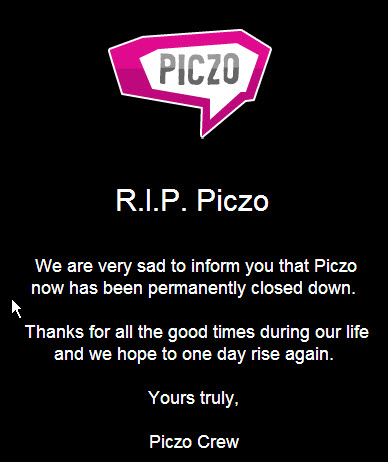
Piczo is a social networking site, geared toward young teenagers, that actually does something about online safety- unlike MySpace and others.

Piczo is a closed system- there’s no way to browse pages or to search. There are numerous ways for parents and others to report inappropriate behavior. And best of all- Piczo has full time staff reviewing all complaints and claims to take swift action to protect its members.

This sounds like the sort of site I was describing last night when I was calling MySpace out for yet another round of smoke and mirrors in the name of user safety.

I haven’t tried Piczo, and much of what I report here comes from the C|Net story, the TechCrunch story, the Piczo safety page and the Piczo parents’ page.

I really wish Piczo would require parental approval before allowing kids to register, but other than that one material omission, it seems to have a good approach to online safety.

The question then becomes a choice between a “safer” network and no network at all. I suspect that when my kids get to the networking age, I will first try to write a secure site for them and their friends to use to connect online. If that’s too nerdy or Daddy-infested for my kids, we’ll have to talk about it. I’m not naive enough to think I can keep my kids from the internet, but I’m certain I can and will exert influence over where they go and what they do there.

My buddy Tom Morris pokes some logical holes in my dark alley theory and compares MySpace to a large city, like New York, Boston or London. He says that problems like the ones at MySpace and elsewhere can’t be solved by technological means. And he says that, since MySpace has more rules than the web at large, it’s at least incrementally safer than the world wild web.

Most of what he says makes sense. I guess the difference that I keep clinging to is that my kids can’t go to New York, Boston or London without me, but they are permitted to (and will almost certainly demand to) go to MySpace, etc. all by themselves.

Sure, I can forbid them from doing it at my house, but what about at a friend’s house? I have to be watchful and involved, but I want sites like MySpace to make it easier for me to control where my kids go and what they do online- not harder.

Piczo seems to be to be a step in that direction.

Update (12/27/12):
piczo

A Growing Chorus of Reason

Amid the wild cheering and vast overvaluation that continue to inflate the Web 2.0 circus tent is a growing chorus of reason, trying valiantly to insert some logic and business sense into the conversations.

Dick Parsons, CEO of Time Warner, says what every other right-thinking CEO in America must think- that YouTube and Facebook are being overvalued.

Fortune Magazine has a story about Google’s chaotic search for it next big hit, which would be its second:

[I]t’s clear from Google’s tentative lurches into new forms of advertising and its spaghetti method of product development (toss against wall, see if sticks) that the company is searching for ways to grow beyond that well-run core.

Business Week has a cover story on click-fraud, the dark side of online advertising which has resulted in a growing distrust of the online advertising model:

In June, researcher Outsell Inc. released a blind survey of 407 advertisers, 37% of which said they had reduced or were planning to reduce their pay-per-click budgets because of fraud concerns. “The click fraud and bad sites are driving people away,” says Fleischmann. He’s trimming his online ad budget by 15% this year.

Meanwhile, a few bloggers continue to ask the questions a lot of the Web 2.0 cheerleaders don’t like to hear.

Nick Carr talks about lowered estimates for online ad spending.

Warner Crocker, who in a later post says I am a navel-gazer, asks the great question that my belly button lint has spelled out so many times before:

I’m still puzzled by the hustle to move everything to a web-service with money based on advertising (I know not every web service goes this way, but most have at least an eye on that model) when we have a culture that, in general despises advertising of any stripe. But yet, onward we go as we stick ads on this service and that.

The out of whack scale of much of Web 2.0 is the culprit for both the bubble blowing insanity and the cautionary chorus.

Until enough people demand that reason, good business sense, a sustainable revenue model, and some semblance of scale be introduced into the equation, we will always have the barkers hollering cash at the door to the tent and a crowd of people clutching their wallets and wondering whether they should step inside the tent or join the chorus.

Tags: ,

Investing Strategy in the Wacky World of Web 2.0

Dead 2.0 takes a sad and hilarious look at the announcement by Mr. Web 2.0 that he is an investor in Dogster.  It’s a great read for anyone who thinks Web 2.0 business is the same as non-Web 2.0 business.  Among my favorite quotes from the story is this one (quoting the wonderfully named Bambi Francisco):

A smaller number pay roughly $20 a year, to get storage for videos, and photos, and the ability to IM other members on the site, using their pets as avatars.

I honestly don’t know if that’s true or not.  I actually hope it isn’t true, but you can never tell.

I had a flying squirrel as a pet when I was a kid.  I’m looking forward to Flyingsquirrelster.  Other of my childhood pets would hang out at Duckster, Owlster, Rabbitster, Greensnakester, Tadpolester (later that one would graduate to Bullfrogster) and, of course, my pet Ben would spend his time at Crawfishster.

I will say that at least Dogster has a targeted demographic that should make ad buys appealing to pet food makers, pet supply stores, the Hallmark Channel, etc.  And Peter Lynch made a fortune for himself and others by investing in things he liked.

The problem I have with Dogster is the problem I have with a lot of the Web 2.0 companies de jour- the play dough doctrine.  The apparent approach of so many of these companies is summed up nicely by The Stalwart:

It only reinforces my conviction that few people have any idea of what will work and what won’t.  There’s a lot of spaghetti throwing in business, just to see what noodles stick.

The exposure from Mr. Web 2.0 will likely quadruple the prospects of Dogster, so maybe in a year or so it will be an internet juggernaut (or bought by Petco).

In the wacky world of Web 2.0, anything is possible.

Tags: ,

Should Digg Pay Its Users?

I am pretty ambivalent too, but I mostly agree with Mathew about paying Web 2.0 users.

While I don’t like Digg, because I find getting my news via popularity contest unsatisfying, when I wonder over there, I want to see content that people thought was interesting, not content tossed up in the name of making a half cent or two.

Additionally, if Digg or its Web 2.0 brethren do start paying users, the only people who will add content just for the money will do it wrong- either by gaming the system or by adding a bunch of unworthy stuff.

Remember Newsome’s Rule: add the prospect of money to any equation and things get very complicated.

Rob Hyndman (in a comment to Mathew’s post) says “The type of work may be new, but it’s work nonetheless. And it strikes me that advocates of the view that it shouldn’t be compensated are either (A) waxing nostalgically and lyrically about a time when the ‘sphere was pure as the driven snow, and motivated only by benevolence and the kindness of pixies (so long as it means only other people should work for free), or (B) hoping to keep using the labour of others for free, at least until after the liquidity event.”

I think that’s probably true- I’m certainly interested in protecting at least part of the blogosphere from the insanity that ensues when every single act is about chasing the almighty dollar. But if we’re going to look at Digg the way Rob suggest, we have to look at the rest of the ‘sphere too.

Sure, Kevin got filthy rich off of content provided by others. But most of Web 2.0 and Google are all walking down the same path.

Add a link, look at an add- it’s all the same thing.

Tags: ,

Donna Bogatin Peels Back the Onion

Donna Bogatin has a great read over at ZDNet about the champions of Web 2.0.

She starts off with a bang:

It is fitting that YCombinator’s Paul Graham did a feature interview with Michael Arrington’s TechCrunch. The two entrepreneurs have a lot in common: they both are making money by promoting Web 2.0 start-ups lacking business plans.

Donna’s point, which is one I and other have been making for some time, is that, while the internet and that sliver of it we call Web 2.0 may have changed the rules ever-so-slightly, the tried and true rules of business still apply. Business is about making money. Not building a cool toy or giving away a lot of stuff to a lot of people. Too many of the people who control the microphone in the blogosphere are either making too much money or have fooled themselves into thinking they are going to make too much money to talk about this. But it’s true.

If people were genuinely interested in changing the business landscape through the use of this collaborative software, they would encourage, or better yet demand, that some thought be put into exactly how you new social bookmarking service is actually going to make a profit. Instead, everyone keeps on yukking it up at Web 2.0 parties and nibbling on the low hanging fruit- ad revenue. Once the fruit is gone, there’s always eBay.

I’m no VC, but let me punch a few holes in this quote by Paul Graham:

What I tell founders is not to sweat the business model too much at first. The most important task at first is to build something people want. If you don’t do that, it won’t matter how clever your business model is. Of course you have to have a business model eventually…

If that’s all it takes, here’s my new Web 2.0 service. Start a web page where anyone who clicks on a link will be sent $20 from a Paypal account. Everybody wants money- especially if it’s free. We’ll put some AdSense ads up there to generate some revenue. Once we get a lot of traffic, then we’ll figure out how to monetize it.

When your entire business is based on people using your product for free, customers are going to be highly resistant to later paying for it. If all you do is give stuff away, you’re a charity. Charities are good, but the money they get should be called donations, and not investments. Particularly when the dream return on that investment is greater fool money via an IPO or getting bought by Yahoo.

The rules of business apply to Web 2.0. Even if every 5 years or so someone catches lightning in a bottle, there are hundreds more who lose money or give up.

There are plenty of reasons why the champions of Web 2.0 don’t want to recognize this indisputable fact, but that doesn’t mean the rest of us have to buy it.

Tags:

Finding the Social Applications that Matter

blogssocialnetworksNick Carr has a post today asking if the whole social application thing is a phenomenon or a passing fancy. In sum, he argues that it is cyclical and somewhat of a fad. Just because all the geeks on the net are vigorously adding links to Delicious doesn’t mean that anyone in the real world even knows what Delicious is. A few people in a small room can make even a casual act look like a trend.

On the whole, I completely agree with that. After I read Nick’s post I asked a few people in my office if they’d ever heard of Flickr, Netvibes or Delicious. One thought Netvibes was Netflix and none of the others even ventured a guess. These social applications are enjoying the same loud voice in a small room effect that I have written about in the context of blogging.

But there are two areas in which I disagree with Nick.

First, Nick couches the discussion in terms of getting things done and social production. He says social applications are extremely inefficient ways to get things done. In the context of applications designed specifically for productivity, that’s a fair way to look at it. But I don’t think you can ignore the social part of the application. I don’t think the mostly young people who use some of the social applications think in terms of efficiency when it comes to social interaction. Delicious may be about personal productivity, but Flickr and certainly MySpace are more about social interaction and the human need to connect and share.

When it comes to social applications, efficiency doesn’t always matter.

For example, it’s faster to push a speed dial button on your cell phone and talk to a friend about where to meet for dinner than it is to email, IM or SMS him, particularly on a phone or PDA. And even though many thought IM was a fad, it has become an integral part of the communication system for an entire generation. Granted, I never SMS or IM, but just about everyone I know under 30 does it all the time. I can’t put it in scientific terms, but there is something about sending IMs that is appealing to people- notwithstanding its empirical inefficiency.

Secondly, I think you have to distinguish between the social applications designed for computer geeks and those designed for the larger population. Certainly Technorati, Netvine and the like are largely the playground of the smallish tech crowd. Take one stroll through MySpace, however, and you’ll notice right away that the horrendous looking pages designed there are not the work of coders and geeks.

The secret to success for social applications is to achieve penetration into the non-geek population.

When I asked the same group at my office if they’d ever heard of MySpace or YouTube, all had heard of MySpace and most knew about YouTube.

MySpace (which is an evolutionary successor to Geocities), or it’s yet to be hatched evolutionary successor, may very well become a central repository for social resumes and affiliations. YouTube is well on its way to becoming the central archive for videos. The trick will be to figure out a way to grow up with your user base. If MySpace can make it cool for people to keep their MySpace pages after they pass 30, get married and start a family, I can see MySpace becoming a part of the online infrastructure the way eBay and Craigslist have.

It’s not about productivity as much as it’s about longevity.

The challenge for these applications is to stay relevant and fun enough to get an allocation of a user’s leisure time- because they are largely within the leisure sphere and outside of the productivity sphere. On that, Nick and I agree.

Mathew Ingram says that to measure the cultural effect of these social applications, you have to look at them as a group, and not just individually. He also believes that some of the parts of these applications, such as tagging and sharing, will eventually find their way into mainstream applications.

Nick says about social applications, in a quote that many would apply to blogging, “it’s a fun diversion for a while – and then it turns into drudgery.”

It’s drudgery if you have a task to complete and the application doesn’t assist you in completing that task. But social interaction is not always goal driven. The stuff that provides fun and connectivity has a good chance to become a permanent part of online life.

The other stuff may very well be the new pet rock.

Why Ad Dollars Alone Can’t Support Web 2.0 Forever

Steve Rubel posts about the economic conundrum that faces Web 2.0.

toomanyads

The problem, as Steve points out, is that Web 2.0 is “largely supported by ads from startups that also are hoping to capitalize in the rising interest in online advertising.” In other words much of the ad dollars generated by Web 2.0 companies are derived from other Web 2.0 companies who want gain enough traffic to make some ad money of their own.

Steve draws an analogy to Bubble 1.0, when Yahoo and many other companies were far too dependant on ads bought by dot.com companies with money to burn. I was very involved in the ad-selling frenzy of Bubble 1.0, selling ads both directly and through agencies for some very popular message board sites. We were all about old media back then, however, so anything that relied on user generated content was frowned upon to one degree or another. That problem was solved when the ad programs moved from a per impression system to a per click system.

One thing we did have in common with Bubble 2.0 was that a very limited number of advertisers were buying up the lion’s share of the ad capacity. As soon as those companies went out of business, ran out of advertising money or decided that internet advertising wasn’t the best place to spend their money, everyone’s ad revenue went from very high to very low- almost overnight.

Unless some new net buyers come into the picture, the current ad game is nothing but a disguised ponzi scheme. The ones who get in early make a lot of money. Those who come in at the middle of the curve make a little money and those who come in at the end lose it all.

The issue is whether those who are in the game now see the ad game as a long term business plan or just a short term money grab. If it’s the former, perhaps the thing to do it take a little pain now by making revenue diversification a priority.

But if it’s the latter, there’s no righting the ship. It just a matter of time.

Meanwhile the band plays on.

UPDATE: Stowe Boyd says it might not be as bad as Steve and I think. I hope we’re all right- that the ad bubble isn’t as inflated as it sometimes appears and that Web 2.0 realizes it can’t survive on ad revenue alone.

Tags: , ,

Steve Newson on Writely vs Live Writer

Steve has a post on the merits of Writely and Live Writer as blogging tools.  This is an interesting topic that I hope he will pursue.

As he points out, Writely is more than just a blogging tool, and it is web based, which allows you to access your documents from anywhere, while Live Writer is more targeted and, at this point, the better platform for blogging.

Wouldn’t it be cool if somehow Live Writer allowed you to synchronize your drafts and settings across multiple computers.  Google has its browser synch, which I uninstalled after it caused me to inadvertently lose all of my bookmarks, so it’s not out of the question that the ever-competitive Microsoft would create a competing application.

In fact, part of the technology is already here, with Microsoft’s FolderShare– an application that I love, but that Microsoft must not, because it doesn’t seem to be marketing it very actively.  I have suggested other ways to use FolderShare, but so far Microsoft hasn’t jumped on my great ideas.  If anyone at Microsoft was awake, they’d be accurately touting FolderShare as the application that makes Writely unnecessary.

What do you say, J.J?  Is cross computer functionality a possibility for Live Writer?

And by the way, my Bloglines update work around seem to be working.

Tags: , ,

Web 3.0: Reading the Kiko Leaves

web20One of the questions that has been tossed around the blogosphere recently is whether Kiko’s failure portends a coming wave of other Web 2.0 failures. Scoble says accurately and succinctly what I and other have been saying for months:

“Getting the cool kids to try your technology isn’t the same thing as having a long-term business proposition.”

That’s why I continue to believe that developers need to start hitting for average instead of swinging for the fences. It’s another way to describe the corner market approach I have talked about.

Is Kiko just the first of many Web 2.0 applications to throw in the towel? Of course it is- math 101 tells us that much. There are a lot of horses running in the same race, and some of them will be left behind. Plus, at least some of these applications are being created out of the love of creation, rather than the wish for riches. As other of life’s responsibilities call, some of these will be shuttered or ignored into oblivion.

The bigger question is whether Kiko heralds the beginning of a big shakeout that will leave the Web 2.0 platform in shambles?

I think the clear answer to that is no. There’s still angel and VC money looking for a place to land. And Yahoo and Google have not abandoned growth by acquisition. I suspect the rate of new Web 2.0 companies will slow a little as we climb up the curve. But there’s still fun to be had and at least the chance for money to be made.

The big shakeout will come when everyone is forced to realize that ad dollars cannot support the weight that everyone from Web 2.0 to MySpace to AOL to Google is placing on its shoulders.

The next wave of Web 3.0 companies will be the ones that create products and applications that people will pay for. Somewhere along the way pay became a dirty word. Math and economics will force that to change- the only question is when.

Web 2.0, and likely Web 3.0, play on a different field than the enterprise applications that rake in the big money. They are largely aimed at consumers- but there’s plenty of money there. Ask Amazon and eBay about that.

After the big shakeout does come, look for the next group of web based applications to go old school and actually expect users to pay for their products.

That means no tossing up a web site just to announce that you are working on some bookmarking or networking service. It means coming out of the gate with something that enough people will pay for to keep you afloat while you market it to the larger population. It means having something that is really cool or useful and not just a thinly disguised advertising platform.

In sum, it means better applications for us and more money for them.

In the long run, that will be good for the web, good for the developers and good for the consumer.

Tags: ,

A New Web 2.0 Exit Strategy

Kiko, an online web calendar has come up with a new exit strategy. If Yahoo or Google doesn’t come calling, try the eBay strategy.

Actually, I think it’s a pretty darn good way to exit a crowded space and would be surprised if some mega-company or funded startup doesn’t pony up something just for the technology and the 40K a month of web traffic. If I were Netvibes, I’d think about spending a little of that mad money (<– that link is tribute that supposedly will lead to some noblesse oblige one day) I just got on a ready-made new feature in my effort to battle My Yahoo for the hearts and minds of the portal crowd.

When I talked a few months ago about taking the corner market approach in the development of Web 2.0 applications, this is the sort of thing I was talking about. While trying to hit the grand slam and get bought by Google for millions is a bad gamble and a worse business plan, some smart guy or gal could make a fine living by developing useful, narrowly crafted applications and selling them for tens of thousands of dollars on eBay. Granted, they won’t be a TechCruch (<– no tribute there, because, well, I don’t want to) darling, but so what.

The Kiko team offers to fly to anywhere in the US and help integrate Kiko into the buyer’s existing site or services for an additional $1500 to cover travel expenses. Again, this sounds like a good deal to me.

One issue, that is noted in the auction description, is how Kiko’s current users will feel about Kiko transferring their data. Kiko has attempted to address this concern by providing account export and deletion options.

Sounds like a pretty good exit strategy to me.

Tags: ,