Here's an Idea: Just Be Nice

Rather than try to recreate the world, how about just apply the real world rules of common sense and courtesy to the blogosphere.  Everyone interacts with other people all day every day in the real world, and we don’t need Tim O’Reilly to rewrite the Golden Rule for us.

If someone is an asshole, do not empower them- ignore them.  As a general rule, you cannot rehabilitate assholes.  You can only disempower them, thereby taking away the incentive to become one.

This new code of conduct business seems to me to be more about an influence grab than it is about trying to make some self-important egghead sing kumbaya.  Not to mention the fact that since it is utterly unenforceable, the only ones who will truly embrace it are those who would be nice anyway.

Seth pretty much nailed it.  So did Mike Arrington (who I feel compelled to note has been known to club others wildly on his blog).

I’m not sure where this new movement is headed, but I don’t think it’s going to instantly make the blogosphere a kinder, gentler place for most of us.

Just act like you would in the real world and things will work themselves out.  We don’t need to recreate the wheel every time someone has a flat tire.

Technorati tags: ,

Shelley on Impulse Control

One of my longtime themes has been that some bloggers have an exaggerated view of the role and power of the blogosphere.  When you’re the 40 pound lemur in the little cage at the end of the primate hut, you sometimes start thinking you’re the 900 lb. gorilla.

Shelley Powers has a great post today about impulse control, or the lack of it, in the blogosphere.

I don’t know anything about Dave Winer’s latest legal battle, but I do know that if thinks calling out a judge on the internet is going to help his case, he is sadly mistaken.  Don’t get me wrong, if some company ripped me off for a few hundred bucks, I’d post about it the way Dave did when he got tangled up with Travelocity.  But when the stakes get really high, the marginal utility of bashing someone on a blog decreases.  Hire one of those planes to fly around the courthouse trailing a sign calling out the judge and see how that works out for you.

I don’t know anything about the Maine blogger brouhaha either, but this quote from Shelley’s post is spot on:

Where there are passionate sides to an argument, truth usually lies somewhere between-both repelled and attracted to the play of emotions.  That, however, doesn’t stop webloggers, who follow the scent of fresh blood in the blogosea, moving impulsively, en masse, in support of the weblogger-in-need of the week, rarely letting a little thing like truth interfere in our righteous cause.

We have seen this happen over and over in the blogosphere- the same way it happens in office spats and neighborhood disputes.  Clans line up according to clan relationships.  Clan relationships are developed to get or retain a clan advantage.  Only in coffee bars and neighborhoods, the clans have to face either other.  The blogosphere can be anonymous.  Like driving, blogging can release the inner asshole.

Stated another way, blogging can cause a complete loss of impulse control.

attentionAnd even if teens of bloggers unite in opposition to a larger, richer and more powerful opponent, the alliance is doomed to failure if the effort takes time or prolonged effort.  Why?  Because bloggers generally have the attention span of a gnat and, as Shelley says:

[Only] the tiniest fraction of webloggers might have some influence in this regard. Most of us don’t, and never will. Of those who do, most use such for their own personal interests, rarely for any greater good.

Even the lady Shelley links to who maintains a site against the Maine blogger says she is writing a book about the “sorry tale.”

Trying to make a buck is deeply ingrained in American culture.  There’s no point in trying to undo what Wall Street, TV shows and Hollywood have built.

But trying to make blogging something bigger, more important and more powerful than it is, does a disservice to those who appreciate blogging for what it is by implying that what it is isn’t good enough.

Impulse control is lost as anonymity increases and as a group of people begin to believe their own bullshit.  It happens in the real world and it happens in the blogosphere.

All we can do is keep reminding the lemurs that there are gorillas out there, even if we can’t see them.

Technorati tags: ,

The Inefficient Blogosphere

Shelley Powers has a thoughtful post in response to my question and other comments on her Techmeme post.

techmeme

She makes some good points, and I agree that popularity as a proxy for authority is flawed. The problem is that, at the moment, there is not a better mousetrap.

I would also note that the substitution of popularity for authority is not limited to the blogosphere. The number of celebrity endorsements in TV and print ads is evidence of that. More and more, we see the flaws and inefficiencies of society at large manifest themselves in the blogosphere.

While I look to Techmeme for the sort of blogosphere headlines that it generally delivers, the substitution of popularity for authority creates an inefficient blogosphere that is not conducive to conversational blogging.

Take the Technorati rankings for example. Your ranking depends on the number of distinct blogs that link to you in a rolling 6 month period. This rewards those who are popular (more people linking to them) over those who engage in regular cross-blog conversations with a regular group of people. For example, Newsome.Org has over 1,600 inbound links, yet it has links from only 275 distinct blogs in the past 6 months. To make matters worse, 6 month old links fall out of the equation every day, making the climb up the Technorati ladder seem more like an encounter with George Jetson’s Astro-treadmill. In other words, if you want to climb up the Technorati ladder, you must choose quantity of interaction over quality. That seems backwards.

And the Technorati ladder is only one of many aspects of the blogosphere that favors popularity over most other attributes.

This system leads to link baiting, manufactured blogospats and other engineered writing. And it discourages the sort of interaction that leads to interesting dialog and meaningful relationships. It also reinforces the artificial standing of popularity in the blogosphere- since a one-off link from a blogger with lots of readers is given greater currency than a series of links from a blogger with less traffic.

And all of this propagates the chasm between the so-called haves and the so-called have nots. It’s the wanting to be over there that keeps us over here. It’s hard to have a conversation with someone who constantly glances at the popular group across the room, hoping they’ll waive him over

That’s the ironic part. To an extent, we are held captive by our own weaknesses. If a group of bloggers with similar goals decided to band together and support each other, they could easily reach critical mass and almost float up blogger’s hill. But that takes commitment, hard work and discipline. It seems easier to keep linking to the popular bloggers and hope they will reach down, take you in their hands and hold you to their breasts. This, I think, is part of what Shelley is getting at. While I don’t direct this argument at Techmeme, I completely get it with respect to the larger blogosphere.

But I still believe you can get there through hard work and patience.

The blogosphere is an imperfect place, frustrating at times.

But it’s the only one we have, so far.

Technorati tags: , ,

OK, Shelley, How Should Techmeme Work?

Shelley Powers has a post complaining about Techmeme and its secret formula algorithm for inclusion.

Specifically, she doesn’t like the fact that traffic resulting from inbound links to Techmeme plays a small role in getting a blog considered for inclusion.  Here‘s Gabe’s post about getting included on his memetrackers, in which he describes the inbound traffic effect.

I have a comment and then a question for Shelley.

First the comment.  What is so wrong with either the way Gabe has historically approached inclusion or the decision to give a little weight to inbound traffic?

I have talked a ton about Techmeme, and my love and occasional frustration with it.  For a while, my eligible posts would show up for weeks and then disappear for weeks, only to later reappear and restart the cycle.  Over time that problem has gone away, either due to a change in the secret formula or due to the fact that, in blog years, I have been blogging for a long time.  In a semi-perfect world, I’d like to see more of my posts picked up as lead stories (as opposed to in the discussion clusters).  I’d love to be included in the pool, with Scoble and some others, of blogs that get picked up semi-regularly as lead stories, not merely for the sake of seeing my posts up there, but because lead stories generally invoke a lot of conversation and conversation is my primary reason for blogging.  Having said that, however, I am grateful that my posts get picked up regularly as discussion links and occasionally as lead stories, so I’m not going to complain (although if Scoble would resubscribe to my blog, that might help a little- hint, hint).

Plus, I know that operating Techmeme is like drinking from a fire hydrant when it comes to filtering content and I’m sure every other blogger would like to tweak Techmeme’s secret formula in their favor.  You can’t please all the people all the time, and all that.

And isn’t inbound traffic one of the primary blogosphere currencies?  When someone links to you and you link back, that’s the blog equivalent of a handshake.  In other words, traffic is generally a shared goal and every other web site in the world gives at least token weight to inbound traffic- so why shouldn’t Gabe?  And if some hard working newish blogger gets picked up by Techmeme thanks to sending some traffic, that sounds to me like a net flattening.

Now the question for Shelley.  How should Techmeme work?  I understand what you think the problem is- that’s the easy part.  How would you fix it?

Technorati tags: ,

More on the Nick Douglas/Valleywag Thing

I mentioned the other day that I thought we’d be hearing more about Nick Douglas’s departure from Valleywag, and now we have.

I got an email from 10 Zen Monkeys today pointing me to a very interesting post.  It seems that the New York Times has published an internal email from Gawker Media’s Lockhart Steele (who, with a name like that, has a second career waiting for him in the WWF), explaining why Nick was sacked.

What’s especially interesting about the 10 Zen Monkeys post is that it was apparently an interview with that site that led to the sacking.  In the interview, Nick talks, obviously (at least to me) tongue in cheek, about trying to get sued.  Here is the question and answer that led to the current state of affairs:

RU: So what levels of outrage or prickliness have you run into?

ND: It’s usually just really uncomfortable conversations at parties. I’m learning that it’s a great art — defusing conversations. I never had that skill before. I was too passive-aggressive to actually have someone confront me at a party. But now I’m able to at least make someone like me for a half hour. And that’s all I really need.

We haven’t gotten a serious legal threat so far. Well, a couple of minor ones, but we’re still waiting for a good solid cease-and-desist and a good lawsuit. We’re really trying to get News Corp to sue us. They tried to stop the publication of some article [ed: originally intended for publication by someone else] calling MySpace a spam factory. And the author was revealing some of the background behind the company – that it wasn’t really started by these two guys in their basement. And, since News Corp went to such lengths to stop the original publisher from publishing the article, we were hoping that if I actually published it on Valleywag, we could finally get sued. (Sighs) It didn’t happen yet. I’m really disappointed about that.

The Steele email indicates that Gawker had “repeatedly spoke to and warned” Nick about whatever it was he was doing wrong, and there may be more to it than what is mentioned in the email.  As a commenter to the 10 Zen Monkeys post points out, “while this internal email might be closer to the truth, even this could be heavily sanitized, so only the firer and perhaps the firee know for sure.”

Regardless, the precipitating event seems a little suspect.  Combined with the stated desire to make Valleywag less about whatever it used to be about and more about traditional tech and money topics, it still looks to me like there is more going on than meets the eye.

The latest developments are certainly interesting, but I don’t think we’ve heard the final chapter in this story.

Technorati tags: , ,

Close Encounters of the Blogging Kind: More on My Near Web 2.0 Summit Experience

As I mentioned the other day, I was in San Francisco this week speaking at a (non-web related) conference.  I was staying at The Palace, which coincidentally happened to be the location of the O’Reilly Web 2.0 Summit.

I didn’t attend any of the presentations, but I did wander around the hallway and foyer outside the meeting rooms.  It looked like there were a few hundred people there- and a lot of socializing occurred in between and after the presentations.

I only had one O’Reilly employee ask me if I was an attendee, and that was when I inadvertently wandered too close to a meeting room where some big presentation must have been in progress.  Since I was staying at the hotel, there wasn’t much they could do to keep me from walking around, but I’m certain there were other non-attendees socializing and I didn’t see anyone get booted.

While I was wandering around, I kept wishing peoples’ names would appear above their heads in Second Life fashion, since I know a lot more people I blog around with by name than by face.  I’m sure I walked right by other people I know from the blogosphere, without even knowing it (those around the neck nametags are hard to read and have a habit of getting turned around).

But I did get to meet a bunch of people, including Robert Scoble, Stowe Boyd and Mike Arrington.  It was a truly serendipitous opportunity for me, as a guy from Texas, to meet in person some people I know a little via the blogosphere.

Best of all, I had a long and good conversation with Steve Gillmor.  We continued the conversation that began around this post.  I restated my apology in person and we talked about a lot of stuff- blogging, geography, podcasting, etc.  He explained his thoughts on links to me and, while I don’t know how to fix it, it’s hard to argue with his logic that there is a problem with the status quo.

Without belaboring the point, let me say two more things about these encounters.

First, while you can get to know someone reasonably well via blogging, email, etc., what you know is just the tip of the iceberg.  There is a lot more to a person than what he or she writes on a blog.  I was nosing around this issue in the comments to my earlier post I mentioned above, but meeting these guys in person, particularly Steve, really drove that point home.

Second, I’m starting to think that geography may not be as big of an obstacle to tech-related blogging as I have long thought.  I talked to a bunch of other people out there (many of whose names I don’t remember).  Quite a few of them of them (I’d say less than half, but close) knew about Newsome.Org- and some of them told me they subscribe to my feed.

Having said that, I think it’s still good to shake hands with someone and look them in the eye.  I’m really glad I had a chance to meet a few other bloggers.

I can’t speak for what went on inside the presentations, but the scene outside was pretty neat to experience.

The Closest I May Ever Come to a Web Conference

I’m in San Francisco to give a speech at a (non-web) conference tomorrow.

I’m staying at The Palace, which, completely coincidentally, happens to be the site of the O’Reilly Web 2.0 Summit. That conference starts with a reception tonight and, based on a schedule I saw, ends on Thursday.

I’m going to hang around near the festivities for an hour or so out of curiosity, and then head over to the Tadich Grill for dinner.

It will be interesting to see if I recognize anyone.

Depending on when they kick me out, I may have more to report later.

The Joy of (Not) Blogging

I got busy at work a couple of weeks ago and was too worn out to write anything when I got home.  A few days became a week, and then another.

In the meantime, I realized something.  I didn’t really miss it much.  The easy decision became to not blog.  After all, it will be there tomorrow.

I scanned, but did not read, my RSS feeds.  Everybody was talking about the same thing.  Most of it was boring from the first post.  All of it seemed very repetitive.

All of this caused me to reexamine my motives for blogging.  As I’ve said before, for me it’s about conversation and learning.  I did get some great tips Photoshop tips from Richard, Steve and Thomas.  Many thanks guys.  That part of the blogging experience still works for me.

But blogging as a conversational medium is feeling extremely inefficient.  Real conversations are conducted in real time.  Blogging, on the other hand, often seems like a bunch of people independently throwing rocks into the air.  Sometime those rocks collide and the resulting sparks look like conversation.

The question becomes, do the occasional sparks make up for the millions of other rocks that thud to the ground untouched?

I don’t know.

I suspect blogging like many things is cyclical.  Lately I am bored with it.  Next week or next month I may be excited again by the blogosphere.

I bet there are a lot of other people who run hot and cold on blogging.  All of this makes me really admire those whose zeal for posting never seems to ebb.

I hope I get zealous again.

Only time will tell.

Technorati tags: ,

TheGoodBlogs Public Beta

For the past few months, I have been a part of the private beta of TheGoodBlogs.  Today they opened the public beta.

TheGoodBlogs is a blog link aggregator that displays links to other topical blog posts via an easy to use and highly configurable widget.  You may have noticed the widget in the right hand column at Newsome.Org.

One of the benefits of TheGoodBlogs is exposure.  Your blog posts get rotated through the widgets on other blogs.  This results in new traffic and new readers.

But the benefit I enjoy the most is the ability to spot and click to other people’s blog posts via the widget on my blog.  I first noticed a number of the blogs I currently subscribe to via TheGoodBlogs widget.

Vernon and Tony have a really good thing going, and I recommend TheGoodBlogs to any blogger looking to find and be found.

Kate Trgovac (a regular read I found via TheGoodBlogs) has a good write-up on TheGoodBlogs.  Mathew Ingram, Mark Evans, Laurence Timms (creator of Chuquet) and Ian Delaney are other blogging pals of mine who have been a part of TheGoodBlogs beta.

Proximity Will Always Matter

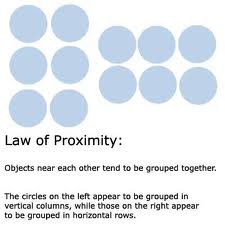
promimityMathew Ingram has a post today about the role of proximity in the Web 2.0/internet arena.  He laments that fact that the west coast, and particularly Silicon Valley, seems to be the hub for everything Web 2.0 related.

Mathew’s post was inspired by an article in the New York Times about the need for proximity in business and financial relationships.  The article talked about the many benefits to startups of being near Silicon Valley.

Fred Wilson jumps in to defend the other coast.  Fred lives in NYC, which also has a lot of proximity advantages.  Silicon Valley and the Big Apple arguing about who has more proximity to money is like Halle Berry and Scarlett Johansson arguing about who’s prettier- it’s largely an academic exercise and the loser is still mighty pretty.

To those of us who live in the hinterlands between the coasts, the proximity issue is the 900 lb gorilla in the room.  We can try to ignore it, but it’s always sitting over there waiting for us to capitulate and say the words it wants to hear.

“You know you’re wasting your time,” whispers the gorilla.  “They are never going to let you in the club, because they don’t know you.”

The indisputable fact is that proximity has always mattered, and it always will.  Why?  Because every meaningful business deal depends, at least in part, on relationships.  Granted, technology has significantly reduced the need to travel, but it has not reduced to need to look someone in the eyes.  Technology and cost notwithstanding, I find that most senior executives want to discuss major points of a large deal across the table- not across the country.

And it’s not just business deals.

The music industry is another example.  Technology being what it is, it shouldn’t matter where a new artist lives.  If he is good enough, he should get discovered and become a star.  Nope.  Where you live has a ton to do with your chances of getting the star maker machinery behind you.  No honest person who knows anything about the music business would deny this.

Blogging is another example.  I’ve talked a lot about how hard it is to build a blog if you don’t live in an area where there is an active blogging community.  It’s a lot harder to develop a relationship with someone via cross-blog conversation than it is by showing up at some dinner or event.  And once you know someone in the real world, it’s a lot easier to get included in the conversation.

It’s also harder to ignore someone who you see every week or two than someone in some place you’ve never been who keeps trying to discuss issues with you while you’re busy trading links and inside jokes with the guy a few notches up from you in the Technorati 100.

“Did you say something,” whispers the Gorilla as he mutes the latest last edition of the Gillmor Gang?  “I was listening to Steve Gillmor talk about stupid people and trolls.”

In fact, proximity is probably the most important factor in the creation and maintenance of the caste system that makes the blogosphere so frustrating.  Many of the so-called gatekeepers know each other in the real world.  Some of them have business relationships.  Money or the prospect of money is a recipe for exclusion.  Ironically, so is the human need to belong.

If the rest of us had any sense, we would have long ago banded together and created a rival kingdom.

But it doesn’t happen.  Because of proximity.  We are scattered all over the world.  That, and the false hope of future inclusion, keeps us at the bottom of the hill and the so-called blogging elite at the top.

“Those bloggers you try to talk to are highly incentivized to maintain the state of attention asymmetry,” the gorilla sighs, as he flips through a worn copy of Freakonomics.

Proximity matters.  No matter how much those of us who call out from the wilderness wish it didn’t.

That sound you hear is the rock tumbling back down blogger’s hill.

Technorati tags: ,