Video Blogging: Hyped and Nerdy

videobloggingThe more I think about it, the more I believe the whole video blogging movement is a step back and to the nerdy.

You can’t easily pause in the middle of video blog posts, move along and return later to finish reading them.  You can’t search for content within them.  They don’t archive well.

You have to watch a ton of boring stuff you don’t care about just to find the part that interests you.  It’s like searching through reams of microfilm to find that one relevant newspaper article you think you remember reading years ago.

There is a low barrier for entry, so you get a whole lot of chaff with the wheat.  Many video blog posts are like home movies eagerly sprung on unsuspecting visitors- they bring geometrically more joy to the people in them than to the people watching them.

They take more time when the idea should be to convey information in less time.  It’s not just that people can read faster than other people can talk, though that’s part of it.  It’s the fact that there are a lot of other sources for interesting and efficient multimedia content.  And thanks to PVRs, most TV shows come with a fast forward button.

They dilute the momentum of the blogging movement, which is already waning thanks to conscription by profiteers and social networks.

And they make bloggers appear even more nerdy to the rest of the world.  That’s a tall order, but there you go.

Would I wipe all homemade video content from blogs?  Absolutely not.  Videos as a primary medium have their place, and that place is YouTube.  Where they can then be served up as accretive blog content.

Even the occasional video post used to spice up a traditional blog can provide value and entertainment.  Several of my pals do that.

Occasional video content is one thing.  Home movies as a substitute for journalism is something else altogether.

My hunch is that video blogging will experience the same life cycle as many prior hype du jours.  Few to many to few.  Novelty to hype to irrelevance.

I hope so.

Technorati tags: ,

Blogging, Bling and the Bearable Lightness of Not

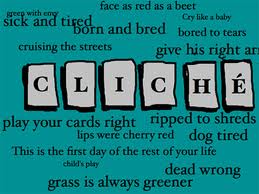
Chip Camden and TDavid have written interesting posts in response to Jeff Atwood’s 13 Blog Cliches.  I tend to do a lot of the stuff on Jeff’s list too.

blogcliche

Here’s my brief take on the 13…

Before I resigned myself to life without parole in Blogger prison, I used to want a calendar widget bad.  Looking back, I think that was because I saw it as a trapping of WordPress freedom.  I’m over that now.  I don’t want a calendar widget or any of the thousand or so other things I could do if I could get my freakin’ blog moved to WordPress without losing all my permalinks.  No flair for me.  Nosiree.

Random images….  Just like Doors’ lyrics and snowflakes and Dave Winer’s recurring blogospats, how do we know they’re really random?  Maybe we just can’t decipher the pattern or metaphor or whatever.  I bet lots of them are less random than they appear at first glance.  Sort of like Thomas Hawk’s photo names.

Big blog rolls on your blog are B-A-D, but only if Newsome.Org isn’t in it.  I really like big honking blog rolls when my blog is in the list.  I keep my big, fat blog roll on my portal page.  If I ever get through my Swivel Feeds experiment, my blog roll is going on a crash diet.  The cats are wearing on me.

I use a Technorati tag cloud thing here, but I have a feeling it won’t be here long term.  I suppose when Google buys the remains of Technorati one day, it will become a Google tag cloud.  Shortly afterwards, I’ll get all paranoid that it’s spying on me and take it down.

Ads.  Those mystical things that make the internet go ’round.  I had an AdSense account for about a month.  I made somewhere in the neighborhood of a quarter.  No more ads for me.  Mike thinks I could make more if I did it thoughtfully.  Maybe, but then I’d have to stop complaining about ads, and where’s the fun in that?  To put it mildly, I am not a believer in advertising’s long term ability to support the internet hysteria.

Number 8 is just wrong.  I’d rather read about someone’s day than yet another post raving about the latest social network or Facebook application.  Nobody’s life is as boring as that.  Like TDavid, I tend to choose interesting voices over interesting subject matter.  The two best posts of the year so far are this one by Will Truman (I’m down to thinking about it weekly now; it was daily for a good while) and Paul Lester‘s Freebird post.  Those posts are all about the writer.

Sorry I haven’t been posting much (see number 9).  TDavid is right that I lose momentum when I go on hiatus, but I can’t help it.  Sometimes I get caught up in the very bearable lightness of not blogging.

Blogging about blogging is actually a contrarian approach during these social network-crazed days.

Technorati tags:

Lost Horizon: Online Utopias, But for Whom?

Dwight Silverman has posted an interesting conversation he had with Steve Rubel on Twitter about blogging and the effect of social networks and related applications.  Steve has been spending an increasing amount of time using services like Twitter and Facebook, and as a result hasn’t been blogging as much.  Dwight, on the other hand, is still excited about the blogging movement and believes, correctly in my opinion, that thanks to RSS, blogging has the most powerful API of all.

Dwight sums up my thoughts on the penetration of Twitter, etc. very nicely:

One of the dangers of keeping obsessive track of new things is forgetting that not everyone rides the cutting edge. Rubel’s been thinking that, because he’s all into Facebook and Twitter, that the majority of Internet users are, too.

You could write an encyclopedia on that statement.  Sometimes I feel like I have.  More and more, the tech-invested internet (we can’t just refer to the blogosphere any more, as more and more people spend time behind the walls of the various social networks) seems to be comprised of a lot of grownups playing with toys and trying to convince the relatively few skeptics (and, of course, the entire non-tech population) that those toys are world-changing business tools.  I’ve never understood that, and I still don’t.  Sure, there are the Chalmers Bryants talking their position as they scramble for their share of the gold.  But there are more than a few folks with no direct skin in the game who seem to be drinking the kool-aid too.

Let me say it once more…

Nobody, and I mean N-O-B-O-D-Y, in the real business world has the slightest idea what Twitter is, and if you tried to tell them, they wouldn’t be the slightest bit interested.  Oh, unless they were in some corporate IT department- they’d be interested then, but only because they’d have to remember to block Twitter along with the free email and porn sites.  And even if they didn’t, heavy use of Twitter at work would be about the same as heavy eBay use.  Not a career enhancing move.

Steve says that the action is moving away from blogs and towards applications like Twitter and Jaiku.  He agrees that RSS is a powerful API, but says it’s limited, in that it only communicates one way.  The problem with that argument, of course, is that unless other users elect to “follow” you, Twitter, etc. is also one way communication.  Even if I had been on Twitter today, I couldn’t have participated in Dwight and Steve’s conversation, because I quit following Steve due to my Pink Floyd Policy.  In other words, I could elect to read what Steve and certain others have to say, but I can’t participate.  Email is more two way than Twitter- at least if I email someone, I can be reasonably certain they’ll see it.

Dwight’s thesis is that AOL, the grandfather of social networks, died because it became irritating to users- many of whom were happy to get their feet wet in the internet’s kiddie pool, but later became unhappy when they wanted to do more – and access more- than the walled-in AOL would accommodate.  I’ve been using Facebook for about 3 months, and I’m already frustrated with it.  I feel like Rodney Dangerfield in Back to School every time I log in, and I find the interface to be very confusing and non-intuitive.

In other words, it’s a little irritating.  Why is this fact wildly ignored by so many bloggers and former bloggers?  By so many, I mean the hundred or so people who write all Shangra-La about Facebook and the other social networks.

Again, I just don’t get it.

Nor, I suspect, do the very large majority of the other grownups who get up and trundle off to work every morning- more worried about paying the bills than using the latest Facebook application.

As I wrote the other day, I find my application usage to be shrinking, rather than growing.  I simply don’t have time to have all the fun that people claim to be having at Facebook, Second Life, Twitter, Pownce, etc.  Plus, every minute I spend writing there is a minute that both dilutes the brand I am trying to build at my blog and inures almost exclusively to the benefit of whoever thinks they’re going to get rich by selling Facebook, etc. to Google or some Google wannabe.

Sure, I think it’s nice to have “friends” on Facebook.  Yes, I log in once in a while to see what’s going on behind the walls.  But all of that is ancillary to my greater online purpose: blogging outside the walls.  With other people.  In a conversation open to the world.  No walls, no silly jargon.

Dwight asks if blogging is passe.

Blogging has always been so 20 minutes ago- that’s one of the things I like about it.  From the day Dave Winer invented it (along with just about everything else, it often seems), it has been a niche activity that serves a meaningful purpose- allowing regular folks like us to share and distribute information more efficiently- but for a limited number of people.  When people get all exercised about all of the social networks and related applications, they are not only diluting their personal brands, they are diluting the entire blogging movement.  A movement that the rest of the world has only just begun to notice.  At a time when we could be bringing blogging to the masses, we have lost our way and scattered our meager ranks across all manner of disparate and desperate locales.  I think that’s the most troubling part of the application du jour internet mentality.

We are dispersing when we ought to be gathering.

The problem, of course, comes down to money.  No one is going to get rich because more people start blogging.  But if you can convince enough people to come to your web site, create a ton of content for free and, most importantly, get served a bunch of ads (note I didn’t say watch them, because nobody does), then you might make some money one day.

In the meantime, I’ll be here blogging.  Once in a while I’ll visit the communities that form behind the walls, but they will never be my home.

Technorati tags: , ,

The 7 Quickest Ways to Get Deleted From My Reading List

delete-key As I’ve mentioned before, I’ve read a lot of blogs over the years.  During that time, I’ve developed some serious likes and dislikes.  My personal belief is that every reader is important, and unless you are at the very top of the Technorati 100, you should work hard to retain every reader.  Conversely, you should avoid things that may cause readers to unsubscribe from your blog.

I’ll cover the likes in a series of posts when my swivel feeds experiment is over.  For now, in honor of 7-7-07, here are the seven quickest ways to get removed from my reading list.

1) Use partial feeds.  Unless you write like Cormac McCarthy, you are generally pissing up a rope by trying to force me to your web site in the name of ads, or whatever other illogical and self-defeating reason led you to use partial feeds.  This is especially true for newer and less known bloggers.  Darren Rowse may be able to get away with it, but you almost certainly can’t.  If Scoble can push a full feed out the door, so can you.  When my swivel feeds list is complete and I start pruning my personal reading list, partial feeds will be the number one reason blogs get axed.  Not only will these blogs lose a reader, they will also lose the potential for links and cross-blog conversation.

2) Engage in excessive self/blog promotion.  When someone tells you how smart they are, they are almost always lying.  I don’t want to read post after post about what a genius you are.  Let me make my own decision based on your writing.  I also don’t want to read post after post about your latest give-away or whatever to get people to visit/link/subscribe to your blog.  Don’t misunderstand, occasional give-aways, contests, etc. done the right way are both appropriate, fun and productive.  But if you’re spending more time acting like a carnival barker than a writer, you are not going to stay on my reading list- or many others.

3) Don’t reciprocate conversation/links.  While linking to me and/or commenting here is a very good way to get on my reading list, it’s in no way a prerequisite.  It’s simply a polite way to tell me about your blog (I subscribe immediately to the large majority of people who link and/or comment, and those who keep my attention get a permanent place in my feeds).  Once you get on my reading list, I will likely reach out to you conversationally.  But, over time, if you don’t respond or, even worse, tend to link around me, I’ll conclude that you aren’t interested in conversing with me and I’ll move on.

4) Add scads of junk or filler to your feeds.  One common example of this is posting a big series of photos on your otherwise non-photo blog as separate blog posts.  This results in the Engadget Effect, whereby I get overwhelmed by the sheer number of posts.  Get a Flickr account and post a link to a photo set instead.  You might think the photos of trees and buildings and whatnot from your recent trip to Peoria are fascinating.  I probably don’t.  And even if I do, I can see them better via a Flickr set.

5) Bombard me with ads.  I understand about the need to make a little money.  Really, I do.  But just like TV, if the ads overwhelm the content, I will turn the channel.  I am willing to suffer through an unobtrusive ad or two – even in feeds – but I won’t suffer through a bunch of ads for a bit of content.  And if you want to get deleted from my reading list immediately, combine partial feeds with banner ads in your feeds.  I dive for the unsubscribe button when that happens.

6) Use a lot of gratuitous profanity.  Anyone who knows me via my job knows that I have been known to curse like the proverbial sailor when provoked.  It’s not one of my better qualities, but it demonstrates that I am far from a prude.  Nevertheless, when I’m reading a blog post or watching a video post and every other word is an F-Bomb, it really turns me off.  If you can’t make your point without a bunch of gratuitous profanity, then either your point or your writing skills are lacking.

7) Ignore/dismiss the other side of the issue.  I can’t stand most talk radio simply because the hosts can only see one side of the issue and either ignore or attack those who feel differently.  If there aren’t two sides to an issue, then why write about it?  And if there is another side to the issue, then address it logically and rationally.  It’s OK to feel strongly, but if you really feel that way (and are not merely regurgitating what someone spoon-fed you), you should be able to explain why.

Those are the fastest ways to get deleted from my reading list.

What are the fastest ways to get deleted from yours?

Technorati tags: ,

Declaration of Blogging Independence

When in the Course of online events it becomes necessary for alienated and isolated bloggers to dissolve the existing blogging hierarchy and exclusionary behavior which have disconnected them from the A-List and made them feel even more nerdy, and to assume among the multitude of powers they wish they had, the equally unattainable station to which the Laws of It Ain’t Fair entitle them, a decent respect for The Onion and Al Gore requires that they should write yet another post no one will ever read to declare the many real and imagined causes which impel them to the third party affected and now ironically embraced separation.

We hold these truths to be self-evidently pie in the sky, that all bloggers are created equal, that they are endowed by their Computers and iPhones with certain unalienable Rights, that among these are lots and lots of Links, Thoughtful Comments and the pursuit of AdSense Dollars. – That to secure these rights, lots of Wailing and Moaning is inserted into Blogs, deriving their literary powers from a mandate from the masses, not from some farcical video-blogged nerdathon, – That whenever any Ze Frank or Ze Frank equivalent becomes destructive of these ends by monopolizing all the viewers who would otherwise be watching videos of Star Trek impersonations, it is the Right of the Bloggers to use their webcams, lightsabers and YouTube to alter or to abolish it, and to achieve new levels of self humiliation, laying its foundation on such principles and organizing its powers in such form, as to them shall seem most likely to effect their rapidly diminishing Technorati Ranking and Google Juice. Technorati, indeed, will dictate that the Blogosphere long established months ago should not be changed for light and transient causes; and accordingly all experience hath shewn that new bloggers are better suited to suffer, while evils are sufferable than to deny the A-Listers the celebrity to which they are accustomed. But when a long train of abuses and usurpations, pursuing invariably the Mythical Endless Ad Dollar and a link from Om evinces a design to reduce them to absolute Isolation and Silence, it is their right, it is their duty, to throw another Blogofit, and to demand a new relational structure for their future security. -Such has been the patient sufferance of many Bloggers; and such is now the necessity which constrains them to start posting cat pictures with misspelled and allegedly funny cat quotes. The history of the present Gatekeepers is a history of repeated exclusions and the turning of deaf, furry ears, all having in direct object the establishment of an absolute Tyranny over the Blogosphere. To prove this, let Facts be submitted to a sleepy world.

They have refused to respond to conversational overtures, the most wholesome and necessary for the public good.

They have ignored posts of immediate and pressing importance, unless emailed till their Attention should be obtained; and when so emailed, they have utterly neglected to reply.

They have called together ludicrously entitled conferences and unconferences at places unusual and uncomfortable, for the sole purpose of fatiguing us into believing that they were right not to invite us.

They have refused for a long time, to cause others to be admitted to Techmeme, whereby the Aggregating Powers, incapable of Annihilation, have returned to the Bloggers at large for their exercise; the Blogosphere remaining in the mean time exposed to all the dangers of invasion from cat blogs within, and convulsions of laughter from little old ladies without.

They have made all of Web 2.0 dependent on Advertising alone for the tenure of its offices, and the amount and payment of its salaries.

They have combined with others in formal and informal affiliations to subject us to a jurisdiction foreign to our desires to be popular, and unacknowledged by our moms.

They have plundered our right to bigger feed counts, ravaged our prospective link counts, burnt out our minds, and denied us links from lots of other people.

In every stage of these Oppressions We have Posted for Redress in the most irritable terms: Our repeated Posts have been answered only by repeated silence. An A-Lister, whose character is thus marked by every act which may define a meanie, is unfit to be the ruler of a utopian and unrealistic blogosphere.

Nor have We been wanting in attentions to our Old Media brethren. We have warned them from time to time of attempts by their laid off and soon to be reporters to extend an unwarrantable jurisdiction over us. We have reminded them of the circumstances of our emigration and settlement here at the end of the long tail. We have appealed to their journalistic standards and arrogance, and we have conjured them by the hair of our chinny chin chins to disavow these usurpations, which would inevitably interrupt our reader counts and inbound links. They too have been deaf to the voice of justice and of consanguinity. We must, therefore, acquiesce in the necessity, which denounces our Separation, and hold them, as we hold the so-called New Media, Enemies when they ignore us, in Linkage Friends.

We, therefore, the Representatives of the New Blogosphere, Assembled, appealing to the Supreme Scoble of the internet for the rectitude of our intentions, do, in the Name, and by Authority of the solitary bloggers, solemnly publish and declare, That these disjointed Blogs are, and of Right ought to be Free and Incoherent Blogs, that they are Absolved from all Allegiance to the old Blogosphere, and that all  connection between them and the old Blogosphere, is and ought to be totally dissolved; and that as Free and Incoherent Blogs, they have full Power to converse with each other, conclude open and free blogging Alliances, establish Cross-Blog Conversations, and to do all other nerdly Acts and other geeky Things which Independent Blogs may of right do. – And for the support of this Declaration, with a firm reliance on the protection of our day jobs, we mutually pledge to each other our Blogs, our Links and our sacred Attention.

Technorati tags: , ,

From Creation to Abandonment: the 5 Stages of Blogging

abandonmentBetween my earlier ScobleFeeds series and my current swivel feeds experiment, I have read a lot of blogs.  During this time, I have been looking for patterns and commonalities.  While it’s hard to draw too many universal conclusions about the blogging experience without front-end data, there are a few patterns that emerge.

One of them is what I think of as the 5 Stages of Blogging.  The stages of a blog’s life from the hopeful day of creation to the sad and sometimes seemingly inevitable day of abandonment.  It may not seem that way in the often competitive blogosphere, but the loss of every legitimate blog is a loss shared by all legitimate bloggers.

Which is a good reason to study the patterns and search for a way to reroute the process towards a better end.

All bloggers don’t experience all 5 stages.  The low financial and technical barrier to entry results in many hastily created blogs that end up abandoned during one of the early stages due to boredom or the lack of a genuine interest in blogging.  Some bloggers aren’t concerned with growing an audience and never reach the frustration stage when their blog’s growth rate stalls or reverses.  And once in a very great while a new blogger actually gets accepted into the warm, chummy place I talked about last night, and happily avoids the pain of the later stages (more often than not, there is an ancillary relationship that triggers this acceptance, but it does happen).  But the pattern is pretty clear, particularly in cases where new bloggers joins the fray in search of conversation, inclusion and readers.  It’s less clear in cases where the blogger is primarily concerned with making money or selling a product.  The psychological investment in blogging is less in those cases, and if the money isn’t made or the product isn’t selling, the blogger often just moves along to the next marketing angle.

If you believe, as I do, that the blogosphere ought to be about conversation and sharing information, as opposed to merely a new manner of media distribution and/or prospecting for gold, then you should be concerned about the high attrition rate in the blogosphere.  If you want to have conversation, then there must be others to converse with.  Encouraging new bloggers and promoting blogging as a means of communication is in the best interest of all legitimate bloggers, from the top of the A-List to the very bottom of blogger’s hill.

People tend to forget this very important fact: without the long tail, there is no short tail.

So why is there so much blog attrition?

Here are my 5 stages of blogging, from creation to abandonment.

Stage 1: Excitement

This is the early stage of a blog, during which a platform is selected and a template evolves, widgets and other ancillary content are added, and the initial blog posts are written.  Like the band who has been gigging for years before making a record, new bloggers – at least the ones who have done a little planning – generally have an albums’ worth of really good topics to toss out.  Those initial posts generate a little reaction, particularly if the blogger does his homework, identifies the established bloggers who are amenable to new voices and cultivates them.

Excitement is high during this stage and expectations are intact and rising.

Step 2: Expectation

After the blog is launched and the blogger has learned his way around the blogosphere, it’s time to start building traffic and readers.  There are three related ways to measure this growth: blog visitors, subscriber numbers and links.  During this stage, a little traffic goes a long way.  I still remember how excited I was when I had 100 inbound links (not from 100 different blogs; I’m talking 100 total).  I called my wife into my study to show her the first time my blog was on Techmeme (then known as Tech Memeorandum).  It takes work to pass those initial milestones, but they generally come within a reasonable period or time.  At this point, the new blogger is certain that before long he and all those guys and gals he reads about will soon be yukking it up in cross-blog conversations like old college buddies.  But like college, this stage doesn’t last forever.

One of two things will happen.  Once in a blue moon, the blogger will catch lightning in a bottle, get swept up by the blogging elite, and become a recognized name in the blogosphere.  Much more often, the blogger will hit a plateau and the growth of his still new blog will slow or flatline.  He’s not the new guy any longer, his album’s worth of posts are getting a little stale, and the lizard-like blogosphere has been distracted by all the other flies buzzing around.

At this point the once hopeful blogger finds himself writing away to what seems like a diminishing rate of return.

Stage 3: Frustration

Once the honeymoon is over, the blogging work that seemed so new and interesting at first starts to feel hard and frustrating.  And very, very inefficient.  The blogger can’t figure out how to generate enough traction to achieve the organic growth that is an absolute requirement to maintain a popular blog.  He writes thoughtful posts on hot topics, links like crazy to other bloggers and waits. And waits.  He gets a few links here and there, but the small return on the huge effort is profoundly discouraging.  The blogging elite doesn’t notice him and many of the other new bloggers are too busy fighting for attention to engage in any meaningful conversation.  The blogging happiness trend is going down pretty quickly, but not in a straight line.  Small victories occasionally conceal the larger defeat and the blogger bounces between the rock of discouragement and the hard to maintain place of synthetic optimism.

At this point, the blogger begins looking for a new angle to kick-start and accelerate the growth process.  Perhaps he crafts alliances with other similarly situated bloggers, which, like any attempt to change the status quo, only works as long as it has critical mass.  Inevitably, some will become convinced that they can muscle their way into the club and take advantage of the very forces that once kept them down.  It’s the same dynamic as the driver who slows down to rubberneck at a traffic accident, telling himself that he’s already paid his dues by waiting in the long line of cars.

For the new blogger, the collapse of his wagon train is just one more setback in a journey that grows more frustrating with every step.

It is during this stage that pandering, agitating and extreme positions in search of a reaction begin to occur.  Like the preschooler who acts out for attention, however, this approach is not sustainable over the long term.  Angry or effusive posts create a self-fulfilling prophesy, whereby the blog’s growth is even more negatively affected as a result of posts, cynical or sycophantic, inspired by the blog’s lack of growth.

This is probably the least happy time for most bloggers.  The former excitement is replaced by frustration and the growing belief that time spent blogging might better be applied elsewhere.  Many bloggers abandon ship at this stage.  Other trudge along wearily to the next stage.

Stage 4 Alienation

After the blogger’s capacity for frustration is exceeded, he does an about face and, instead of seeking inclusion in the conversations, he rejects the entire process completely.  At this point, the tailspin towards abandonment has begun.  The blogger’s mental image of the blogosphere as unicorns and butterflies in a field of wildflowers is replaced with an equally distorted image of a dark and wicked place, full of conspiracies and evil doers.  The benefit of the doubt is cast aside in favor of broad condemnation.

This alienation manifests itself in one or more ways.  Perhaps it takes the form of cynical posts about the unfairness of the system.  Or long periods without posting anything, followed by a week or so of active posting.  Rote behavior, in an effort to find the hidden key that will unlock the gate.

Some blogs exist in a near perpetual state of alienation.  Eventually, the alienation gives way to abandonment.

Stage 5: Abandonment

Next comes the unsatisfying end game for the discouraged blogger.  His once cherished blog is either cast into the abyss via the delete button or, more often, left to lie silent by the side of the road like a burned out jalopy.  A testament to the inefficiency of the process.

I am amazed at the number of abandoned or nearly abandoned blogs I come across.  All the information in all the posts that were never published lost- not just for now, but for all time.  The development of the collective consciousness interrupted.  Once here, twice there.  Before long the entire process is in jeopardy.

I don’t have an easy solution to reduce the rate of blog attrition.  I do what I can by trying to find and highlight blogs from the blogosphere’s mostly invisible middle earth.  I don’t know if that will make a difference or not.  I hope so, but I am not immune to discouragement.

What I do know is that all legitimate bloggers, regardless of our motivation for blogging, have a vested interest in nurturing the blogosphere and encouraging the creation and continued existence of legitimate blogs by people we don’t know yet who have a lot to say, a lot to share, and a lot to teach us.

Technorati tags: ,

Fear and Loathing in the Blogosphere

First my old buddy Mathew Ingram links to me, and then goes back and removes the link.  Even though I challenge you to find anyone who took a more even-handed approach than I did to the Federated Media/Microsoft discussion.

Now, Louis Gray (who I have linked to at least six times in the past month)  calls me a cheater.  Says I and those like me are ruining Technorati’s credibility by participating in viral tag link arounds.  He says my Technorati count is bogus.  Implies that I am a fraud who engages in a sultry practice.  He suggests that I lead by example and renounce my wicked ways.

Those are pretty strong words, particularly since Louis doesn’t know the first thing about me, including how to spell my name.  Apparently he doesn’t know much about the blogosphere either.

The blogsphere is not a level playing field.  Louis said as much the other day.  We’ve been talking about the gatekeeper thing for years.  There are a hundred theories about the cause, but there is only one effect: that there are those on the inside, where the blogosphere is all warm and chummy, and there are those on the outside looking in.  Personally, I think a lot of it boils down to three factors: (1) people blog for a lot of different reasons and blogs often have cross-purposes; (2) those who have proximity in career or geography can more easily create relationships that transcend the blogosphere, resulting in more shared attention; and (3) human nature.  It’s the human nature part that creates the walls that are the hardest to scale.

In other words, the walls may be naturally formed without malice.  But there are walls.

Those on the outside looking in can either accept it and move on (thus the high rate of blog attrition), pander to the A-Listers (take a look at Louis’s blog roll on the right side of his blog page for a great example of that) and hope you’ll one day get invited to the club (with the chance of success being roughly equal to the chance a high school basketball player has of making the NBA), or take the blogosphere for what it is and play the game with everyone else.  I have tried the first two and found them lacking.  I have tried the latter exactly twice.  Once here, which generated virtually no links, and once here, which generated quite a few.

Do those posts add value for the reader?  Of course not.  Do the ads we suffer through in feeds and on blog pages add value for the reader, of course not.  The latter are designed to line the pockets of those who see the blogosphere as a way to make money.  For me, the former is a small attempt to end run around the fact that, despite writing hard for years, I simply cannot get many of the popular bloggers to allow me into the conversation.  If bloggers like Dave Winer, Fred Wilson, Guy Kawasaki, Om Malik, Steve Rubel and others won’t let me join their conversations, what am I do to?  If waiting patiently doesn’t work?  If giving blogging up isn’t appealing?  If I am truly the hardest working man in the blogosphere and have so little to show for it, what is left?

I could write away in obscurity and support the machine for the benefit of the empowered.  I could establish some artificial moral standard that no one would know or care about- that would only apply to me, since almost everyone else is gaming the system in one way (ads, products or services to sell) or another (linking mostly to those in their circle of friends).  Or I could keep writing hard every day and try to find another way up blogger’s hill.  Try, as in two posts out of 1,262 posts.  That’s .002%.  I get far more “bogus” content than that every single day when I see all the ads my feeds.

The viral tag links are not nearly as meaningful as a link from a blogger engaging in cross-blog conversation with me.  But are they that different from the hordes of links Scoble and others get when they post about arm farting and whatnot?  Is a link from some other blogger via viral tags that much worse than all those upstream “I agree” or “look at me, please” links from some pandering wannabe?  I think not.  At most, they are equally worthless.  So don’t condemn one unless you’re willing to condemn both.  Those who live in glass houses, and all that.

If ads designed to separate readers from their cash are perfectly OK.  If partial feeds are OK.  If undisclosed conflicts of interest are conveniently ignored…how can sharing links be the great evil that needs to be exposed and eradicated?  And if sharing links for the sake of links is a sin, why didn’t Louis call me a cheater and a fraud when I did this?  Or this?

Dave Sifry, who knows a little about Technorati, says that “in this new world of conversation, the hyperlink is becoming a new form of social gesture between people.  It’s something akin to a tap on the shoulder.”  Maybe these viral tags are the blogosphere equivalent of the mosh pit where the disenfranchised jump around wildly to the horror of the ruling class.  Maybe they’re the Boston Tea Party where terrorists-cum-revolutionaries toss the highly taxed authority count into the sea.  Whatever they are, those who engage in them do not deserve the condemnation that Louis espouses.

The blogosphere isn’t a perfect place, but it’s the only one we have.  Bloggers aren’t perfect either.  As Louis will tell you over and over, I’m not either.

But if we’re going change the nature of the blogosphere, then there are a lot better places to start than calling me out as the poster child for bad behavior.

Technorati tags: ,

Arm Farting in the Blogosphere

Everybody’s talking about Techmeme today…again.  Scoble says he has all the inbound links and ought to be the top story about whatever the top story is at the moment.  He’s said basically the same thing before.  Here’s the problem with that: Scoble could write a post about arm farting and 30 or 40 people would immediately link to it, hoping he might link back.  Scoble has more yes men than Michael Corleone and Michael Arrington combined.

In other words, all those people linking wildly to Scoble aren’t doing so because they think he is the world’s greatest authority on arm farting.  They are simply holding out their hands eagerly and hoping Scoble will shake it (via a link) as he walks by.  Getting a link from Scoble is almost as good as getting arrested with Paris Hilton.  It’s not Scoble’s fault he’s the king of the blogosphere any more than it’s Paris Hilton’s fault she’s in jail.

All of which means that, at least at the top of the blogosphere, links are less about authority and more about popularity and power.  Power to control admission to the in-crowd.  Just like in life, some go radical and reject the system that excluded them.  Others waive expectantly, hoping they’ll get called over to play.  Most are somewhere in between.

But none of this is a sound basis for deciding what is top news and what isn’t.  There needs to be more to it.  There needs to be a balance between popularity, authority, freshness and inclusion.  Most of the target audience for Techmeme already subscribe to Scoble’s blog.  They are at Techmeme looking to see what others are saying about various topics.  And let’s not kid ourselves, a ton of Techmeme readers are bloggers who want to be included in the conversation.  To remove the opportunity for inclusion would change Techmeme in a fundamental and adverse way.      

I have no idea how Techmeme works under the hood, but it seems to do a good job of picking out appropriate stories and discussion links.  Sure, I get the point that the Register and the New York Times are not blogs.  But be that as it may, I find Techmeme to be a lot less biased than most bloggers, A-List and otherwise, when it comes to picking up interesting and relevant links.

Meanwhile, Louis Gray has a case of the new blogger’s blues: “I can’t tell you how many times I’ve gotten to a story before ‘the big guys’ get it, only to be ignored.”  We’ve all been there brother, but stay the course and you’ll get some exposure via Techmeme.  No, you won’t get to be the main topic link very much, because A-Listers and a lot of wannabes will always link “upstream” in an effort to protect or obtain a membership card.  But you’ll get in the discussion links (where I live).  Is it perfect?  No.  Is it more productive than waiting for a link from one of the A-Listers or wannabes?  Absolutely.

The blogosphere is not a level playing field and there are as many motivations for blogging as there are bloggers.  This makes the trip up blogger’s hill a steep one, but Techmeme has always struck me as a reasonably fair and informative place to start.

Technorati tags: , ,

Is New School a Synonym for Blogomercial?

toomanyadsFred Wilson calls Nick Denton “old school” in the wake of Valleywag’s report that a number of influential bloggers wrote about Microsoft’s “people-ready” slogan as part of an ad campaign.  Fred says that, in complaining about this pay to say campaign, Nick is “stuck in the old media mindset.”  Fred is “excited to participate in an ad campaign that [isn’t] just mindless banners.”

Let’s think about this.

First, it’s important, and no coincidence, that the bloggers in question wrote these posts on a dedicated page hosted by their advertising company.  The page says “Sponsored by Microsoft” right at the top.  Sponsored is a pre-owned cars word for paid for.  Anyone who thought about it for a second would realize that these posts are little blog infomercials – blogomercials if you will.  The issue, of course, is that the same company who sponsored these blogomercials also runs ads on these folks’ blogs.

It’s not about lack of disclosure.  It’s about whether or not you want to be the blogosphere equivalent of Suzanne Somers hawking a ThighMaster.  It’s about the crossroads between cash and credibility.

All we have as bloggers is our reputation and our track record.  No ad campaign is worth risking that, regardless of whether it crosses any ethical line.  This is more about common sense than ethics.

Meanwhile, back at the crossroads, Mike Arrington tells anyone who doesn’t like the ad campaign to pound sand and gripes about losing money due to the temporary suspension of the ad campaign.  One day I’d like to see Mike actually address an issue thoughtfully instead of go into attack mode every time someone takes a contrary view.

Om Malik, on the other hand, says he will not continue running the ads.  Om says “Nothing is worth gambling the readers’ trust. Conversational marketing is a developing format, and clearly the rules are not fully defined. If the readers feel a line was crossed, I will defer to their better judgement.”  Paul Kedrosky says he’s done with them too.  Is that old school?  Only if being smart, taking the long view and caring for your personal brand is old school.

Once again, blogs are merely platforms for content.  While the rules evolve with the passage of time, just because you’re publishing online and not in print does not mean you can or should trash all the old rules and have a free for all.

Federated Media, the advertising company that ran the Microsoft campaign, had this to say:

ValleyWag today suggests that one of FM’s conversational marketing campaigns is hurting the editorial integrity of our authors. It says that Microsoft paid them to write, which is simply not true. They were invited to join a conversation with readers about Microsoft’s new theme, and they did so, but they didn’t write about it on their blogs. The only money they get from Microsoft is from ads running on their sites, for which they’re paid by the page view.

That is either one subtle distinction or splitting hairs, depending on how you look at it.  If there is a financial relationship involved, there is an issue of disclosure and credibility that must be addressed.  The fact that the payment isn’t directly tied to the posts in question doesn’t change that.

Tony Hung says that, at the end of the day, this sort of thing is no different than PayPerPost.  I don’t think it’s nearly that bad, but I do tend to agree with a commenter to Mike Arrington’s post who says:

Your name is on the ads. Your words are on the ads. You’re quoted as spouting “people ready” Microsoft propaganda crap like the cheapest B-actor reciting the advertisers’ slogan.

I don’t like it when Suzanne Somers tries to sell me a bill of goods on TV.  And I don’t like it when Suzanne Somers 2.0 does it in the blogosphere either.

Technorati tags: , ,

Meanwhile in Ring Three

Here’s the latest from the (a)Tension Convention.

3ringStowe Boyd, who never answered my very relevant question, says in a comment to Karl Martino’s excellent post on the topic that he doesn’t like being called a blowhard for no reason.  Dave Rogers then goes into great detail about why he thinks Stowe is a blowhard.  Does anyone really give a shit whether Stowe is a blowhard or not?  Or whether his hat is a backwards baseball cap or a beret or an Indian headdress?

Once again, bloggers are fighting about all sorts of stupid stuff while the issues that really matter, such as marketing, conflicts of interest and whether Web 2.0 amounts to a hill of beans, are ignored.  If you ever doubt that the blogosphere is more about building and defending personal brands than promoting reasoned discourse, all you have to do is look at what bloggers get mad about.  It’s the playground mentality, only semi-anonymous and remote.

The blogosphere is what we make it.

Technorati tags: , ,